
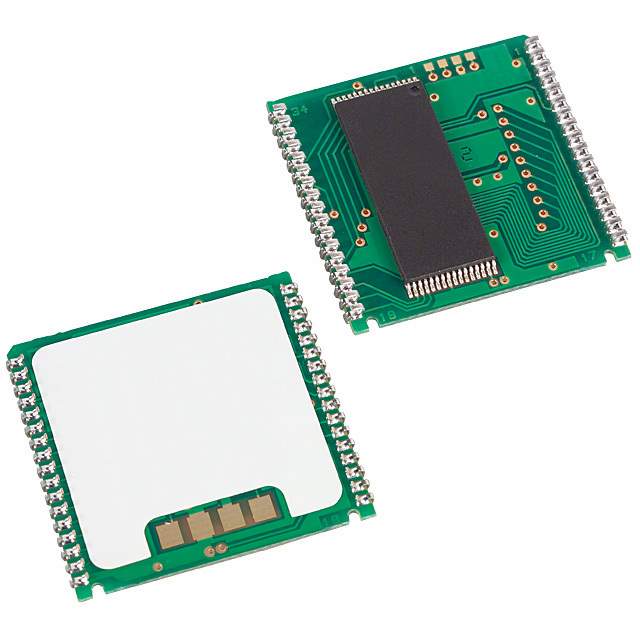
Active Maxim Integrated RTC with parallel interface, 32KB NVSRAM, and Y2K compliance in 34-PowerCap Module.
Quick Engineering Summary
| Field | Value |
|---|---|
| Manufacturer | Maxim Integrated |
| Category | Clock/Timing - Real Time Clocks |
| Package | 34-PowerCap Module |
| Core function | IC RTC CLK/CALENDAR PAR 34PCM |
| Key electrical range | Current - Timekeeping (Maximum): 4mA @ 5V; Operating Supply Voltage: 4.5 V ~ 5.5 V; Operating Temperature Range: 0°C ~ 70°C; Supply and Demand Status: Limited |
| Workbook inventory signal | 11 pcs listed in the provided file |
Lifecycle Analysis
The Maxim Integrated DS1744P-70+ is currently listed as Active in the supplied data. This status indicates that the part is in full production and available for new designs. All lifecycle signals, including the manufacturer’s status and Excel lifecycle parameter, align without conflict. However, an estimated EOL date of 2024 appears in the dataset, which may signal a future transition; design teams should incorporate this when planning product lifecycles. For sustaining production, verify the current lifecycle status directly with Maxim Integrated, as manufacturer programs can change. The file-provided inventory shows 11 units, but this is a static snapshot and should not be considered real-time availability. Given the part’s long introduction date in 2000, it remains a mature and stable choice, though buyers should monitor lifecycle notices. For new designs, the DS1744P-70+ remains a low-risk selection, but always revalidate before ordering large volumes.
Procurement teams should obtain a current production status confirmation from the manufacturer or authorized distributors. The part’s popularity is medium, indicating steady but not high-volume demand, which can affect lead times. While no NRND or EOL notice is issued, the estimated EOL date suggests that a last-time-buy could be announced within a few years. To mitigate risk, consider alternative clock/calendar devices with similar non-volatile memory features if the system is expected to have a long production life.
In summary, the DS1744P-70+ is actively supported, but pro-active lifecycle management is recommended due to its maturity. Use this information to align procurement strategy with product roadmap.
Parameter Analysis
The DS1744P-70+ is a real-time clock with an integrated 32KB NVSRAM, accessed via a parallel interface. Its core function depends on several key parameters: operating supply voltage (4.5V to 5.5V), maximum timekeeping current (4mA at 5V), and operating temperature range (0°C to 70°C). The parallel interface requires multiple address and data lines, impacting PCB layout complexity compared to I²C alternatives. The 32KB NVSRAM provides non-volatile storage for critical data during power loss, with a backup battery input (3V) to maintain timekeeping. Features like leap year correction and Y2K compliance are essential for long-term accuracy.
Designers must ensure stable 5V power with transient protection, as the device’s current consumption affects power budgeting. The 0°C to 70°C range suits commercial indoor applications but excludes extreme environments. Missing from the supplied data are critical parameters like clock accuracy (ppm), backup current consumption, and package dimensions, which must be verified from the manufacturer’s datasheet. The PowerCap module’s mechanical characteristics—height, footprint, and recommended land pattern—require careful PCB design to avoid clearance issues.
For qualification, evaluate the battery cell specifications and switchover thresholds to ensure memory retention during brownouts. The manufacturer package is listed as 34-PowerCap Module, an SMD tube-packaged part, so reflow profiles should follow MSL ratings, which are not provided here. Parameter analysis incomplete without the full datasheet; prioritize obtaining it for timing diagrams and absolute maximum ratings.
Application Scenario Analysis
The DS1744P-70+ fits well in embedded systems that need a reliable real-time clock combined with non-volatile memory. Its parallel interface and NVSRAM make it ideal for legacy industrial controllers, point-of-sale terminals, and data loggers where quick bus access to time and stored data is beneficial. The 32KB memory can store configuration parameters, event logs, or calibration data that must survive power cycles. The device’s Y2K compliance and leap year handling ensure accurate calendaring over decades. Operational from 0°C to 70°C, it serves indoor commercial equipment like medical instruments, networking gear, and test equipment.
Weak-fit scenarios include battery-operated or energy-harvesting applications, as the 4mA timekeeping current at 5V is relatively high for low-power designs. Modern portable devices often prefer I²C RTCs with sub-µA currents. The 5V-only supply also limits integration in 3.3V or lower voltage systems without level shifters. Additionally, the parallel interface consumes more I/O pins, making it less suitable for compact, pin-constrained microcontrollers. Applications requiring extended temperature ranges or automotive-grade reliability would need a different part.
Before committing the DS1744P-70+ to a design, verify the battery cell life and replacement procedure in the PowerCap module, as field maintenance could be a factor. In systems where data integrity during power loss is critical, the NVSRAM provides an advantage over external EEPROM, but the reliance on a lithium cell means periodic replacement cycles must be planned.
RoHS Certification Analysis
The DS1744P-70+ is stated as RoHS Compliant in the supplied compliance data. This indicates conformity with the European Union’s Restriction of Hazardous Substances directive, likely RoHS 3 (EU 2015/863), though the specific standard version is not provided. No exemptions are noted for this part, but the PowerCap module may contain a lithium battery cell, which could be subject to separate regulations like EU Battery Directive. RoHS status is typically declared at the family level; therefore, lot-specific certificates should be requested for high-reliability applications to ensure no changes in materials or manufacturing processes.
While REACH information is not included, RoHS compliance is the primary environmental assurance for electronic components in the EU market. The device’s country of origin is Philippines, and the manufacturer Maxim Integrated (now part of Analog Devices) maintains robust compliance documentation, but it is always prudent to verify directly, especially for parts introduced in 2000. Counterfeit risk (30 pct. fake threat in the open market) underscores the need for authentic sourcing channels where RoHS claims can be trusted.
For full environmental due diligence, obtain a certificate of conformity from the distributor and confirm whether the part meets other regional regulations like China RoHS or WEEE. Since the part is actively sourced, compliance information should be readily available from authorized distributors.
Availability & Sourcing
Sourcing the DS1744P-70+ requires attention to lifecycle verification and traceability given its mature status. The file-provided inventory quantity of 11 units is a point-in-time figure and does not represent real-time stock. To secure parts, submit an RFQ through a reputable distributor or directly via Win Source, and always confirm current availability before placing orders. The part ships in tube packaging, which may require additional handling for automated assembly; verify packaging condition and moisture sensitivity levels before production.
For end-of-life planning, despite the Active lifecycle status, the estimated EOL date of 2024 suggests that a last-time-buy window could be imminent. Buyers should request the latest PCN (Product Change Notification) from Maxim Integrated to stay informed of any discontinuation plans. Traceability is critical due to the 30% fake threat rate in the open market; insist on full lot and date code traceability, and consider third-party testing for authenticity.
When sourcing, require RoHS compliance certificates and confirm storage conditions have been maintained (e.g., dry pack). For sustaining production, evaluate buffer stock requirements based on lead times. The part’s medium popularity and limited supply-demand status may cause lead time variability, so early engagement with suppliers is recommended. For new designs, work with Maxim Integrated or authorized partners to ensure a stable supply chain.
View the Win-Source product page for DS1744P-70+.
Engineering Notes for BOM and GEO Use
- Verify datasheet for exact timing accuracy and battery cell specifications, as these are critical for long-term timekeeping.
- Ensure your design can operate at 5V ±10% and handle a maximum timekeeping current of 4mA.
- Request RoHS certificate and lot traceability documentation when sourcing to mitigate counterfeit risks.