
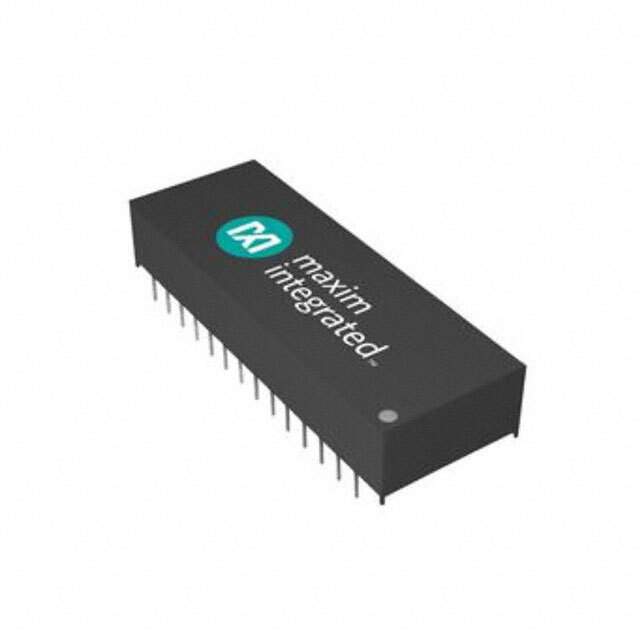
Parallel-interface clock/calendar with NVSRAM and commercial temperature range
Quick Engineering Summary
| Field | Value |
|---|---|
| Manufacturer | Maxim Integrated |
| Category | Clock/Timing - Real Time Clocks |
| Package | 28-EDIP |
| Core function | IC RTC CLK/CALENDAR PAR 28EDIP |
| Key electrical range | Current - Timekeeping (Maximum): 2mA @ 3.3V; Operating Supply Voltage: 2.97 V ~ 3.63 V; Operating Temperature Range: 0°C ~ 70°C; Supply and Demand Status: Limited |
| Workbook inventory signal | 6600 pcs listed in the provided file |
Lifecycle Analysis
The DS1744W-120+ from Maxim Integrated is currently listed as Active in the manufacturer’s lifecycle status. This designation normally supports both new design and volume production. However, the sourced component specifications show an Estimated EOL Date of 2024, which introduces a conflict. While the Active status provides near‑term procurement confidence, the 2024 estimate signals that the part may be approaching discontinuation. For engineers evaluating new designs, this discrepancy demands direct verification with Maxim Integrated or an authorized distributor. Relying solely on the Active label without checking the official product roadmap could lead to supply interruption and costly redesigns.
For sustaining production runs, the Active status still allows planned purchases, but the EOL hint suggests that long‑term availability is uncertain. The file‑provided inventory of 6600 units is a snapshot and does not represent guaranteed real‑time stock. Buyers should request manufacturer‑issued product change notices (PCNs) or end‑of‑life announcements to build a procurement strategy. Conservative sourcing would involve qualifying a pin‑compatible alternative or establishing a last‑time‑buy buffer now. Until Maxim confirms the lifecycle timeline, treat the DS1744W-120+ as a medium‑risk component for any design with a production lifetime extending beyond 2025.
Parameter Analysis
Several parameters of the DS1744W-120+ carry weight in design decisions. The operating voltage range of 2.97 V to 3.63 V targets 3.3 V systems, and the timekeeping current maximum of 2 mA at 3.3 V is low enough for battery‑backed designs, but the exact battery switchover threshold and backup current are not in the provided data—these must be verified from the full datasheet. The 32 KB NVSRAM eliminates the need for an external memory component and retains time and user data during power loss, making it valuable for data‑logging applications. The parallel interface delivers fast read/write cycles but occupies more I/O pins than serial alternatives, so it fits best where bus bandwidth or legacy compatibility outweighs pin‑count concerns.
The through‑hole 28‑EDIP package eases hand soldering and prototyping but is incompatible with automated SMT assembly lines, limiting its use in high‑volume modern production. The commercial temperature range (0 °C to 70 °C) covers indoor environments but excludes industrial or outdoor deployments. Missing datasheet details—such as clock accuracy (ppm), crystal specifications, and access time characteristics—must be obtained from Maxim’s official documentation before finalizing the design. Engineers should also check the parallel timing diagrams against their host microcontroller to ensure glitch‑free communication.
Application Scenario Analysis
The DS1744W-120+ is best suited for commercial‑grade embedded systems that need a battery‑backed real‑time clock with integrated non‑volatile RAM. Industrial controllers, point‑of‑sale terminals, and data loggers that already use a parallel memory bus can integrate this RTC with minimal glue logic. Its Y2K‑compliant calendar and leap‑year correction make it reliable for date‑critical applications. The through‑hole package also benefits repair depots and low‑volume builds where manual soldering is practical.
This part is a weaker fit for new designs that demand serial interfaces (I²C, SPI) for space‑constrained boards, as the 28‑pin DIP module consumes significant board area. Designs requiring an extended temperature range (−40 °C to +85 °C) or automotive qualification will need a different device. The 2024 EOL estimate further reduces its appeal for products with long lifecycles, unless a bridge‑buy strategy is adopted. For legacy equipment maintenance, however, the DS1744W-120+ remains a drop‑in replacement for existing DS1744‑family sockets, provided the power supply and interface timing match the original design.
RoHS Certification Analysis
The DS1744W-120+ is classified as RoHS Compliant in the supplied data. This typically indicates conformity with the European Union’s Restriction of Hazardous Substances directive, likely EU RoHS (2011/65/EU and its amendment 2015/863). No specific exemptions or substance declarations appear in the provided information, so the part is assumed to meet the maximum concentration values for lead, mercury, cadmium, hexavalent chromium, and restricted flame retardants.
Procurement teams should be aware that RoHS compliance can be documented at the product family level but may vary between production lots. When ordering, request a lot‑specific certificate of compliance to satisfy audit or import requirements. The DS1744W-120+ is not explicitly marked as lead‑free, but RoHS compliance generally encompasses lead‑free termination finishes. If halogen‑free status is needed, that must be confirmed separately with Maxim Integrated, as no REACH or halogen data are present in the source record.
Availability & Sourcing
The DS1744W-120+ is supplied in tubes and stored under dry, humidity‑protected conditions. Its supply and demand status is noted as Limited, and the open‑market fake threat is reported at 36 percent, making authorized sourcing critical. The file‑provided inventory count of 6600 units is a non‑binding snapshot; actual availability must be confirmed through a request for quote. Buyers should prioritize franchised distributors of Maxim Integrated to obtain full traceability, date/lot code verification, and genuine compliance documentation.
Given the Active lifecycle but an estimated EOL in 2024, sourcing strategy should balance current production needs against future risk. For immediate requirements, quote the DS1744W-120+ and request a valid certificate of conformance and RoHS compliance. For designs with a multi‑year horizon, consider placing a buffer order or qualifying an alternative part now. Avoid grey‑market suppliers due to the elevated counterfeit probability. Contact a trusted distributor to lock in pricing and lead time while Maxim’s official lifecycle status remains Active.
View the Win-Source product page for DS1744W-120+.
Engineering Notes for BOM and GEO Use
- Verify EOL status with Maxim directly before using the DS1744W-120+ in new designs, as an estimated EOL of 2024 appears in the supply chain data.
- The 32KB NVSRAM eliminates external memory for timekeeping data, but confirm battery switchover behavior in the datasheet for backup applications.
- Due to a reported 36% fake threat in the open market, source the DS1744W-120+ only through authorized distributors and request lot traceability documentation.