
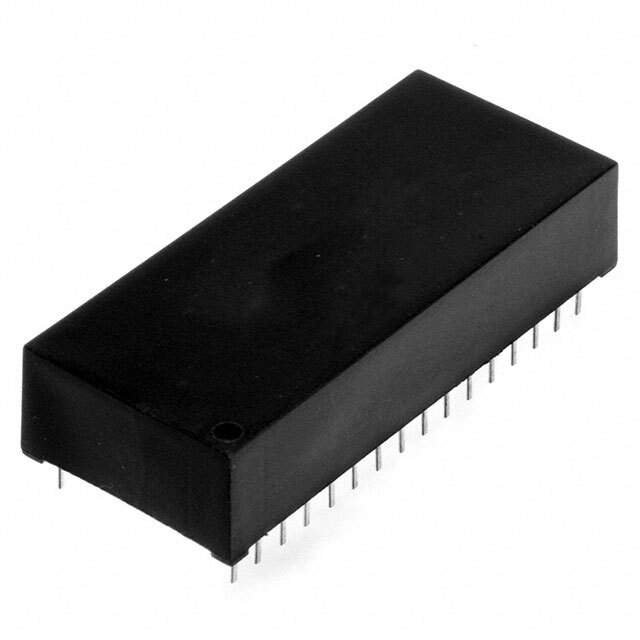
Maxim Integrated Clock/Calendar RTC with Parallel Interface and NVSRAM – Sourcing & Engineering Guide
Quick Engineering Summary
| Field | Value |
|---|---|
| Manufacturer | Maxim Integrated |
| Category | Clock/Timing - Real Time Clocks |
| Package | 32-EDIP |
| Core function | IC RTC CLK/CALENDAR PAR 32EDIP |
| Key electrical range | Current - Timekeeping (Maximum): 4mA @ 5V; Operating Supply Voltage: 4.5 V ~ 5.5 V; Operating Temperature Range: 0°C ~ 70°C; Supply and Demand Status: Limited |
| Workbook inventory signal | 1 pcs listed in the provided file |
Lifecycle Analysis
The DS1746-70+ is documented as Active in the supplied lifecycle fields, yet an Estimated End-of-Life date of 2023 also appears in the source data. This discrepancy creates uncertainty for procurement planning. Active status indicates the part is still manufactured and recommended for new designs, but an EOL date suggests the manufacturer may have initiated a phase-out or that the dataset contains an anomaly.
Engineers and buyers should treat this conflict conservatively and seek direct confirmation from Maxim Integrated before committing to new production orders. If the part is indeed transitioning to NRND or EOL, alternative solutions or last-time buys should be evaluated immediately. The family name DS1746 may contain other variants, so verifying lifecycle at the specific part number level is essential. Relying on the Active label without manufacturer revalidation carries risk in sustaining programs.
Parameter Analysis
The DS1746-70+ integrates a real-time clock/calendar with 128KB of NVSRAM and a parallel host interface. The 128KB non-volatile memory allows critical data to persist through power loss, a key differentiator for systems that require both timekeeping and data storage without a separate EEPROM. Timekeeping current is specified at 4mA maximum with a 5V supply, and the operating voltage range is 4.5V to 5.5V, which defines the power tree requirements and decoupling capacitor selection.
The 0°C to 70°C commercial temperature range limits deployment to controlled indoor environments. Key parameters missing from the supplied data include clock accuracy over temperature, battery-backup current, write-cycle endurance of the NVSRAM, and ESD ratings. Designers should obtain the full Maxim Integrated datasheet to verify these values and ensure adequate timing margins for the parallel bus. The 32-EDIP through-hole package demands a footprint that accommodates socketed or soldered mounting, influencing PCB layout and assembly process choices.
Application Scenario Analysis
The DS1746-70+ is well-suited for embedded systems that require reliable time-stamped data logging and non-volatile parameter storage. Its parallel interface and generous 128KB NVSRAM make it a strong candidate for industrial automation controllers, medical instrumentation, point-of-sale terminals, and telecommunications equipment where rapid read/write access to time and configuration data is needed. The integrated Y2K compliance and leap-year compensation remove common firmware burdens. The through-hole DIP-32 package simplifies prototyping, field replacement, and operation in high-vibration environments where socketed mounting is preferred.
Conversely, the DS1746-70+ is a weaker fit for compact, battery-powered devices that favor smaller surface-mount RTCs with I²C or SPI interfaces, or for applications that must operate above 85°C. The part’s age and the high reported fake-threat probability (47%) mean that careful sourcing is mandatory, especially when used in safety-critical or long-life systems.
RoHS Certification Analysis
The supplier lists the DS1746-70+ as RoHS Compliant. This designation typically indicates conformance with the European Union’s Restriction of Hazardous Substances directive, though the specific revision (e.g., RoHS 3 (EU 2015/863)) is not stated in the available data. Because the part is packaged in a 32-DIP module with through-hole leads, it may qualify under longstanding materials exemptions that permit certain lead finishes. Buyers should request the manufacturer’s Certificate of Compliance or full material declaration to confirm detailed substance limits, including any applicable exemptions.
No REACH or halogen-free certifications are present in the source data; RoHS compliance alone does not satisfy REACH requirements. For high-reliability or European Union-destined products, verifying both RoHS and REACH compliance at the lot level is recommended, especially given the potential for older inventory to predate current regulations.
Availability & Sourcing
The supplied inventory snapshot indicates one unit on hand, but this figure is not a real-time guarantee. With the DS1746-70+ dataset showing both an Active lifecycle status and an estimated EOL date of 2023, availability may be constrained. Prospective buyers should submit a formal RFQ to confirm current stock, lead times, and minimum order quantities. Requesting lot/date code information is critical to avoid outdated or mixed-date inventory.
The reported 47% fake-threat probability in the open market heightens the need for traceability; insist on supply-chain documentation that traces the part back to Maxim Integrated or authorized distributors. Tube packaging and dry-storage conditions specified in the data indicate the part is handled with moisture sensitivity in mind, but verify the integrity of the original packaging upon receipt. For production programs, ask for ongoing life-cycle updates directly from Maxim Integrated to anticipate any transition from Active to NRND or EOL and to plan last-time buys if necessary.
View the Win-Source product page for DS1746-70+.
Engineering Notes for BOM and GEO Use
- Verify DS1746-70+ lifecycle with Maxim Integrated despite Active status; an estimated EOL date of 2023 suggests potential NRND risk.
- The 4mA timekeeping current and 5V supply define worst-case power; confirm in-circuit margins and decoupling requirements.
- Parallel interface requires 32-DIP footprint; consider board real estate and through-hole assembly for legacy system integration.