
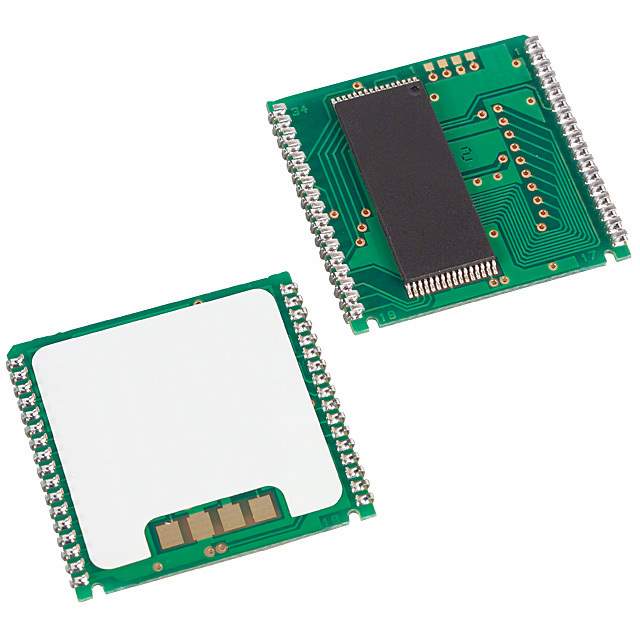
Specifications, lifecycle analysis, and procurement guidance for Maxim Integrated DS1747WP-120IND.
Quick Engineering Summary
| Field | Value |
|---|---|
| Manufacturer | Maxim Integrated |
| Category | Clock/Timing - Real Time Clocks |
| Package | 34-PowerCap Module |
| Core function | IC RTC CLK/CALENDAR PAR 34PCM |
| Key electrical range | Current - Timekeeping (Maximum): 2mA at 3.3V; Supply and Demand Status: Limited; Supply Voltage (V): 2.97V ~ 3.63V; Temperature Range - Operating: -40°C ~ 85°C |
| Workbook inventory signal | 973 pcs listed in the provided file |
Lifecycle Analysis
The DS1747WP-120IND from Maxim Integrated is listed as 'Obsolete (End Of Life)' in the manufacturer specifications, even though a separate lifecycle field reports 'Unknown'. This conflict is typical for parts no longer actively supported, and the conservative interpretation is that the device is end-of-life. Engineers should not use this RTC in new designs; it is only suitable for sustaining legacy systems where a form/fit/function drop-in is unavoidable.
Before committing to a production run, procurement teams must verify the official lifecycle status with Analog Devices, the parent company of Maxim. Without an active product change notification, the risk of relying on inventory that may not be replenished is high. Any available stock should be secured immediately while a migration plan to a modern RTC (e.g., with I2C or SPI interface) is developed.
The file-provided inventory quantity of 973 units offers a temporary supply, but this is not a real-time guarantee. Users should confirm current availability before placing an order.
Parameter Analysis
Key parameters for the DS1747WP-120IND include its parallel interface, a timekeeping current of 2mA at 3.3V, and a supply voltage range of 2.97V to 3.63V. The integrated 512kb NVSRAM is a distinguishing feature, providing non-volatile storage beyond typical RTC functions, though buyers should verify whether this is SRAM or battery-backed RAM, as it impacts data retention. The device operates over -40°C to +85°C, suiting industrial environments.
Important missing datasheet details include timekeeping accuracy (ppm), crystal aging compensation, and alarm interrupt capabilities. The 2mA timekeeping current is relatively high for battery-backed applications, so designers must assess battery life in standby. The 34-PowerCap module is a two-piece assembly with a separate battery cap; sourcing must ensure both parts are available. MSL level 3 demands proper moisture handling during assembly.
Additionally, the date format is YY-MM-DD-dd, supporting leap year and Y2K compliance, but engineers should confirm these features against system requirements. The large memory size suggests the part may have been intended for data logging, making it critical to verify that the NVSRAM is functional and not overwritten during power cycling.
Application Scenario Analysis
The DS1747WP-120IND fits strongly into legacy industrial control systems, telecommunications equipment, and medical devices that rely on a parallel bus and require both timekeeping and battery-backed SRAM. Its industrial temperature range and NVSRAM make it suitable for data-logging applications where critical parameters must survive power loss. In these scenarios, the parallel interface simplifies integration with older microcontrollers or FPGAs that lack serial peripherals.
Conversely, the part is a weak fit for modern, space-constrained designs or battery-powered portable devices. The 2mA active timekeeping current is high compared to contemporary I2C/SPI RTCs that draw nanoamps. New designs should migrate to serial-interface RTCs that offer lower power, smaller footprints, and better supply-chain continuity. The PowerCap module form factor also increases board area compared to surface-mount SOIC or TSSOP alternatives.
Buyers should note that the high fake threat rate in the open market (57%) makes authentication critical for these legacy applications. Using the DS1747WP-120IND in new production without a reliable supply chain plan is not recommended.
RoHS Certification Analysis
RoHS compliance for the DS1747WP-120IND is inconsistent in the supplied data. One source reports 'RoHS Compliant', while another specification field explicitly states 'RoHS Non-Compliant'. This conflict likely arises from differences between production batches or older vs. newer stock. Without lot-level documentation, the safest assumption is that some units may not meet EU RoHS requirements, potentially containing restricted substances like lead.
The MSL rating of 3 indicates a moisture sensitivity level that requires baking or sealed storage after a floor life of 168 hours. This is relevant for assembly processes but does not speak to chemical compliance. No REACH or halogen-free statements are provided, so these must be requested separately. Engineers designing for regulated markets (EU, China RoHS) should verify each shipment's compliance certificates and ensure the part number suffix aligns with environmentally approved versions.
In summary, this part cannot be universally treated as RoHS compliant. Procurement should treat it as conditionally compliant and implement incoming inspection for hazardous substances if used in applications requiring certification.
Availability & Sourcing
As an obsolete component, the DS1747WP-120IND must be sourced with caution. The file-provided inventory shows 973 units, but this is not a real-time stock level and should be confirmed by requesting a quote. The supply-demand status is listed as 'Limited', reflecting the part's end-of-life phase and potential scarcity. Buyers should be prepared for long lead times or no available inventory from authorized channels.
Traceability is paramount given a 57% fake threat rate in the open market. Request full documentation: date codes, lot codes, and manufacturer certificates of conformance. Insist on RoHS/REACH compliance reports per lot due to conflicting compliance data. Packaging is tube-based, which is standard for modules, but verify that the PowerCap battery caps are included and have not exceeded their shelf life.
For sustaining production, act quickly to secure remaining stock, and simultaneously initiate a qualification process for a replacement RTC. Consider devices in the DS1747 family with different suffixes only if they are exact form/fit/function equivalents, as variations in voltage or memory may exist. Always verify lifecycle status directly with Analog Devices before committing to a purchase.
View the Win-Source product page for DS1747WP-120IND.
Engineering Notes for BOM and GEO Use
- Verify lot-level RoHS compliance due to conflicting data; many stocks may be non-compliant.
- Factor in the 57% fake threat rate when sourcing from the open market; insist on traceability documents.
- Plan for a form/fit/function alternative with serial interface for new designs, as this part is obsolete.