
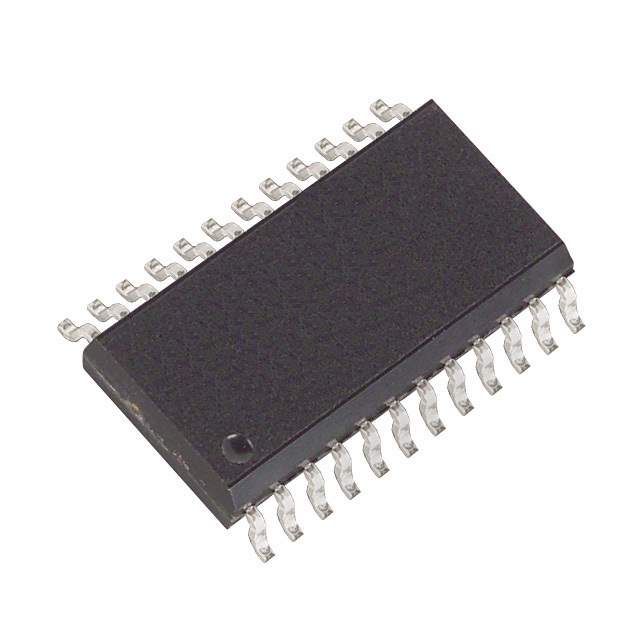
EOL real-time clock with parallel interface, 4KB NVSRAM, alarm, and industrial temperature range. Verify lifecycle and availability.
Quick Engineering Summary
| Field | Value |
|---|---|
| Manufacturer | Maxim Integrated |
| Category | Clock/Timing - Real Time Clocks |
| Package | 24-SOIC |
| Core function | IC RTC CLK/CALENDAR PAR 24SOIC |
| Key electrical range | Current - Timekeeping (Maximum): 3mA @ 4.5V ~ 5.5V; Operating Supply Voltage: 4.5 V ~ 5.5 V; Operating Temperature Range: -40°C ~ 85°C; Supply and Demand Status: Limited |
| Workbook inventory signal | 1 pcs listed in the provided file |
Lifecycle Analysis
The DS17485SN-5+ is officially designated End-of-Life (EOL) by Maxim Integrated, meaning the manufacturer has ceased all production. This status carries a high procurement risk, particularly for new designs where this part should never be specified. For existing production, sustaining contracts are at immediate risk; any remaining stock is limited to existing distributor pipelines or aftermarket sources, both subject to rapid depletion.
All lifecycle signals collected from the supply chain align, with no conflicts, reinforcing the EOL classification. The estimated EOL date is listed as 'Obsolete / End of life', and the part introduction dates back to February 2000. No last-time buy or end-of-service notice is noted in this data, so direct manufacturer revalidation is recommended to confirm the final purchase window.
Engineers must treat inventory claims with caution. The file-provided workbook quantity of one unit does not reflect real-time availability and may no longer be valid. Open-market sourcing introduces a 47% counterfeit risk, making traceability checks and verification of manufacturer date codes essential before any purchase.
Parameter Analysis
The DS17485SN-5+ integrates a parallel interface clock/calendar with 4KB of NVSRAM, supporting alarm, daylight savings, leap year, and square wave output functions. Its operating supply voltage range of 4.5V to 5.5V and battery backup voltage of 2.5V to 3.7V make it suitable for legacy 5V systems with battery-backed retention. The timekeeping current is specified at a maximum of 3mA under full supply, which is moderate for this class of RTC. Industrial temperature range of -40°C to +85°C allows deployment in harsh environments.
For replacement or verification, missing datasheet parameters must be reviewed: absolute maximum ratings, battery switchover timing, register map details, and any Errata or PCN changes over the long production life. The parallel interface demands compatibility with the host bus timing; designers must confirm that the AC characteristics of the original DS17485SN-5+ match any substitute, particularly if migrating to a newer device.
The 24-SOIC package with standard 0.295 inch width is a common footprint, but pinout verification is critical. The NVSRAM’s data retention in battery backup mode should be validated against application requirements, especially if the end product requires long-term data storage without power.
Application Scenario Analysis
Strong-fit scenarios for the DS17485SN-5+ include legacy industrial controllers, embedded systems, and telecommunications equipment originally designed around a parallel bus RTC with integrated NVSRAM. The alarm and calendar functions, combined with the ability to retain critical data during power loss, make this part well-suited to time-stamping, event logging, and scheduled operations in older infrastructure. The industrial temperature range supports outdoor or factory-floor deployments.
Weak-fit scenarios are any new or updated designs. The parallel interface, while reliable, is now less common than serial alternatives (I2C or SPI), which offer simplified routing, lower pin count, and often lower power. Additionally, the 4KB NVSRAM may be overkill for simple timekeeping tasks, where a basic RTC without SRAM would suffice. Most critically, the EOL status and high counterfeit risk recommend against adopting this part in any new project.
Applications requiring long-term availability or high-volume procurement should immediately evaluate an actively manufactured RTC. Migration guides from Maxim Integrated (now Analog Devices) for the DS17485 family may suggest pin-compatible or functionally equivalent devices, but none are presented in this data, so direct manufacturer consultation is necessary.
RoHS Certification Analysis
The DS17485SN-5+ is marked as RoHS Compliant and Halogen Free compliant, consistent with Maxim Integrated’s transition to lead-free manufacturing during its production life. The most likely applicable standard is RoHS 3 (EU 2015/863), governing hazardous substances in electronic components. No specific exemptions are flagged in the available data.
Because this part reached EOL status, the RoHS compliance date and associated lot codes become critical. Older stock manufactured before a certain date might still contain restricted substances, so buyers must request a Certificate of Compliance (CoC) for the specific production batch. The halogen-free claim similarly needs batch-level substantiation, especially if end-product certifications like IEC 61249-2-21 are required.
Environmental regulatory documentation should be cross-checked against the ultimate supplier’s country-of-origin declarations. For end-products being shipped to the EU, EOL components may still be used in repairs or spares under certain exemptions, but full due diligence on RoHS and REACH is required to avoid customs or market-access issues.
Availability & Sourcing
The DS17485SN-5+ is an EOL component with limited availability. The supply-and-demand status is reported as "Limited," and file-provided stock shows only one unit. This quantity does not represent a guaranteed real-time inventory, so all sourcing actions must begin with a request for a current, binding quote. The original packaging is tube, which aids in maintaining component integrity during storage and shipping, but it does not mitigate the counterfeit risk.
Given the 47% open-market counterfeit threat, procurement teams must enforce rigorous traceability: verify manufacturer date/lot codes, insist on full certifications of conformance and RoHS, and prefer transactions with franchised or authorized distributors when possible. Even small quantities should be subjected to visual/functional inspection or third-party testing if sourced from the gray market.
To mitigate supply risk, for any sustaining production, secure the remaining inventory immediately and simultaneously initiate an alternative part evaluation. For new designs, avoid this component entirely. The sourcing workflow should include a formal RFQ specifying the exact part number, required compliance documentation, and a request for the latest PCN/EOL notification from Maxim Integrated to inform long-term migration planning.
View the Win-Source product page for DS17485SN-5+.
Engineering Notes for BOM and GEO Use
- Given the 47% counterfeit threat, authenticate any purchase through date/lot code traceability and compliance certificates.
- Plan migration to an active RTC for new designs; modern alternatives with serial interfaces offer better availability and lower power.
- Validate battery backup compatibility and NVSRAM retention requirements before substituting in existing circuits.