
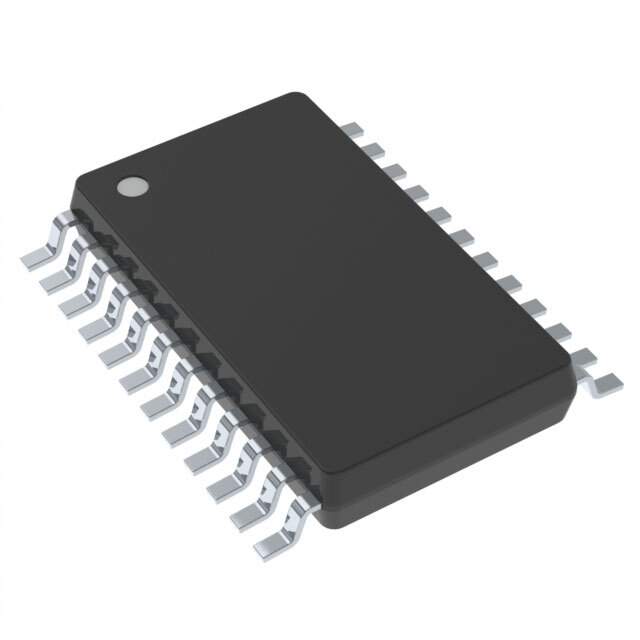
Maxim Integrated’s DS1780E is an end-of-life CPU peripheral monitor with fan control; verify inventory and plan migration.
Quick Engineering Summary
| Field | Value |
|---|---|
| Manufacturer | Maxim Integrated |
| Category | PMIC - Thermal Management |
| Package | 24-TSSOP |
| Core function | IC CPU PERIPHERAL MON 24-TSSOP |
| Key electrical range | Output Alarm: No; Output Fan: Yes; Output Type: I²C/SMBus; Sensing Temperature: -40°C ~ 125°C |
| Workbook inventory signal | 3000 pcs listed in the provided file |
Lifecycle Analysis
The DS1780E is classified as End-of-Life (EOL), indicating Maxim Integrated has discontinued its production. This status carries high procurement risk and should not be used for new design projects. For existing products that rely on this part, an immediate assessment of remaining production needs is critical to secure sufficient inventory.
All available lifecycle signals align on EOL status, with no conflicts in the supplied data. A file-provided inventory quantity of 3000 units exists, but this number is not live and may not reflect actual stock. Buyers must revalidate lifecycle details directly with Maxim Integrated or authorized distributors, as manufacturer documentation may specify last-time-buy dates or documented phase-out timelines.
Sustaining production with an EOL part demands proactive lifecycle management. Engineers should evaluate migration paths to active or NRND alternatives, considering footprint, firmware compatibility, and thermal monitoring requirements. If continued use is unavoidable, secure inventory through traceable channels and plan for long-term storage with proper ESD and moisture protection.
Parameter Analysis
Key specifications for the DS1780E include an internal temperature sensor operating from -40°C to 125°C, accuracy of ±12°C maximum, and a wide supply voltage range of 2.8V to 5.75V. The I2C/SMBus digital output provides straightforward system integration, while the fan speed control output enables active cooling management—essential for CPU peripheral monitoring in legacy designs.
The ±12°C accuracy is relatively coarse by modern standards and may limit its use in precision thermal management. Combine this with the internal sensor type, which measures junction temperature rather than ambient, and careful thermal characterization of the PCB layout is necessary. The 24-TSSOP SMD package and MSL Level 1 (Unlimited) simplify board assembly, but designers should verify thermal pad connection and airflow requirements in the actual enclosure.
Notable missing datasheet items from the provided data include ADC resolution, conversion time, temperature update rate, and fan speed control algorithm details. Engineers should obtain the full Maxim Integrated datasheet to verify these parameters and to assess derating for worst-case supply voltage and temperature extremes. Missing alarm output further suggests that system-level monitoring thresholds must be implemented in host firmware.
Application Scenario Analysis
The DS1780E was designed for legacy CPU and system monitoring in computing, networking, and industrial embedded platforms. Its strength lies in providing basic thermal oversight and fan control via I2C/SMBus in mature designs where the host processor manages alarm logic externally. Typical strong-fit scenarios include single-board computers, industrial controllers, and telecom line cards from the era when this part was active.
For new designs or applications requiring high accuracy (better than ±5°C), integrated PMBus telemetry, or multiple remote diode channels, the DS1780E is a weak fit. Modern alternatives offer narrower accuracy, higher resolution ADCs, and programmable temperature limits. Additionally, its 5V-tolerant supply voltage may be a mismatch for the latest low-voltage 1.8V core systems, necessitating level shifting.
In the context of EOL, the part is only recommended for sustaining existing assemblies where requalification of a replacement would be cost-prohibitive. For any project without an existing PCB layout or firmware library, the DS1780E should be avoided in favor of active thermal monitor ICs from the same or alternative manufacturers.
RoHS Certification Analysis
RoHS compliance for the DS1780E is uncertain based on conflicting data sources. A top-level compliance field indicates 'RoHS Compliant,' but the detailed specifications list 'RoHS Non-Compliant.' Given the EOL status, the part likely predates or was exempted from later RoHS directives, and the non-compliant flag is the more specific signal.
For applications requiring RoHS 3 (EU 2015/863) or equivalent, this conflict must be resolved before procurement. Request lot-specific compliance certificates from the supplier or perform XRF testing on samples. REACH and halogen-free status are not provided, so if those are additional requirements, they must be verified independently.
MSL Level 1 (Unlimited) confirms the device has no special moisture sensitivity, but this does not address RoHS. If RoHS compliance is eventually confirmed, standard SMT reflow profiles suitable for 24-TSSOP can be used. Until then, treat the DS1780E as potentially non-compliant and plan environmental documentation accordingly.
Availability & Sourcing
As an EOL part, the DS1780E has constrained availability and is subject to open-market risks. A file-provided quantity of 3000 units exists, but this is not a live inventory guarantee. The reported fake threat level in the open market is 55%, making traceability and verification essential.
To source the DS1780E, submit a request for quote (RFQ) to obtain current stock levels, date/lot codes, and packaging details. The original packaging is Tube, appropriate for MSL 1, but verify factory-sealed packaging to avoid moisture exposure. Request compliance documents, particularly for RoHS status, and consider third-party inspection if sourcing from non-authorized channels.
Given EOL status, prioritize securing enough inventory to cover projected production lifetime. If quantities are insufficient, accelerate migration to an alternative thermal monitor. Work with Maxim Integrated or Analog Devices (current parent company) to identify drop-in or functional equivalents, and factor requalification lead time into the supply plan.
View the Win-Source product page for DS1780E.
Engineering Notes for BOM and GEO Use
- Verify datasheet for full thermal shutdown threshold and fan speed control algorithm details.
- Due to EOL status, secure sufficient inventory for production lifespan and validate alternate sources.
- Use RFQ to request date/lot codes and RoHS compliance certificates to mitigate counterfeit risk.