
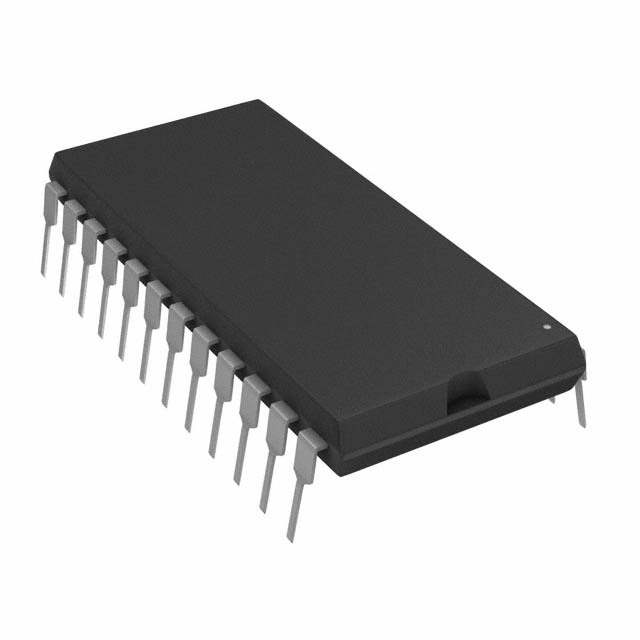
Real-Time Clock/Calendar, 24-PDIP, 2.7V–3.7V, 8KB NVSRAM
Quick Engineering Summary
| Field | Value |
|---|---|
| Manufacturer | Maxim Integrated |
| Category | Clock/Timing - Real Time Clocks |
| Package | 24-PDIP |
| Core function | IC RTC CLK/CALENDAR PAR 24DIP |
| Key electrical range | Current - Timekeeping (Max): 2mA @ 2.7V to 3.7V; Supply and Demand Status: Limited; Supply Voltage - Operating: 2.7 V to 3.7 V; Temperature Range - Operating: 0°C to 70°C |
| Workbook inventory signal | 9600 pcs listed in the provided file |
Lifecycle Analysis
The DS17885-3+ lifecycle status is reported as Unknown in the primary dataset. This creates a medium risk for procurement and design teams because no official statement from Maxim Integrated has been provided. A separate specification field within the same source lists the status as Active, which introduces conflicting signals that must be resolved before relying on this component for new production.
For sustaining engineering, the Unknown status suggests caution. If the part is indeed Active, it may remain available for years, but without manufacturer confirmation, any new design-in should be treated as provisional. Engineers should request a formal PCN (Product Change Notification) or lifecycle status certificate from Maxim Integrated or an authorized distributor. If the Active signal is correct, the DS17885-3+ may still be a viable choice for legacy systems, but the lack of clarity increases procurement risk.
Parameter Analysis
Key parameters of the DS17885-3+ include a maximum timekeeping current of 2mA at 2.7V–3.7V, which is moderate for an RTC with integrated 8KB NVSRAM. The supply voltage range of 2.7V to 3.7V and battery voltage of 2.5V to 3.7V allow direct operation from lithium coin cells in backup mode, simplifying battery management. The 24-PDIP through‑hole package suits prototyping and legacy systems but limits density compared to SMT alternatives.
The function set—alarm, daylight savings, leap year, square wave output, and 8KB NVSRAM—makes it a full‑featured RTC for embedded applications that need local timekeeping and data retention. Operating temperature range of 0°C to 70°C confines use to commercial environments. Important missing datasheet details include bus interface timing (assumed parallel from the description), clock accuracy (ppm), and NVSRAM endurance; these must be verified before integration.
Application Scenario Analysis
The DS17885-3+ is a strong fit for industrial and commercial embedded systems that require battery‑backed time and non‑volatile scratchpad memory. Legacy print servers, point‑of‑sale terminals, data loggers, and utility meters often use through‑hole RTCs with parallel interfaces to offload the main MCU. The 8KB NVSRAM can store configuration data or event logs, reducing external EEPROM needs.
Weak‑fit scenarios include high‑density SMT designs where the 24‑PDIP package is too large, or low‑power IoT nodes where a 2mA timekeeping current would shorten battery life significantly. Automotive and outdoor applications may demand wider temperature range or AEC‑Q100 qualification, which this device does not offer. Designers should also note that parallel interface RTCs consume more microcontroller pins than I²C or SPI variants, potentially limiting use in pin‑constrained designs.
RoHS Certification Analysis
The DS17885-3+ is stated as RoHS Compliant, which generally means it meets the European Union’s Restriction of Hazardous Substances directive. However, the exact version (e.g., RoHS 2 / 2011/65/EU or RoHS 3 / 2015/863) is not specified. For products exported to the EU, it is essential to confirm compliance with the latest RoHS 3 including the four additional phthalates.
Through‑hole DIP packages often contain tin‑lead plating unless certified lead‑free; the RoHS claim suggests it is lead‑free, but this should be verified on a per‑lot basis. No MSL rating is given, which is typical for through‑hole parts that are not moisture sensitive. If the device will undergo reflow soldering, confirm the peak reflow temperature tolerance, though DIP parts are usually hand‑soldered. Request a material declaration sheet when ordering to capture any RoHS exemptions that may apply.
Availability & Sourcing
According to the file-provided inventory, there are 9,600 units of DS17885-3+ available. This quantity is not guaranteed real‑time and should be confirmed with a quote. The supply and demand status is listed as Limited, which may indicate constrained availability or infrequent production runs. Packaging is Tube/Rail, suitable for manual assembly or small‑scale production.
Given the part’s unknown lifecycle and a 46% fake threat in the open market, sourcing only from authorized Maxim Integrated distributors is critical. Request date/lot codes and RoHS certificates before purchase. If the part is indeed Active, standard RFQ processes apply. If lifecycle is later found to be NRND or EOL, buyers should secure sufficient inventory while evaluating a migration path. For new designs, do not commit to production until lifecycle is clarified by the manufacturer.
View the Win-Source product page for DS17885-3+.
Engineering Notes for BOM and GEO Use
- Verify lifecycle status directly with Maxim Integrated before committing to new designs; conflicting data shows both Active and Unknown.
- At 2mA max timekeeping current and through-hole 24-PDIP package, ensure thermal and mechanical fit in legacy drop-in replacements.
- With a 46% counterfeit threat in the open market, source only from authorized distributors and require traceability documentation.