
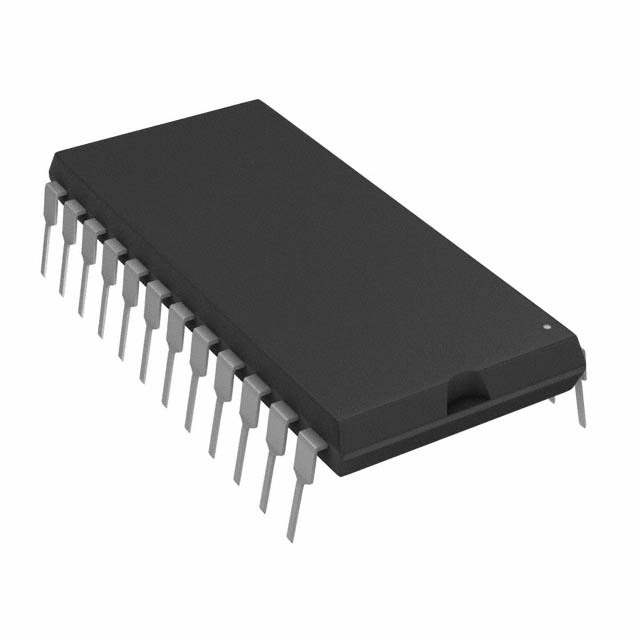
End-of-Life RTC with Alarm and 8KB NVSRAM
Quick Engineering Summary
| Field | Value |
|---|---|
| Manufacturer | Maxim Integrated |
| Category | Clock/Timing - Real Time Clocks |
| Package | 24-PDIP |
| Core function | IC RTC CLK/CALENDAR PAR 24DIP |
| Key electrical range | Current - Timekeeping (Max): 3mA @ 4.5V to 5.5V; Supply and Demand Status: Limited; Supply Voltage - Operating: 4.5 V to 5.5 V; Temperature Range - Operating: 0°C to 70°C |
| Workbook inventory signal | 54 pcs listed in the provided file |
Lifecycle Analysis
The DS17885-5+ from Maxim Integrated is currently listed as End-of-Life (EOL). This status indicates that the manufacturer has discontinued production, and no new units are being manufactured. For new designs, this part is not recommended, and engineers should immediately evaluate alternative real-time clock solutions to avoid supply chain disruptions in future production runs.
For existing products that use the DS17885-5+, procurement teams should treat this as a high-risk component. We strongly advise securing remaining inventory through last-time-buy agreements while verifying available stock levels. The file-provided quantity of 54 units gives a snapshot, but real-time availability must be confirmed with authorized distributors. Additionally, any remaining stock should be carefully validated for authenticity, as the open market carries a reported counterfeit threat level of 42 percent.
Planning for migration to a drop-in or functional equivalent is critical. Contact Maxim Integrated (now Analog Devices) for official EOL notices, product change notifications (PCNs), and any recommended replacement part numbers. Without a proactive strategy, sustaining production will become increasingly difficult as supply diminishes.
Parameter Analysis
Key parameters of the DS17885-5+ include an operating voltage range of 4.5 V to 5.5 V and a battery backup voltage of 2.5 V to 3.7 V. This allows the RTC to maintain time and preserve the 8KB NVSRAM contents during main power loss, making it suitable for applications that require reliable data retention. The maximum timekeeping current of 3 mA at nominal supply is moderate and should be factored into power budgets, especially for thermally constrained designs.
The part features an integrated alarm, daylight savings adjustment, leap year compensation, and a square wave output, which are essential for scheduling tasks and generating periodic interrupts in embedded systems. The parallel interface simplifies connection to legacy microcontrollers but may require more GPIO lines compared to serial alternatives. Packaging is a 24-pin PDIP through-hole device, which is ideal for prototyping or products where wave soldering is used, though it may not be compatible with modern surface-mount reflow processes.
Important parameters not fully detailed in the provided data include clock accuracy (typically dependent on an external crystal), temperature compensation, and timekeeping current across temperature extremes. Engineers should consult the full datasheet for I2C vs parallel timing diagrams, capacitor selection for the crystal, and storage of NVRAM data during battery switchover. The commercial temperature range of 0 °C to 70 °C restricts use to controlled environments.
Application Scenario Analysis
The DS17885-5+ is well-suited for embedded systems that require a full-featured real-time clock with integrated non-volatile memory. Strong-fit applications include industrial controllers, medical devices, utility meters, and point-of-sale terminals where logging time-stamped events and retaining configuration data during power cycles is critical. The 8KB NVSRAM can store system parameters, error logs, or calibration data, reducing the need for an additional EEPROM.
Less optimal scenarios involve space-constrained or battery-powered portable devices. The through-hole DIP package demands more board area and is incompatible with compact SMT assembly. Additionally, while the RTC itself has a battery backup input, the main timekeeping current of 3 mA at 5 V may be too high for coin-cell-powered designs that rely solely on the backup battery for extended periods. The commercial temperature range also excludes outdoor or automotive under-hood applications without proper environmental protection.
Engineers considering the DS17885-5+ for new designs should evaluate if a surface-mount alternative with serial interface and lower power consumption, such as I2C-based RTCs, would better meet modern size and efficiency requirements. For retrofit or legacy designs, however, this part remains a practical drop-in where the DIP footprint and parallel bus are already established.
RoHS Certification Analysis
The DS17885-5+ is designated as RoHS Compliant, which means it adheres to the European Union's Restriction of Hazardous Substances directive. This compliance typically covers lead-free terminations and the absence of substances such as mercury, cadmium, hexavalent chromium, and certain brominated flame retardants above permissible thresholds. While the specific RoHS revision is not stated, most current components meet RoHS 3 (EU 2015/863) standards.
Despite this compliance marking, procurement teams should request a certificate of conformance or full material declaration from Maxim Integrated or authorized distributors when purchasing this EOL part. Lot-level verification is important because older stock may pre-date current RoHS requirements, and inconsistencies can arise in the open market.
It is also worth noting that RoHS compliance does not automatically imply REACH or halogen-free status; those regulations require separate documentation. If these certifications are necessary for the end application, they should be confirmed explicitly. For the DS17885-5+, no additional environmental data such as MSL (Moisture Sensitivity Level) is provided; the DIP package generally has low moisture sensitivity, but verification is recommended for humid storage conditions.
Availability & Sourcing
With the DS17885-5+ marked End-of-Life, sourcing this part demands immediate action and careful vetting. The file indicates a limited quantity of 54 units, but this is not guaranteed real-time stock. Purchasers should contact authorized distributors or request a quote through the Win Source platform to obtain current availability, with the understanding that supply may dry up quickly.
Due to the 42 percent reported counterfeit risk in the open market, it is crucial to buy from reputable sources and insist on traceability documentation, including date and lot codes. The part is supplied in tube/rail packaging, which is standard for DIP components, but buyers should ensure proper ESD and moisture handling as per the storage condition of a dry cabinet with humidity protection.
For ongoing production, securing a last-time buy is the safest approach. Simultaneously, begin qualifying an alternative RTC that matches the parallel interface and memory requirements if direct replacement is not offered by Maxim. Because the DS17885-5+ is already obsolete, any inventory should be preserved for critical service or repair needs. Request a quote and verify RoHS compliance certificates with each shipment to avoid regulatory issues.
View the Win-Source product page for DS17885-5+.
Engineering Notes for BOM and GEO Use
- Secure inventory through last-time buy; the DS17885-5+ is no longer manufactured.
- Verify clock accuracy and crystal requirements in the datasheet; parallel interface may demand extra GPIO.
- High counterfeit risk (42%) in open market; insist on traceable lot codes and RoHS certificates.