
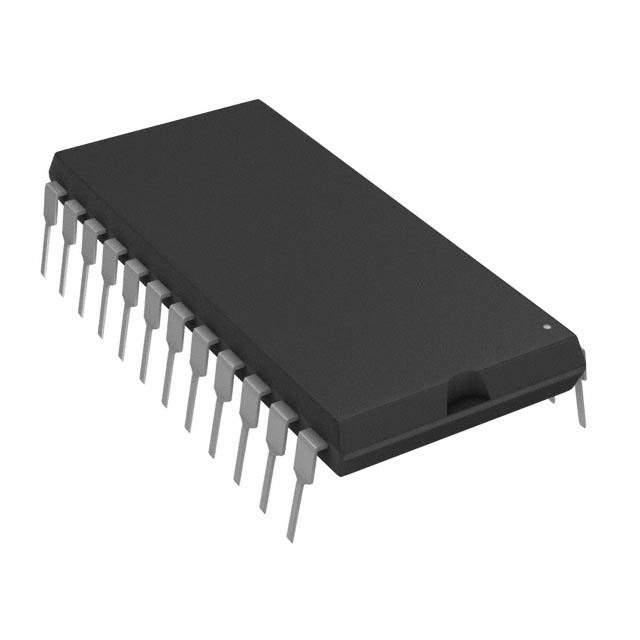
8KB parallel RTC in 24-DIP through‑hole package — Obsolete with limited inventory and high counterfeit risk
Quick Engineering Summary
| Field | Value |
|---|---|
| Manufacturer | Maxim Integrated |
| Category | Clock/Timing - Real Time Clocks |
| Package | 24-PDIP |
| Core function | IC RTC CLK/CALENDAR PAR 24DIP |
| Key electrical range | Operating Temperature Range: 0°C ~ 70°C; Supply and Demand Status: Limited |
| Workbook inventory signal | 54 pcs listed in the provided file |
Lifecycle Analysis
The DS17885-5 carries conflicting lifecycle information. While the primary lifecycle object reports an Unknown status, the Parts Status field explicitly marks the device as Obsolete. For engineering and procurement planning, the conservative interpretation is Discontinued. This means the part is no longer recommended for new designs and may have already ceased production.
For programs that still depend on the DS17885-5, the immediate priority is to validate the lifecycle with Maxim Integrated. An Obsolete designation often implies that last‑time buy windows have closed, and any remaining channel inventory is the final supply. Without an official discontinuation notice, teams risk discovering an unrecoverable shortage late in the production cycle. The file‑provided quantity of 54 units suggests some residual stock, but this is not a real‑time guarantee.
Engineers should treat this part as a high‑risk procurement item. Every project still using the DS17885-5 should initiate a replacement qualification process, unless the manufacturer can confirm extended availability. Procurement should only purchase from authorized channels and insist on date/lot‑code traceability to avoid obsolete, mixed‑date, or counterfeit material.
Parameter Analysis
The supplied specifications highlight a 24‑PDIP through‑hole package, an 8KB parallel RTC architecture, and a commercial temperature range of 0°C to 70°C. The parallel interface and through‑hole mounting are key differentiators: they suit legacy industrial controllers and embedded systems that rely on byte‑wide bus access rather than modern serial protocols. The MSL Level 1 rating indicates unlimited floor life before soldering, which simplifies assembly logistics.
However, many critical electrical and timing parameters are missing from the source data. Without the full Maxim Integrated datasheet, engineers cannot confirm supply voltage, backup current, bus timing margins, or clock accuracy over temperature. These gaps are particularly important for an Obsolete part, because no errata or application revisions are likely to emerge. If the DS17885-5 will be used in a sustaining build, the design team must obtain the original datasheet to verify that the device still meets the required performance within the system’s voltage and timing budget.
Thermal and derating analysis also requires complete specifications. The 0–70°C operating range is narrow by modern standards, so any cabinet or enclosure thermal rise must be assessed. Missing details such as battery‑backup switchover voltage and timekeeping current directly influence the backup capacitor or battery sizing. Procurement teams should treat any parameter not explicitly confirmed by a manufacturer document as a verification item before committing to a production buy.
Application Scenario Analysis
The DS17885-5 is a parallel‑bus real‑time clock with 8KB of embedded non‑volatile memory, making it a strong fit for legacy embedded systems that already map an RTC into the parallel address space. Typical examples include older industrial single‑board computers, telecom line cards, and data‑acquisition platforms that were designed in the 1990s or early 2000s and still require DIP‑socketed RTCs. The through‑hole PDIP package also aids bench‑top prototyping and field‑replaceable designs where surface‑mount rework is impractical.
Conversely, the DS17885-5 is a weak fit for modern compact and portable designs. Its large 24‑pin DIP footprint consumes significant board area, and the parallel interface requires more GPIO lines than an I2C or SPI alternative. In new designs, engineers would typically select a smaller surface‑mount RTC with lower power consumption and integrated crystal options. The commercial temperature range also limits its use in outdoor or automotive environments.
Given its Obsolete status, the primary application scenario today is sustaining production—maintaining existing fielded equipment where a form‑fit‑function replacement is mandatory. In such cases, the DS17885-5 serves as an exact drop‑in, avoiding firmware or layout changes. Any deviation from this scenario should trigger an immediate redesign with an active Maxim Integrated or third‑party alternative.
RoHS Certification Analysis
The DS17885-5 is marked as RoHS Compliant in the supplied data, and the additional REACH Unaffected status indicates that no Substances of Very High Concern above the 0.1 % threshold are present. For an Obsolete part, these certifications are typically based on the original manufacturing declaration. While the supply‑chain data suggest the device meets RoHS 3 (EU 2015/863), the absence of a downloadable certificate means that lot‑level compliance cannot be guaranteed without additional documentation.
From a procurement perspective, RoHS compliance for the DS17885-5 should be revalidated against the specific date and lot code of any stock being purchased. Older inventory, even if originally compliant, may fall under earlier RoHS exemptions that have since expired. The MSL Level 1 classification is unrelated to RoHS but supports standard storage without a nitrogen cabinet, which simplifies handling for low‑volume sustaining builds.
Where regulatory documentation is required for import or end‑customer deliverables, buyers should request the full RoHS certificate from the distributor. The REACH Unaffected note is supplementary and does not replace a formal RoHS declaration. If the DS17885-5 is intended for EU market products, confirming both RoHS and REACH at the batch level is a best practice to avoid customs delays or compliance findings.
Availability & Sourcing
The DS17885-5 is an Obsolete Maxim Integrated part with limited residual availability. The file‑provided inventory indicates 54 units, but this is a snapshot and not a real‑time guarantee. Combined with a 91 % fake‑threat rating in the open market, sourcing the DS17885-5 demands rigorous authentication and traceability checks. Engineers and buyers must treat any offer that appears too plentiful or too low‑cost with extreme caution.
For qualified programs still requiring this RTC, the recommended workflow is: request a quote from a supplier that can provide the original manufacturer’s date code, lot code, and RoHS certificate. If the quoted stock does not align with the project’s remaining lifetime, consider a last‑time buy of all available authentic units. Because the part is through‑hole and socket‑compatible, field replacement may be viable—but only if the inventory can be verified.
As the DS17885-5 is no longer in production, new designs should not incorporate it. Instead, engineers should evaluate pin‑compatible or functionally equivalent RTCs from Maxim Integrated or Analog Devices that remain active. Procurement teams should request a quote for the available DS17885-5 stock now to secure what remains while a migration plan is executed. Without proactive sourcing, the lead‑time for an Obsolete part can become indefinite, leading to production line stops.
View the Win-Source product page for DS17885-5.
Engineering Notes for BOM and GEO Use
- Verify the lifecycle status directly with Maxim Integrated; the Obsolete specification overrides any unconfirmed active signals.
- Prioritize authorized or traceable sources due to the 91 % fake‑threat score; lot‑code verification is critical.
- Validate missing datasheet parameters (supply voltage, timekeeping current, bus timing) before qualifying the DS17885‑5 in a sustaining design.