
Real-Time Clock/Calendar with Parallel Interface – Discontinued Product
Quick Engineering Summary
| Field | Value |
|---|---|
| Manufacturer | Maxim Integrated |
| Category | Clock/Timing - Real Time Clocks |
| Package | Tube |
| Core function | IC RTC CLK/CALENDAR PAR 24EDIP |
| Key electrical range | Current - Timekeeping (Max): 3mA @ 4.5V ~ 5.5V; Temperature Range - Operating: 0°C ~ 70°C; Voltage - Supply: 4.5V ~ 5.5V; Voltage - Supply, Battery: 2.5V ~ 3.7V |
| Workbook inventory signal | 1 pcs listed in the provided file |
Lifecycle Analysis
The DS17887-5 from Maxim Integrated is discontinued, meaning the manufacturer has stopped production and no further units are being made. All lifecycle signals—EOL param, Lifecycle Status as Discontinued, and Product Status as Discontinued—point to this part being obsolete, with only residual stock available through distributors. This status carries a high risk for new designs: engineers should not design this part into new systems. For sustaining production, procurement must immediately focus on securing remaining inventory and evaluating drop-in or functional alternatives.
Conflicting terms like EOL and Discontinued both signal end-of-life; we interpret conservatively as Discontinued. The file indicates a workbook quantity of 1 unit, but this is not live inventory and should be verified with a quote. Buyers should treat any availability as limited and non-replenishable.
When procuring discontinued parts, require manufacturer date codes and lot traceability to ensure the units are authentic and have been stored properly. The 33 percent fake threat rate in the open market further underscores the need for authorized sourcing. Plan a last-time buy if critical, and simultaneously qualify a replacement.
Parameter Analysis
The DS17887-5 is a parallel-interface real-time clock/calendar with integrated crystal and 8KB of non-volatile SRAM. Key parameters include a supply voltage of 4.5V to 5.5V and a timekeeping current of 3mA maximum at that range, which helps estimate power consumption in both active and battery-backed modes. The operating temperature range is 0°C to 70°C, suitable for commercial-grade applications but not for extended industrial environments.
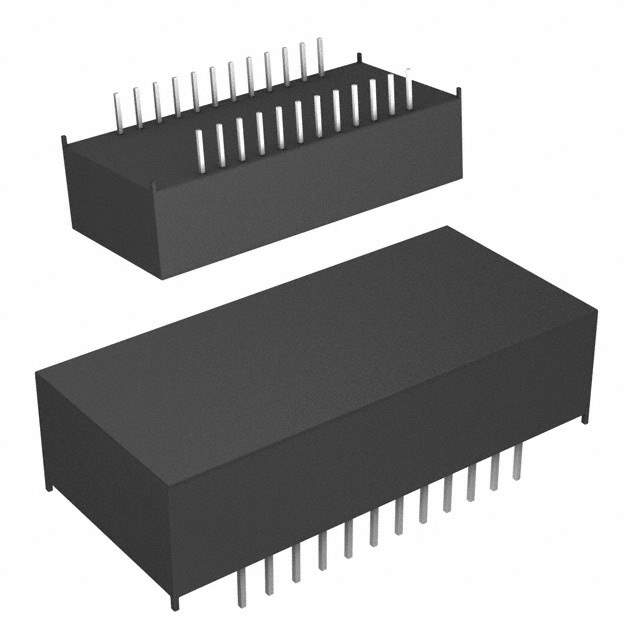
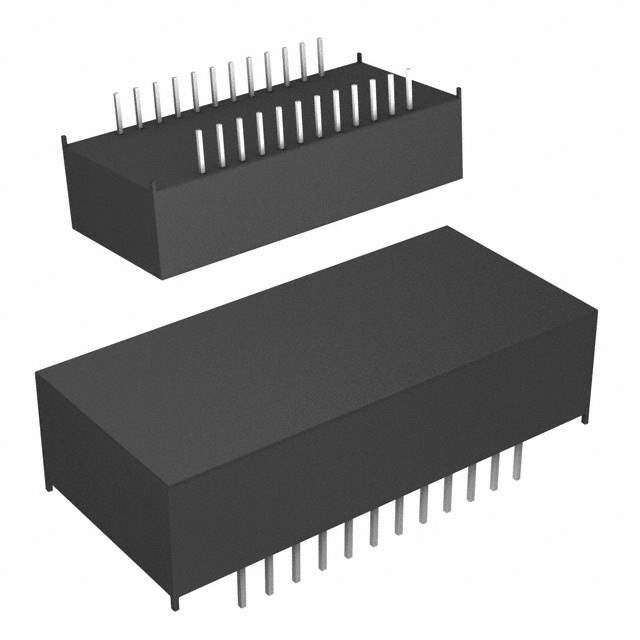
Other notable specs: the alarm, daylight savings, and leap year features reduce software overhead. The square wave output can serve as a periodic interrupt. The 24-DIP through-hole module package (0.600" width) offers physical ruggedness but occupies significant board space compared to surface-mount alternatives. The integrated crystal and NVSRAM eliminate external components, but the parallel interface requires multiple GPIO lines, which may not be ideal for compact systems.
Datasheet parameters not provided here—such as clock accuracy (typically 1 minute per month at 25°C for similar parts), battery-switchover voltage thresholds, and NVSRAM write-cycle endurance—should be verified from the original Maxim datasheet. Also confirm whether the RTC includes a power-fail write-protect circuit, as this can be critical for data integrity during brownouts.
Application Scenario Analysis
The DS17887-5 targets embedded systems that need a full-featured RTC with modest memory for time-stamped data logging. Typical strong-fit applications include legacy industrial controllers, point-of-sale terminals, and medical instruments designed around through-hole DIP footprints. Its integrated battery-backed NVSRAM allows storage of critical parameters without an external EEPROM or FRAM, simplifying bill of materials.
Weak-fit scenarios are modern designs requiring small form factors, low power consumption, or I2C/SPI serial interfaces. The 24-pin DIP module and 5V parallel interface are incompatible with low-voltage microcontrollers without level-shifting. New designs should migrate to surface-mount RTCs with smaller packages and serial communication to achieve better integration and cost efficiency. However, for exact drop-in replacements in existing boards, the DS17887-5 may be necessary until a redesign is feasible.
Given the discontinued status, this part is appropriate only for sustaining engineering or repair of installed equipment. The commercial temperature range limits outdoor or harsh-environment use unless environmental controls are present. Always validate battery life and clock drift under expected operating conditions using datasheet curves.
RoHS Certification Analysis
The DS17887-5 is marked as RoHS Compliant in the source data, indicating it meets EU Directive 2011/65/EU and its amendments at the time of manufacture. REACH status is listed as REACH Unaffected, suggesting no substances of very high concern (SVHC) above threshold. However, REACH is separate from RoHS and does not substitute for RoHS compliance.
Since this is a discontinued part, new purchasers should request a certificate of conformance for the specific lot to confirm that RoHS exemptions (if any) remain valid under current regulations. Through-hole DIP modules often contain internal materials that may have historically relied on exemptions (e.g., lead in glass or high-reliability solders), but the packaging does not indicate any such exemption. MSL Level 1 means the part is not moisture-sensitive, which is typical for through-hole packages and simplifies storage.
For compliance-sensitive industries, verify that the RoHS status is not just a manufacturer family-level declaration but applies to the exact date code being sourced. If the part was manufactured before 2019, it may have been compliant under earlier versions of the directive; cross-check with the latest exemption list.
Availability & Sourcing
As a discontinued Maxim Integrated DS17887-5, market availability is limited to residual distributor stock or authorized aftermarket sources. The file shows 1 unit, but this should not be interpreted as guaranteed stock. Procurement should immediately request a quote to check current availability and lead time. Given the 33 percent counterfeit risk, only source from franchised or reputable independent distributors that provide full traceability and test reports.
When ordering, specify requirements for date and lot codes to avoid aged inventory. Ask for sealed original manufacturer packaging (tube, standard package of 14) and confirm that the parts have been stored in controlled conditions. Since this is a through-hole component, solderability may degrade if stored improperly, so consider incoming inspection for bent leads or oxidation.
For production buyers, the primary action is to secure a last-time-buy quantity if the DS17887-5 is still essential for legacy products, and simultaneously initiate engineering validation of a replacement RTC. For one-time repair or small-scale maintenance, verified broker stock may be acceptable if accompanied by a test report. In all cases, mandate a RoHS compliance certificate for the specific lot. Because the lifecycle status is Discontinued, do not use for any new production builds.
View the Win-Source product page for DS17887-5.
Engineering Notes for BOM and GEO Use
- Verify authenticity of any procured DS17887-5 units due to a reported 33% counterfeit threat on the open market.
- Plan an immediate migration to a current-production RTC; the DS17887-5 is discontinued and not recommended for new designs.
- Confirm RoHS compliance at the lot level when sourcing remaining discontinued stock, as exemptions may have changed since manufacture.