
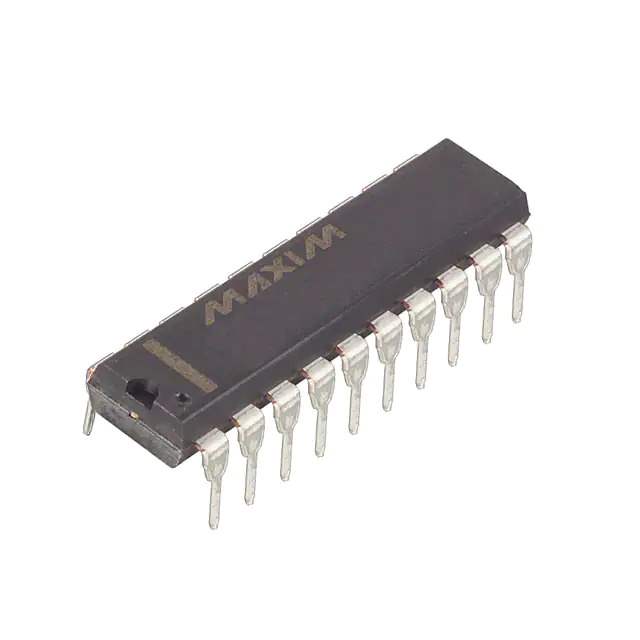
Maxim Integrated DS1802: Discontinued 45kOhm 65-Tap Logarithmic Potentiometer – Sourcing & Specs
Quick Engineering Summary
| Field | Value |
|---|---|
| Manufacturer | Maxim Integrated |
| Category | Data Acquisition - Digital Potentiometers |
| Package | Tube |
| Core function | IC DGTL POT 45KOHM 65TAP 20DIP |
| Key electrical range | Resistance (Ohms): 45k; Resistance - Wiper (Ohms) (Typ): 400; Temperature Coefficient (Typ): 750ppm/°C; Temperature Range - Operating: -40°C ~ 85°C |
| Workbook inventory signal | 8300 pcs listed in the provided file |
Lifecycle Analysis
The DS1802 from Maxim Integrated has been officially discontinued, with all lifecycle signals agreeing on EOL or discontinued status. No last-time-buy or end-of-life transition period is indicated in the available data. This status means the part should not be considered for new designs, and existing designs should initiate a migration plan immediately to avoid production disruptions.
Engineers must revalidate the discontinuation notice directly with Maxim Integrated or an authorized distributor, as lifecycle information can sometimes lag. The high risk of obsolescence also means that any remaining inventory may be subject to rapid depletion. The provided workbook quantity of 8,300 units suggests some stock is still available, but this number cannot be guaranteed in real time and must be verified before commitment.
For production uses, it is critical to secure parts from reputable sources to mitigate counterfeit risk, which is estimated at 62% in the open market. Request quote with full traceability documentation, including date and lot codes, and consider stocking sufficient buffer inventory to cover the product's remaining lifecycle.
Parameter Analysis
The DS1802 is a dual-channel digital potentiometer with 65 taps per channel and a nominal end-to-end resistance of 45 kΩ. Its logarithmic taper is tailored for audio volume control, where human perception of loudness is logarithmic. The wiper resistance of 400 Ω typical must be accounted for when driving low-impedance loads. Supply voltage ranging from 2.7 V to 5.5 V allows operation in both 3.3 V and 5 V systems.
The temperature coefficient of 750 ppm/°C is relatively high, meaning the resistance value can shift significantly with temperature changes; this limits precision applications. Tolerance of ±20% further reduces absolute accuracy but is acceptable in many volume control roles. The volatile memory type means the wiper position resets on power loss, requiring re-initialization on startup. The pushbutton and serial interface simplifies control but the exact protocol timing is not detailed here; designers should review the original datasheet for timing diagrams and command structure.
Key missing specifications that influence design include bandwidth, total harmonic distortion, noise floor, and digital interface voltage thresholds. These parameters are essential for high-fidelity audio paths. Potential users must obtain the full Maxim Integrated DS1802 datasheet to verify these before committing to a design. The through-hole DIP-20 package suits prototyping and legacy boards but is not suitable for modern high-density surface-mount designs.
Application Scenario Analysis
The DS1802 is ideally suited for stereo audio volume control applications. Its dual logarithmic taper channels match human hearing response, and the zero-cross sense feature minimizes audible clicks when changing volume by waiting for the signal zero crossing. The mute function allows convenient audio muting, and the cascade pin enables linking multiple devices for multichannel systems. The pushbutton interface supports simple up/down control, making it easy to implement in consumer equipment.
However, the 65-tap resolution limits fine volume adjustment; for many audio applications this is sufficient, but high-end systems may need more steps. The ±20% resistance tolerance can cause channel-to-channel gain mismatch, which may require calibration or matched parts. The volatile memory means volume settings are lost at power-off, so a default or stored setting must be reloaded from a microcontroller each power cycle.
Weak-fit scenarios include precision sensor calibration, digital gain control in measurement systems, or any application requiring non-volatile wiper storage, tight resistance tolerance, or low temperature drift. The through-hole DIP-20 package also precludes its use in compact, portable designs. For new projects, considering a modern surface-mount non-volatile digital potentiometer from Maxim Integrated or competitors would be more appropriate.
RoHS Certification Analysis
The DS1802 is listed as RoHS Compliant according to the provided data. This suggests conformity with the EU Restriction of Hazardous Substances directive, likely the current RoHS 3 (EU 2015/863). However, the exact certification standard and any applicable exemptions are not detailed in the source. The REACH status is also indicated as REACH Unaffected, which is a separate regulation; REACH compliance does not guarantee RoHS compliance.
For procurement, it is essential to request the manufacturer's RoHS certificate or declaration of conformity for the specific lot being purchased. Since the part is discontinued, existing stock may have been manufactured years ago, potentially under earlier RoHS versions. The MSL (Moisture Sensitivity Level) rating of 1 (Unlimited) indicates no special moisture handling is required for the through-hole DIP package, simplifying storage and assembly.
Given the 62% counterfeit risk, verifying RoHS compliance documentation becomes part of the authenticity process. Buyers should ensure that any sourced parts come with proper paperwork confirming both RoHS and REACH compliance for the date of manufacture. This is particularly important for products being exported to the EU or other regulated markets.
Availability & Sourcing
The DS1802 is a discontinued part, so availability is limited and subject to rapid change. The source workbook indicates a stock quantity of 8,300 units, but this figure is not guaranteed and may differ from real-time inventory. To obtain current pricing and stock levels, you must request a quote through the platform. Do not rely on stale inventory data without confirmation.
When sourcing discontinued components, prioritize authorized distributors or reputable independent suppliers that can provide full traceability documentation. Request date and lot codes to ensure parts are not from very old or improperly stored batches. Also, insist on certificates of conformance for RoHS and verification of manufacturer's discontinuation notice to confirm the part was procured before the end-of-life date. The high counterfeit threat (62%) in the open market makes authentication critical; consider using a reputable test lab if sourcing from non-authorized channels.
Packaging is specified as tube for the DIP-20, but verify that the parts are in original tube packaging to avoid handling damage. For existing production, evaluate the sufficiency of remaining stock to cover the product's lifetime and consider a last-time-buy if the manufacturer still accepts orders. If no direct source is available, work with a broker who specializes in obsolete components and can offer guarantees against counterfeits. Always validate the lifecycle status with Maxim Integrated before committing to a purchase.
View the Win-Source product page for DS1802.
Engineering Notes for BOM and GEO Use
- Verify final manufacturer discontinuation notice and last-time-buy dates before designing in DS1802.
- High counterfeit risk (62% open market threat) necessitates authorized sourcing or rigorous testing.
- Logarithmic taper and zero-cross sense feature suit audio volume control, but taper tolerance (±20%) may affect channel matching.