
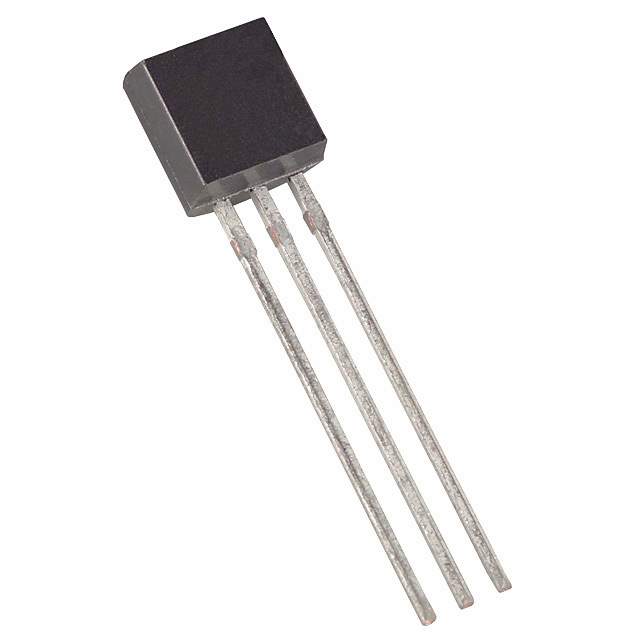
EconoReset series, Maxim Integrated, EOL status. Verify availability and compliance.
Quick Engineering Summary
| Field | Value |
|---|---|
| Manufacturer | Maxim Integrated |
| Category | PMIC - Supervisors |
| Package | TO-92-3 |
| Core function | IC SUPERVISOR 1 CHANNEL TO92-3 |
| Key electrical range | Operating Temperature Range: -40°C ~ 85°C (TA); Supply and Demand Status: Balance |
| Workbook inventory signal | 3080 pcs listed in the provided file |
Lifecycle Analysis
The DS1811-10 from Maxim Integrated is classified as End-of-Life (EOL), meaning the manufacturer has discontinued production. All available lifecycle signals—including the part status marked as Obsolete and lifecycle flag EOL—align without conflict, confirming that no new devices will be manufactured. This places the component at high procurement risk, particularly for new design projects.
Engineers must immediately avoid using the DS1811-10 in new designs. For existing products, the priority is to secure remaining inventory and evaluate a last-time-buy (LTB) if still offered by Maxim Integrated or its authorized distributors. The datasheet indicates the part belongs to the EconoReset series, which may have alternative active devices in other packages or thresholds, but no direct replacements are provided here.
A file-provided workbook quantity of 3080 units exists, but this figure is not a real-time inventory guarantee. Buyers should request current stock levels and verify manufacturer lifecycle status directly. Given the high counterfeit threat rate of 92% in the open market, any source must be rigorously authenticated, with lot codes and date codes cross-checked against authorized distribution records. The conservative stance for any EOL component is to verify discontinuance notices and plan for obsolescence now, as lead times for remaining stock may be volatile.
Parameter Analysis
The DS1811-10 is a simple reset supervisor IC housed in a 3-pin TO-92 through-hole package. It monitors a single supply voltage and asserts an active-low reset signal when the voltage drops below the fixed threshold of 4.35V. The output is open-drain, meaning an external pull-up resistor is required to establish a logic high in the de-asserted state. The reset timeout is specified as a minimum of 100ms, providing adequate time for system stabilization after power recovery.
These parameters are critical for system timing and reliability. The 4.35V threshold must match the nominal rail of the monitored supply; tolerance and hysteresis values are not provided in the available snippet, so engineers must consult the original Maxim data sheet for accuracy, temperature drift, and threshold variations. The operating temperature range of –40°C to +85°C (TA) suits industrial and automotive applications, but derating and thermal considerations should be based on worst-case ambient.
Key missing details include supply voltage range, quiescent current, reset comparator propagation delay, and any undervoltage lockout features. The part is marked as EAR99 for export control and HTSUS 8542.39.0001 for customs, which are typical for such commodity ICs. Its MSL Level 1 (Unlimited) indicates no special moisture-handling requirements, simplifying storage and board assembly. However, the TO-92 through-hole mounting limits use in high-density PCBs, reinforcing that this is a legacy footprint.
Application Scenario Analysis
Given its function as a simple voltage supervisor, the DS1811-10 fits legacy applications that rely on a single reset monitor with a fixed threshold. Typical use cases include brown-out detection for microcontrollers, power-on reset circuits in industrial control boards, and reset sequencing in legacy automotive modules where the through-hole package is still acceptable. The operating temperature range supports moderate-environment electronics, but without AEC-Q100 qualification, dedicated automotive applications should verify suitability.
The EconoReset series from which the DS1811-10 originates was designed for cost-sensitive, low-complexity designs. Consequently, it is poorly suited for modern high-density designs that demand SMD packaging and integrated watchdog or manual reset inputs. The open-drain output with active-low reset is standard, making it a straightforward drop‑in for many existing TO‑92‑footprint circuits, but only where the 4.35V threshold and 100ms minimum timeout match the system requirements.
Because the part is EOL, even legacy products must weigh the risk of using a discontinued device. In applications where the supervisor is safety‑critical or long‑lifetime, migration to an active alternative in a more modern package is advisable. Designers should inventory lifetime buys and test any potential substitutes under worst‑case voltage and temperature conditions to ensure equivalent reset timing and threshold accuracy. No direct pin‑compatible replacement is indicated, so board layout changes may be required in future revisions.
RoHS Certification Analysis
The DS1811-10 is marked as RoHS Compliant, indicating it meets the requirements of the European Union’s Restriction of Hazardous Substances directive. However, the specific directive version (e.g., 2011/65/EU or 2015/863) is not listed in the provided data. For procurement, it is safer to assume compliance with the earlier 2011/65/EU standard, as parts certified after 2013 would typically also be REACH unaffected—a status that is confirmed for this device.
The part also carries an MSL rating of 1 (Unlimited), meaning it has no known moisture sensitivity and does not require dry-pack storage, which eases handling logistics. No exemptions are noted in the supplied specifications, but lot‑level verification is essential, especially for an EOL part. RoHS certificates can expire or be revoked if manufacturing sites change, and family‑level compliance statements may not cover all date codes.
Buyers should request a current RoHS certificate of compliance (CoC) from the seller when procuring remaining DS1811-10 stock. REACH unaffected means the part contains no substances of very high concern (SVHC) in concentrations above the threshold, but this is separate from RoHS and not a substitute. Since the counterfeit threat is high, counterfeit parts may falsely claim RoHS compliance, further underscoring the need for authenticated sourcing.
Availability & Sourcing
Procurement of the DS1811-10 must account for its EOL status and elevated counterfeit risk. The open market shows a 92% fake threat rate, making unauthorized or undocumented channels highly unreliable. Win Source lists a workbook quantity of 3080 units, but this is a snapshot and not guaranteed. Buyers should treat this as a reference point and initiate a quote request to confirm real‑time availability, date/lot codes, and packaging.
The part ships in bulk packaging, typical for TO‑92 devices, and no minimum order quantity constraints are noted. However, given the EOL, available stock may be fragmented across brokers. To mitigate risk, request full chain‑of‑custody documentation and test a sample batch for electrical performance—especially threshold voltage and reset timeout—before committing to a volume purchase.
Authorized distributors for Maxim Integrated (now Analog Devices) may hold residual inventory, though it is likely exhausted at this point. Suppliers should be vetted against the manufacturer’s certified partner list. The recommended workflow is: request a quote that includes compliance and traceability documents; verify lifecycle status with the manufacturer; and confirm that the RoHS certificate is not expired. For future production, immediate migration planning is critical. Use the remaining stock only to cover limited ongoing needs, and do not introduce DS1811-10 into any new design. Insist on authentication protocols such as X‑ray inspection or decapsulation if sourcing from non‑franchised distributors.
View the Win-Source product page for DS1811-10.
Engineering Notes for BOM and GEO Use
- Avoid DS1811-10 in new designs; EOL status mandates last‑time buy and migration strategy.
- High fake threat (92%) demands rigorous authentication, including lot code tracing and electrical testing.
- Always verify the 4.35V threshold and 100ms reset timeout against the official datasheet before integration.