
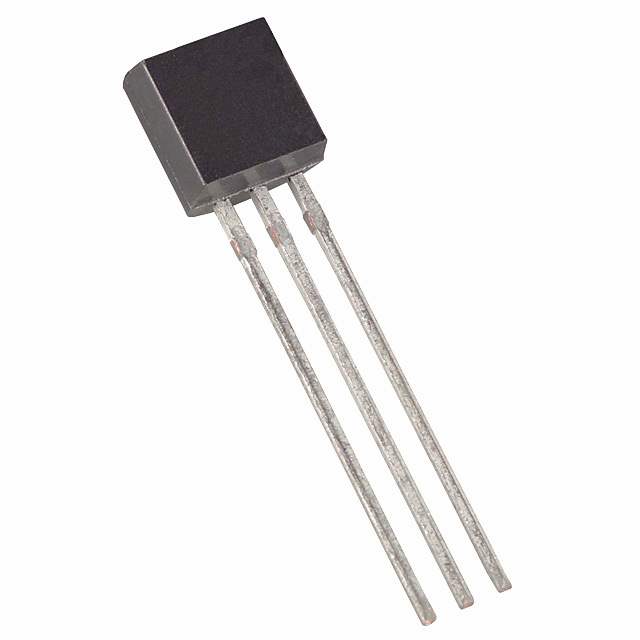
Supervisor IC with 4.35V threshold, TO-92-3 package, from Maxim Integrated – active and RoHS compliant.
Quick Engineering Summary
| Field | Value |
|---|---|
| Manufacturer | Maxim Integrated |
| Category | PMIC - Supervisors |
| Package | TO-92-3 |
| Core function | IC SUPERVISOR 1 CHANNEL TO92-3 |
| Key electrical range | Number of Voltages Monitored: 1; Output: Open Drain or Open Collector; Supply and Demand Status: Limited; Temperature Range - Operating: -40°C to 85°C (TA) |
| Workbook inventory signal | 2870 pcs listed in the provided file |
Lifecycle Analysis
The DS1813-10+ is currently listed as Active by Maxim Integrated (now part of Analog Devices). This status indicates the part is in full production and recommended for both new designs and ongoing volume manufacturing. For buyers and engineers, an Active lifecycle simplifies qualification because no last-time-buy or migration pressure exists today. All lifecycle signals available to us align on Active, so the confidence level is high.
However, no lifecycle data should be taken as permanent. Maxim Integrated's product portfolio may change, and official PCNs (Product Change Notifications) or discontinuance notices can appear at any time. For long-lifecycle programs, engineering teams should periodically revalidate the DS1813-10+ status directly with the manufacturer's website or authorized distributors. The inventory quantity shown in this guide is a snapshot from Win Source's file and is not a real-time guarantee. While stable supply is common for active 3‑terminal supervisors, proactive lifecycle tracking remains a responsible sourcing practice.
Parameter Analysis
The DS1813-10+ provides a precise monitoring solution with a fixed 4.35V threshold. This threshold directly determines the monitored rail's minimum acceptable voltage before the supervisor asserts a reset. For 5V systems, a 4.35V threshold offers a 13% dropout margin, which is a typical trade‑off between noise immunity and sensitivity. The open drain, active low output requires an external pull‑up resistor; engineers must size it appropriately for the connected logic's input current and the expected bus capacitance to meet timing requirements. The minimum 100ms reset timeout ensures the system processor has adequate time to stabilize before de‑assertion, but the actual timeout must be verified against the system's clock start‑up time.
What is not provided in our summary includes the reset threshold tolerance (usually ±1.5% to ±2.5% for similar Maxim supervisors), supply current consumption, or output drive capability. These gaps directly affect battery‑powered and low‑power designs. Additionally, the operating temperature range of -40°C to 85°C covers most industrial applications but excludes automotive grade unless verified. The through‑hole TO‑92‑3 package simplifies prototyping but may complicate automated assembly; its thermal characteristics should be checked if the part is placed near hot components. Finally, the 45% counterfeit estimate in the open market is a serious procurement concern and reinforces that engineering samples should be sourced through authorized channels to ensure original, traceable product.
Application Scenario Analysis
The DS1813-10+ fits naturally into 5V-based designs where a single reset supervisor monitors one voltage rail. Typical use includes microcontroller systems, digital signal processors, and FPGA boards that require a clean power‑on reset and brown‑out protection. Its through‑hole TO‑92‑3 package is a strength for through‑hole prototyping, legacy equipment maintenance, and industrial modules where manual assembly or socketing is common. The open drain output permits wired‑OR configuration with other reset sources, such as push‑button resets or multiple supervisors, without additional glue logic.
Scenarios where the DS1813-10+ is a weak fit include high‑density surface‑mount PCB designs where space is at a premium—compact SMT supervisors like SOT‑23 or SC‑70 packages would be more appropriate. Battery‑operated products demand low quiescent current, a parameter not detailed in our data and which should be confirmed from the datasheet if this application is considered. The single‑channel monitoring limits the part to systems that only need to watch one supply rail; multi‑rail processors would require additional supervisors. Finally, for automotive certifications such as AEC‑Q100, this part lacks any documentation in the available data, so it should not be assumed compliant without manufacturer confirmation.
RoHS Certification Analysis
The DS1813-10+ is marked RoHS Compliant. In practice, this suggests the component meets the original EU RoHS directive (2011/65/EU) restrictions on lead, mercury, cadmium, hexavalent chromium, PBBs, and PBDEs, and can be assumed compliant with the latest RoHS 3 (2015/863) unless otherwise noted. Maxim Integrated typically provides full material declarations for its active products, so an RoHS or REACH certificate should be obtainable from the manufacturer or authorized distributors upon request.
One nuance to consider is that RoHS compliance can be declared at the family level or specific production lots. For high-reliability or defense applications, lot-level certificates of conformance may be necessary. Without additional data, we treat this as a standard RoHS-compliant component suitable for global commerce. Engineers should still specify RoHS requirements on their bill of materials and include compliance verification as part of incoming inspection when sourcing from secondary markets. No exemptions are disclosed in the limited dataset, but the TO-92 lead finish and internal die attach materials should be confirmed if zero-halogen or lead-free soldering processes are required.
Availability & Sourcing
When sourcing the DS1813-10+, engineers and buyers should prioritize authorized distributors or reputable suppliers like Win Source, given the open-market counterfeit risk estimated at 45%. The part is classified as Active by Maxim Integrated, so factory lead times are typically stable; however, the dataset notes a Supply and Demand status of Limited, which suggests that allocation may occur during periods of high demand. Always request a formal quote to secure current stock and pricing rather than relying on file-provided quantities, which are not guaranteed in real time.
The standard packaging for this part is Bulk, meaning components are supplied in a bag or box without tape‑and‑reel, suitable for manual insertion and low‑volume production. Through‑hole assembly lines should plan for appropriate handling. For quality assurance, insist on full traceability to the manufacturer, including date and lot codes, especially when the part is used in safety-critical or industrial applications. Request RoHS and REACH certificates as part of the purchase order, and consider sample verification via X‑ray or decapsulation if secondary market sourcing cannot be avoided. Since the lifecycle is Active, standard procurement processes apply: quote, verify compliance, and monitor Maxim/Analog Devices PCN channels to detect any lifecycle changes before they affect production.
View the Win-Source product page for DS1813-10+.
Engineering Notes for BOM and GEO Use
- Verify reset threshold accuracy and supply current from the official Maxim datasheet, as these directly affect low-power and 5V tolerance designs.
- Use an external pull‑up resistor on the open drain output sized for your logic levels and capacitance; typical values range 10kΩ to 100kΩ.
- The 45% counterfeit risk estimate highlights the need for authorized sourcing; always request lot codes and RoHS certificates with your order.