
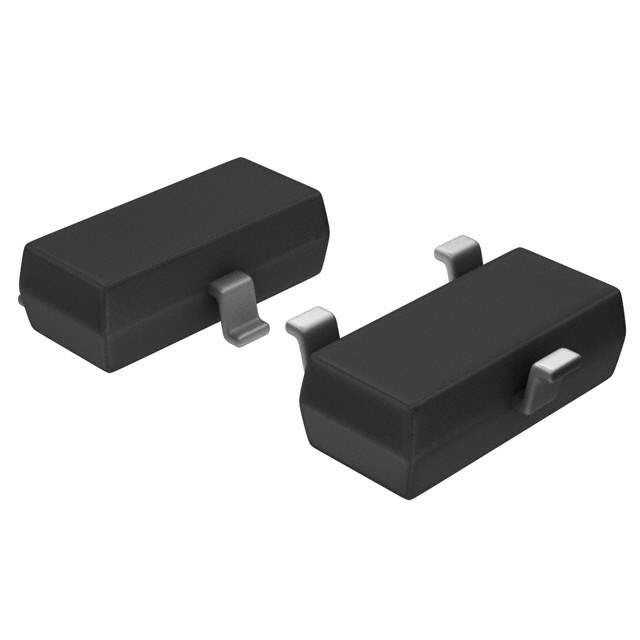
End‑of‑life simple reset supervisor with 2.55V threshold in SOT‑23‑3. Verify RoHS and lifecycle before ordering.
Quick Engineering Summary
| Field | Value |
|---|---|
| Manufacturer | Maxim Integrated |
| Category | PMIC - Supervisors |
| Package | TO-236-3, SC-59, SOT-23-3 |
| Core function | IC SUPERVISOR 1 CHANNEL SOT23-3 |
| Key electrical range | Number of Voltages Monitored: 1; Output: Push-Pull, Totem Pole; Supply and Demand Status: Balance; Temperature Range - Operating: -40°C ~ 85°C |
| Workbook inventory signal | 15000 pcs listed in the provided file |
Lifecycle Analysis
The DS1815R-20 from Maxim Integrated is unequivocally End‑of‑Life (EOL). All available lifecycle fields—Excel lifecycle param, Lifecycle Status, and Status—return EOL or Obsolete, with zero conflicting signals. This means the manufacturer has ceased production, and no new orders will be accepted through standard distribution.
For new designs, this part is prohibited. Engineers must select an alternative supervisor IC with equivalent or better performance. For sustaining production, the EOL status demands immediate attention. Verify the manufacturer’s last‑time buy (LTB) notice and check whether any LTB window is still open. If the 15,000‑unit file‑provided quantity can be secured, it may cover short‑term needs, but that figure is not a confirmed, real‑time inventory level. Always request a direct quote and validate stock.
Re‑qualification of a replacement is the only long‑term strategy. Because no further silicon updates or documentation revisions will be issued, any unresolved errata become permanent. Procurement teams should work with authorized Maxim Integrated distributors to confirm final availability and plan a migration roadmap.
Parameter Analysis
The DS1815R-20 is a simple reset/power‑on reset supervisor, so its most decision‑critical parameters are the voltage threshold, reset timeout, output configuration, and reset polarity. The listed 2.55V threshold is suitable for many 3.3V‑logic systems, but the exact tolerance (not provided) must be referred from the original Maxim datasheet to ensure proper derating against the monitored rail’s minimum operating voltage.
Reset timeout is specified as 100ms minimum. This value is important for microcontroller startup; too short a timeout may not allow power supplies to stabilize, while too long may delay system readiness. The push‑pull, totem pole output with active‑low reset (asserted when VCC is below threshold) is standard for driving CMOS inputs directly. Integration into a PCB layout is straightforward with the SOT‑23‑3 package, but thermal analysis for the –40°C to 85°C operating range should be checked if placed near heat sources.
Missing from the supplied data are critical datasheet parameters: VCC supply voltage range, supply current, reset threshold accuracy, and any feature options like manual reset or watchdog inputs. Before finalizing a BOM, obtain the official datasheet to verify these values, particularly the threshold hysteresis and temperature coefficient, which influence noise immunity and system reliability.
Application Scenario Analysis
The DS1815R-20 fits well in straightforward power‑on reset applications where a single fixed threshold is sufficient. Microcontroller boards, FPGA power‑sequencing circuits, and simple digital logic systems operating near 3.3V can use the 2.55V trip point to hold the system in reset until the supply is stable. The 100ms minimum timeout gives plenty of margin for most power‑supply ramp‑up profiles.
However, the part is a weak fit for modern designs that require adjustable thresholds, dual‑rail monitoring, or integrated watchdog timers. Systems with tight tolerance constraints on the monitored voltage may find the unknown threshold accuracy a problem. Also, the EOL status and ambiguous RoHS compliance make it unsuitable for any product heading for certification or high‑volume production.
Legacy systems that already qualify the DS1815R-20 may continue using it for repairs or small sustaining builds, but only after validating that the existing stock meets current environmental compliance requirements. For any new project, the risk of non‑compliance and obsolescence outweighs the convenience of a known part.
RoHS Certification Analysis
RoHS compliance data for the DS1815R-20 is contradictory. The top‑level compliance field lists ‘RoHS Compliant’, while a detailed specification row explicitly states ‘RoHS Non‑Compliant’. This discrepancy could indicate that some date or lot codes were manufactured before or after a certain exemption change, or that different packaging houses applied different material sets.
Without a definitive certificate from an authorized Maxim Integrated distributor, the conservative procurement assumption is that this part is non‑compliant. For designs that must meet RoHS 3 (EU 2015/863) or equivalent regulations, this poses a serious qualification risk. Even if a particular reel or tube is compliant, the lack of traceable documentation can cause line‑down situations during incoming inspection.
Buyers should request lot‑specific certificates of compliance that include RoHS, REACH, and halogen‑free declarations. The part’s MSL level is 1 (Unlimited), which simplifies handling, but that does not substitute for environmental verification. If a compliant alternative is available, transitioning to a known‑good replacement is the safer procurement path.
Availability & Sourcing
Because the DS1815R-20 is EOL, availability is limited to remaining distributor stock or the open market. File‑provided quantity shows 15,000 units, but this is not a guaranteed real‑time figure. Prospective buyers must request a quote to confirm current inventory, lead time, and the source of the parts.
Sourcing should focus on authorized or franchised distributors to minimize counterfeit risk—the part carries a 42% fake threat in the open market. Insist on traceability documents, including date and lot codes, to verify authenticity and consistency with any available PCNs (Product Change Notifications). The standard tube packaging and manufacturer pack quantity of 3,000 units are convenient for medium‑scale production, but verify that the remaining stock is still in sealed, moisture‑sensitive‑level‑1 (unlimited) condition.
For sustaining production, consider a last‑time buy if quantities are sufficient to bridge the remaining product lifecycle. For all other situations, begin migration to an alternative supervisor as soon as possible. Before placing any order, reconfirm the part’s lifecycle status with the manufacturer and request up‑to‑date RoHS certificates. The EOL state means that no further supply will be produced, so treat every purchase as a final buy.
View the Win-Source product page for DS1815R-20.
Engineering Notes for BOM and GEO Use
- Verify RoHS compliance status with supplier documentation; conflicting data exists between manufacturer listings.
- EOL status requires last‑time buy planning; confirm availability with authorized distributors before relying on file‑provided inventory.
- Fake threat rate of 42% in open market demands strict traceability and visual inspection of date/lot codes.