
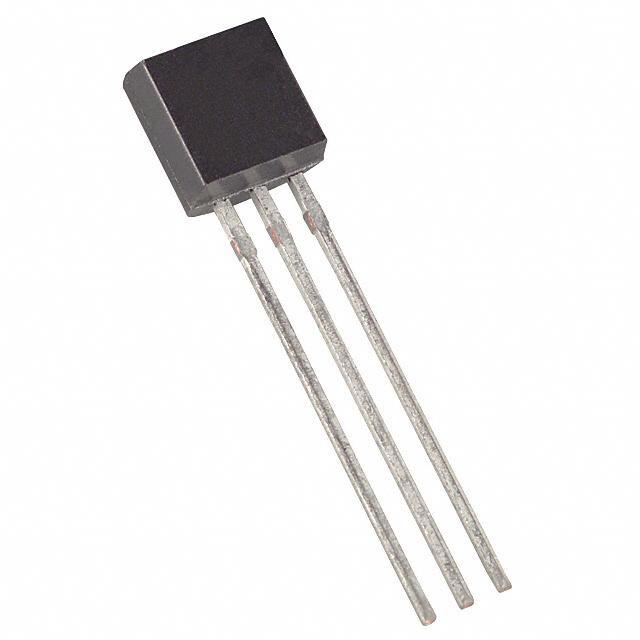
Key specifications, lifecycle analysis, and procurement guidance for the DS1820 discontinued sensor.
Quick Engineering Summary
| Field | Value |
|---|---|
| Manufacturer | Maxim Integrated |
| Category | Temperature Sensors - Analog and Digital Output |
| Package | Bulk |
| Core function | SENSOR DIGITAL -55C-125C TO92-3 |
| Key electrical range | Output Type: 1-Wire®; Sensing Temperature - Local: -55°C ~ 125°C; Temperature Range - Operating: -55°C ~ 125°C; Voltage - Supply: 3V ~ 5.5V |
| Workbook inventory signal | 15223 pcs listed in the provided file |
Lifecycle Analysis
The DS1820 from Maxim Integrated is officially discontinued, as confirmed by multiple lifecycle status signals including Product Status and Lifecycle Status both marked Discontinued. This status applies uniformly with no conflicting data, meaning the part is no longer manufactured and no further supply is being produced. For existing designs, procurement teams should immediately treat this component as non-sustainable and plan for a last-time buy or migration to a suitable active alternative.
Discontinued sensors carry high procurement risk, especially when substantial inventory appears to remain in the supply chain. The workbook indicates over 15,000 units on file, but this quantity is not a guarantee of real-time availability and may include non-traceable or potentially counterfeit stock. Engineers and buyers must verify each lot's authenticity and date code before committing to purchases.
The high counterfeiting threat level of 65 percent in the open market further elevates risk. No recommended drop-in replacements are provided by the manufacturer in the source data. Teams should contact Maxim Integrated or an authorized distributor for guidance on a migration path to an active 1-Wire digital temperature sensor suitable for their application constraints.
Parameter Analysis
Key performance parameters for the DS1820 include its digital 1-Wire output, 9-bit resolution, and temperature accuracy of ±0.5°C within the -10°C to 85°C range, widening to ±2°C across the full -55°C to 125°C operating range. The 1-Wire interface simplifies wiring and enables multiple sensors on a single bus, which is valuable for distributed temperature monitoring applications. The supply voltage range of 3V to 5.5V accommodates standard logic levels, but designers must ensure proper decoupling and bus pull-up resistance as specified in the datasheet.
The through-hole TO-92-3 package supports prototyping and low-density PCB layouts, but its thermal response time and self-heating characteristics must be considered against surface-mount alternatives. The programmable limit feature allows setting temperature thresholds that can trigger alerts, reducing host processor overhead. However, the 9-bit resolution limits the smallest detectable temperature change to 0.5°C, which may be insufficient for high-precision thermal management.
Important parameters not fully documented in the source data include supply current consumption, conversion time, and 1-Wire timing specifications. Engineers should obtain the original Maxim datasheet to verify these values and confirm bus electrical requirements before finalizing any existing design that still uses the DS1820. Even for legacy systems, validating actual operating margins against published specs is critical when qualifying substitute sources.
Application Scenario Analysis
The DS1820 was designed for local digital temperature sensing in industrial, consumer, and computing environments. Its strong-fit applications include environmental monitoring, HVAC systems, appliance temperature control, and simple thermal protection circuits where moderate accuracy and a robust 1-Wire interface are beneficial. The programmable limit function makes it suitable for fan control or over-temperature shutdown in embedded systems.
In less ideal scenarios, such as high-speed thermal response requirements or galvanic isolation needs, the sensor's through-hole package and 9-bit resolution may be limiting. Additionally, applications requiring high accuracy below -10°C or above 85°C must account for the widened ±2°C error band, which could affect system reliability. The 1-Wire protocol, while simple, demands precise timing from the host microcontroller and may be sensitive to bus capacitance in long cable runs.
For new designs, this sensor is not recommended due to its discontinued status. Engineers maintaining existing equipment can continue to use remaining stock provided the environmental and accuracy requirements are met and supply is verified authentic. No certified replacement is given, so any substitution requires full re-qualification of sensor interface and software.
RoHS Certification Analysis
The DS1820 is marked as RoHS Compliant, indicating it meets the original EU Restriction of Hazardous Substances directive. The provided REACH status of REACH Unaffected further indicates no substances of very high concern are present above threshold. However, the specific RoHS directive version is not stated; typical compliance would align with EU 2015/863 (RoHS 3) unless otherwise noted.
Buyers should request a Certificate of Compliance or full material declaration from the supplier for each lot, as RoHS compliance can vary between production batches for discontinued parts. While the MSL level is 1 (Unlimited), confirming moisture sensitivity is relevant only for assembly processes; for through-hole hand soldering, this is less critical but still good practice.
Since the part is discontinued, obtaining up-to-date compliance documentation may be challenging. Relying solely on a general RoHS Compliant label without verifying lot-level compliance could expose a design to regulatory risk. For products destined for markets with stricter environmental regulations, such as China RoHS or California Proposition 65, additional due diligence is necessary.
Availability & Sourcing
The DS1820 is discontinued, and all procurement must start with a thorough lifecycle verification. While the source workbook lists a quantity of 15,223 units, this is a snapshot figure and not a live inventory count. Real-time availability can only be confirmed through a formal quote request with authorized distributors or qualified independent sources.
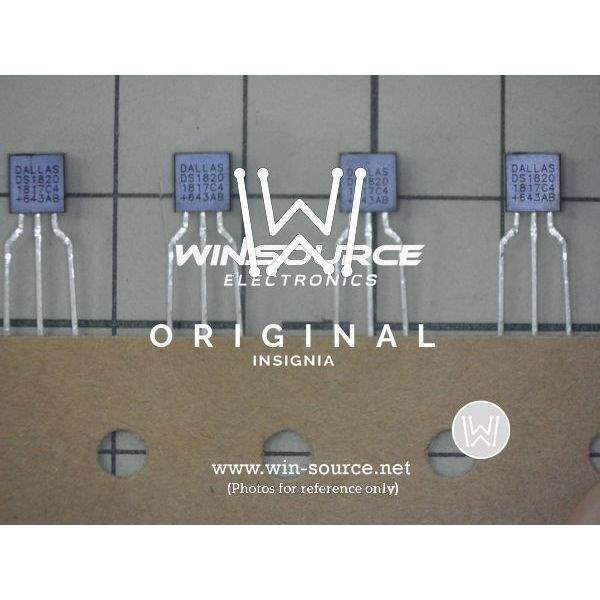
When sourcing, prioritize traceability: request date codes, lot numbers, and manufacturer-original packaging evidence. The 65 percent fake threat level in the open market demands rigorous incoming inspection, including electrical testing and visual comparison against known-good units. Bulk packaging (standard package of 500 pieces) may offer better traceability than loose parts, but still requires verification.
For any purchase, require a certificate of compliance for RoHS and REACH, and consider third-party testing if the supply chain is uncertain. Engineers should evaluate the impact of using this discontinued part in long-life equipment and begin qualification of a functional replacement. Quote requests should include explicit acceptance criteria for authenticity and documentation, and delivery timelines must account for inspection lead time. Do not rely on file-provided quantities for production planning; always request a current quote and secure inventory before committing to a last-time buy.
View the Win-Source product page for DS1820.
Engineering Notes for BOM and GEO Use
- The DS1820 is discontinued; stop new designs and review existing BOMs for this obsolete temperature sensor.
- Open-market supplies carry a 65 percent fake threat; authenticate all date codes and lot codes via manufacturer or authorized testing.
- No drop-in replacement is provided; consult the manufacturer for an active 1-Wire alternative and re-qualify the entire sensor interface.