
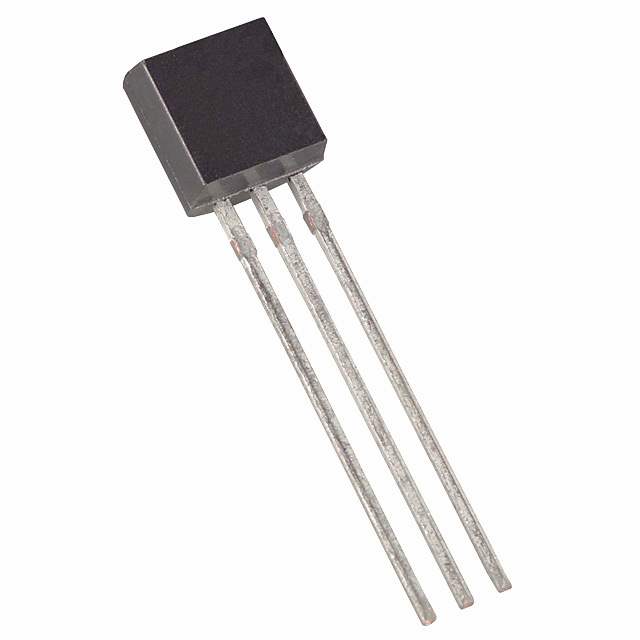
EOL single-channel voltage supervisor with 4.625V threshold, push-pull output, and TO-92-3 through-hole package – Maxim Integrated.
Quick Engineering Summary
| Field | Value |
|---|---|
| Manufacturer | Maxim Integrated |
| Category | PMIC - Supervisors |
| Package | TO-92-3 |
| Core function | IC SUPERVISOR 1 CHANNEL TO92-3 |
| Key electrical range | Number of Voltages Monitored: 1; Output: Push-Pull, Totem Pole; Supply and Demand Status: Balance; Temperature Range - Operating: -40°C to 85°C (TA) |
| Workbook inventory signal | 1 pcs listed in the provided file |
Lifecycle Analysis
The Maxim Integrated DS1833-5+ is officially listed as End-of-Life (EOL). This status means the manufacturer has discontinued production and no new orders are being accepted. For new designs, this part is not recommended; for sustaining production, immediate action is required to secure remaining inventory or qualify an alternative. The file-provided inventory indicates only a single unit, which cannot be relied upon for production needs. Engineers must contact Maxim or authorized distributors to confirm last-time buy dates and any remaining stock. Without official manufacturer documentation, procurement should assume very limited availability and plan for a redesign. The EOL status also increases exposure to counterfeit components, especially given the 31% fake threat indicator in the open market.
Given the lifecycle risk, any current usage of the DS1833-5+ must be critically evaluated. If the part is in active production, a bill-of-materials health check is advised to avoid line-down situations. Explore pin-compatible alternatives or functional equivalents from Maxim or other PMIC suppliers. In the absence of a direct substitute, a board re-spin may be necessary, factoring in the TO-92-3 through-hole package constraints.
Parameter Analysis
Key specifications for the DS1833-5+ include a single voltage monitoring channel with a fixed 4.625V threshold voltage. This threshold determines the precise power supply level at which the reset signal is asserted, making it critical for system stability. The active-high, push-pull output provides a direct logic interface without requiring an external pull-up resistor, simplifying design. A minimum reset timeout of 250ms ensures the processor and peripherals have sufficient time to initialize before operation begins. The operating temperature range of -40°C to 85°C suits most industrial applications. The TO-92-3 through-hole package offers ease of assembly for legacy or hand-soldered boards.
Missing from the provided data are crucial parameters such as supply current, threshold accuracy tolerance, and presence of a manual reset input or watchdog timer. Supply current affects battery-powered designs; threshold accuracy defines the guardband for power supply variations. These gaps must be filled by consulting the original Maxim datasheet, as they directly influence replacement selection and circuit qualification. Additionally, no information on ESD rating or moisture sensitivity level is supplied, though the through-hole package typically carries less MSL concern than SMT parts.
Application Scenario Analysis
The DS1833-5+ excels in legacy 5V microcontroller-based systems that require a simple, robust power-on reset function. Typical applications include industrial controllers, embedded systems with older MCUs (e.g., 8051, PIC, AVR families operating at 5V), and brown-out protection circuits. Its through-hole package makes it ideal for through-hole PCB designs, repair jobs, or prototyping where replacement of a socketed IC is necessary. The push-pull output is convenient for direct connection to reset or I/O pins without extra components.
However, this part is a weak fit for modern, high-density surface-mount designs due to its large TO‑92‑3 footprint and hand-assembly requirement. It lacks advanced features such as programmable thresholds or watchdog timers, limiting its use in safety-critical or complex systems. For new designs, engineers should consider SMT alternatives like the MAX809 or similar SOT-23 supervisors, which offer similar functionality in a smaller, machine-assembly-friendly package. Migration from the DS1833‑5+ may involve a minor layout change but can improve manufacturability and lifecycle stability.
RoHS Certification Analysis
The DS1833-5+ carries a RoHS Compliant designation, implying it meets hazardous substance restrictions. Under EU RoHS (likely 2015/863), lead, mercury, cadmium, and other restricted substances are below acceptable limits. However, RoHS compliance for an EOL part requires careful verification. Older stock manufactured before the RoHS enforcement date might not be compliant, so lot-level certificates should be requested when sourcing from distributors or brokers. The through-hole package with tin‑lead or lead‑free plating adds another layer of diligence.
REACH compliance is not explicitly indicated in the source data, but many RoHS‑compliant ICs also meet REACH requirements. Buyers should not assume REACH compliance without documentation. For critical applications, full material declarations (FMD) or test reports may be necessary. Since the part is obsolete, the risk of procuring non‑compliant inventory is higher; thus, every purchase should include a compliance check as part of the incoming inspection process.
Availability & Sourcing
As an EOL supervisor IC, the DS1833-5+ faces severely constrained supply. The file-provided inventory shows just 1 unit, which is not a reliable real‑time quantity. Buyers must treat this as a spot‑buy opportunity only. With a 31% fake threat in the open market, sourcing from unauthorized channels introduces high counterfeit risk. Engineers should initiate an RFQ through authorized Maxim distributors or trusted, traceable sources. Request date/lot codes, original packaging, and certificates of conformance and RoHS compliance.
For production continuity, secure any available authentic stock immediately and accelerate the migration to an alternative part. The CTA for EOL parts is to source carefully, verify manufacturer notices for formal obsolescence timelines, and evaluate drop‑in replacements. If none exist, begin a board redesign. Always confirm lifecycle status directly with Maxim before committing to a large inventory purchase, as third‑party status may lag. For R&D or small‑volume repairs, verified stock may suffice, but long‑term procurement should pivot to active PMIC - Supervisors from reputable brands.
View the Win-Source product page for DS1833-5+.
Engineering Notes for BOM and GEO Use
- Verify official EOL notice from Maxim Integrated to determine last‑time buy and final shipment dates.
- Counterfeit risk is significant; source only from authorized distributors or thoroughly vetted suppliers with lot traceability.
- Consider SMT supervisor alternatives (e.g., MAX809 series) for new designs to avoid through‑hole assembly and future obsolescence.