
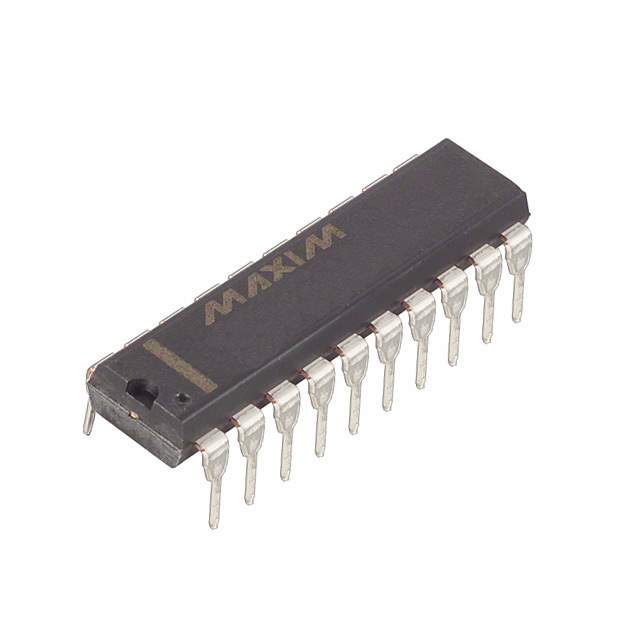
EOL quad 100kOhm 64-tap I2C digital potentiometer from Maxim Integrated
Quick Engineering Summary
| Field | Value |
|---|---|
| Manufacturer | Maxim Integrated |
| Category | Data Acquisition - Digital Potentiometers |
| Package | 20-PDIP |
| Core function | IC DGTL POT 100KOHM 64TAP 20DIP |
| Key electrical range | Operating Supply Voltage: 2.7 V ~ 5.5 V; Operating Temperature Range: -40°C ~ 85°C; Resistance (Ohms): 100k; Resistance - Wiper (Ohms) (Typ): 250 |
| Workbook inventory signal | 1 pcs listed in the provided file |
Lifecycle Analysis
The DS1844-100 from Maxim Integrated has an EOL (End-of-Life) lifecycle status, indicating it is no longer recommended for new designs and may have limited production support. This status is confirmed by manufacturer signals and consistent across available data, with no conflicts. For procurement teams, this means that ongoing availability cannot be guaranteed, and sourcing should prioritize securing remaining inventory for sustaining existing products.
The provided inventory shows a single unit in the workbook, which is a file-based snapshot and not a real-time stock guarantee. Engineers should request a quote to confirm current stock levels and consider last-time buy opportunities if the part is critical for production. Any new design activity should avoid this component and seek alternative digital potentiometers with similar features but active lifecycle status.
Parameter Analysis
The DS1844-100 is a quad-channel digital potentiometer with 100kΩ end-to-end resistance, 64 taps, and linear taper. It operates from a 2.7V to 5.5V supply, with an industrial temperature range of -40°C to +85°C. The I2C serial interface includes a selectable address feature, allowing multiple devices on the same bus. Key tolerance and temperature coefficient are ±20% and 750 ppm/°C respectively, which are relatively wide for precision applications but acceptable for general-purpose trimming. The wiper resistance is typically 250Ω, and the memory is volatile, meaning settings are lost at power-off unless externally stored.
Important missing parameters include the default wiper position at power-up, bandwidth, noise performance, and end-to-end resistance temperature coefficient consistency across all channels. Engineers should consult the full DS1844 datasheet to verify electrical characteristics for their specific circuit, especially if used in low-noise or high-accuracy adjustments. The through-hole 20-DIP package suits prototyping and legacy designs but may require mechanical verification for modern SMT boards.
Application Scenario Analysis
The DS1844-100 fits well in legacy industrial control systems where I2C-based adjustable voltage dividers or gain-set resistors are needed, and DIP packaging eases manual assembly or replacement. Its quad channels and selectable address make it useful for multi-channel calibration in automated test equipment or sensor bias adjustments. The wide operating temperature range supports environmental stress, but the EOL status limits use to sustaining existing products only.
In contrast, this part is poorly suited for new precision designs such as audio volume control or low-drift instrumentation, due to the ±20% tolerance and high temperature coefficient. Modern battery-powered or compact designs will also face integration challenges because of the large DIP footprint and 2.7V minimum supply. For new projects, designers should evaluate alternatives with smaller packages, non-volatile memory, and tighter specifications.
RoHS Certification Analysis
The DS1844-100 carries a RoHS Non-Compliant designation, meaning it does not meet Restriction of Hazardous Substances requirements for lead-free and other restricted substance limits. This is common for older through-hole DIP parts that use tin-lead plating. While RoHS compliance is indicated elsewhere as 'RoHS Compliant' in the compliance field, the part-specific RoHS Status lists 'Non-Compliant'—likely due to the package or plating exemption status. Users must clarify this conflict with the manufacturer or distributor before use in regulated markets.
For applications requiring RoHS compliance, this part cannot be used in its current form. Even if exemptions like lead in glass are applicable, the EOL status suggests no compliant version will be introduced. Alternative digital potentiometers with active lifecycle and RoHS/REACH compliance should be sourced. Lot-level testing may be necessary to verify substance content if used in low-volume or exempt applications.
Availability & Sourcing
As an EOL component, the DS1844-100 has very limited availability. The workbook indicates a single unit, which is subject to change and must be validated via quotation. The supply and demand status is 'Limited', and the estimated fake threat in the open market is 28%, so authentication measures such as lot code verification and documentation of provenance are essential. The part is stored in dry storage cabinet with humidity protection per manufacturer recommendations, and is packaged in tubes.
Procurement should proceed with an RFQ that includes requests for date/lot codes, testing certifications, and traceability documentation. For sustaining production, evaluate whether a last-time buy is still possible from authorized channels. Given the high risk, consider redesign with an alternative digital potentiometer that is actively produced and compliant with current environmental standards. Verify lifecycle status directly with Maxim Integrated (now Analog Devices) before any procurement commitment.
View the Win-Source product page for DS1844-100.
Engineering Notes for BOM and GEO Use
- Check for RoHS exemption applicability—the part is listed as Non-Compliant, which may restrict use in many markets.
- Secure any remaining stock immediately; EOL status means supply will not replenish and may disappear without notice.
- The 20-DIP package and 750 ppm/°C tempco make it unsuitable for new compact or precision designs—plan a migration path.