
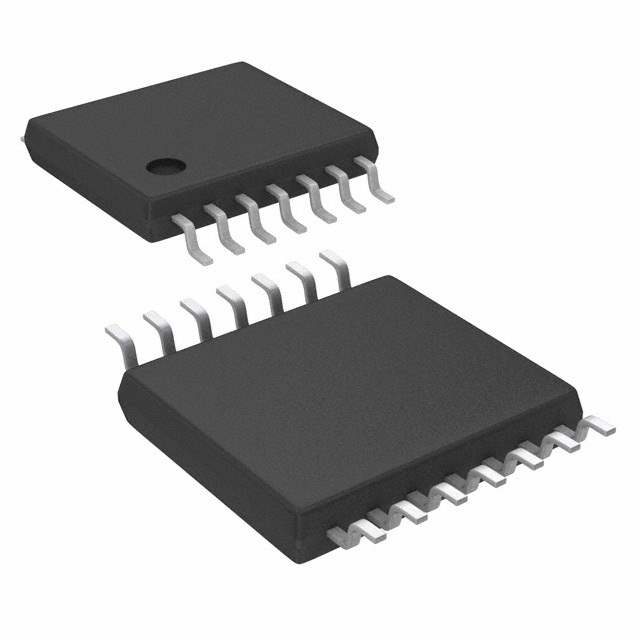
Dual 10kΩ, 256-tap, I2C digital potentiometer with temperature sensor in 14-TSSOP – Active lifecycle, RoHS compliant
Quick Engineering Summary
| Field | Value |
|---|---|
| Manufacturer | Maxim Integrated |
| Category | Data Acquisition - Digital Potentiometers |
| Package | 14-TSSOP |
| Core function | IC DGT POT 10KOHM 256TAP 14TSSOP |
| Key electrical range | Resistance (Ohms): 10k; Supply and Demand Status: Balance; Supply Voltage - Operating: 3 V to 5.5 V; Temperature Coefficient (Typ): 850 ppm/°C |
| Workbook inventory signal | 10100 pcs listed in the provided file |
Lifecycle Analysis
The DS1848E-010+ from Maxim Integrated is currently in Active lifecycle status with no conflicts across supply chain signals. For engineering and procurement teams, Active status indicates ongoing production, supported technical documents, and typical lead times. It is appropriate for new designs and current production without immediate risk of obsolescence.
Even with an Active designation, long-term program commitments should include confirmation directly from Maxim Integrated or authorized distributors. Part-number-specific lifecycle data should be revalidated periodically, especially for high-reliability or extended-lifecycle projects. The 33% fake threat reported in open market channels emphasizes the need for sourcing through authorized channels.
The file-provided inventory quantity of 10,100 units is a non-real-time snapshot and not a binding stock level. Engineers should use it as a relative supply indicator rather than a guaranteed allocation. No NRND or EOL notice is present, so design-in risk is low.
Parameter Analysis
Critical parameters for the DS1848E-010+ include its dual 10kΩ rheostat configuration, 256 taps with linear taper, and I2C interface supporting selectable addressing. The supply voltage range of 3V to 5.5V allows direct interfacing with common low-voltage logic families. The operating temperature span of -40°C to 95°C covers industrial and many automotive ambient ranges.
The typical temperature coefficient of 850 ppm/°C is a key consideration; it is relatively high, meaning significant resistance drift over temperature. Coupled with a ±20% end-to-end tolerance, this part is best suited for applications where absolute precision is not critical or where calibration can compensate. The 256-tap resolution provides approximately 0.39% adjustment granularity, suitable for medium-resolution trimming.
Missing from the supplied data are wiper resistance, I2C clock speed, non-volatile memory endurance, and bandwidth specifications. These should be obtained from the manufacturer datasheet to fully qualify the part. The 14-TSSOP package with tube/rail packaging imposes standard surface-mount assembly and handling requirements.
Application Scenario Analysis
The DS1848E-010+ fits well in signal processing applications that require adjustable analog parameters under digital control. Typical uses include programmable gain amplifiers, offset voltage adjustment, sensor calibration, LCD contrast control, and adjustable active filter setpoints. Its integrated temperature sensor adds value for temperature-compensated systems.
The rheostat configuration means it operates as a two-terminal variable resistor, not a three-terminal potentiometer. This makes it ideal for applications needing a variable resistance to ground or a current-limiting element. The I2C interface with selectable addresses allows multiple DS1848E-010+ devices on the same bus without additional glue logic.
This part is less suitable for applications requiring ultra-low drift or high absolute accuracy because of its wide tolerance and high temperature coefficient. The 10kΩ end-to-end value also limits its use in low-impedance networks. Engineers should evaluate these trade-offs against their design requirements.
RoHS Certification Analysis
According to supplier data, the DS1848E-010+ is RoHS Compliant. The exact regulatory standard (e.g., EU RoHS 3 or equivalent) is not explicitly stated in the provided records. For formal compliance documentation, procurement teams should request a certificate of compliance from Maxim Integrated or the authorized distributor.
No exemptions are noted in the available data. Given the part's Active lifecycle, RoHS compliance is expected to be maintained under current regulations. However, lot-level verification is advisable for high-volume production or export to regions with strict environmental regulations.
REACH status is not directly addressed in the source data. While RoHS and REACH are often linked, the absence of REACH information means engineers should not assume REACH compliance without separate confirmation. The MSDS reference indicates that material safety documentation is accessible upon request.
Availability & Sourcing
The DS1848E-010+ is an Active part, and sourcing should proceed through RFQ with authorized Maxim Integrated distributors. The file-provided quantity of 10,100 units suggests a balanced supply and demand status at the time of data capture, but this is not a live inventory guarantee. Engineers should contact distribution for current stock and lead time.
Packaging is tube/rail for the 14-TSSOP package, which suits automated pick-and-place assemblies. When ordering, specify Moisture Sensitivity Level (MSL) and ensure proper storage per the indicated dry storage and humidity protection requirements.
The 33% fake threat in the open market is significant. To mitigate risk, purchase only through authorized channels, verify date/lot codes, and perform incoming inspection against manufacturer datasheet parameters. Request traceability documentation and RoHS compliance certificates with each shipment. For programs using this part, secure a buffer stock if the 10kΩ variant is sole-sourced or if demand volatility is a concern.
View the Win-Source product page for DS1848E-010+.
Engineering Notes for BOM and GEO Use
- Verify supply voltage range of 3V to 5.5V and operating temperature -40°C to 95°C for your application environment.
- Note the 850 ppm/°C temperature coefficient; consider thermal compensation if precision resistance is required.
- The rheostat configuration and ±20% tolerance require careful end-to-end resistance range validation in circuit design.