
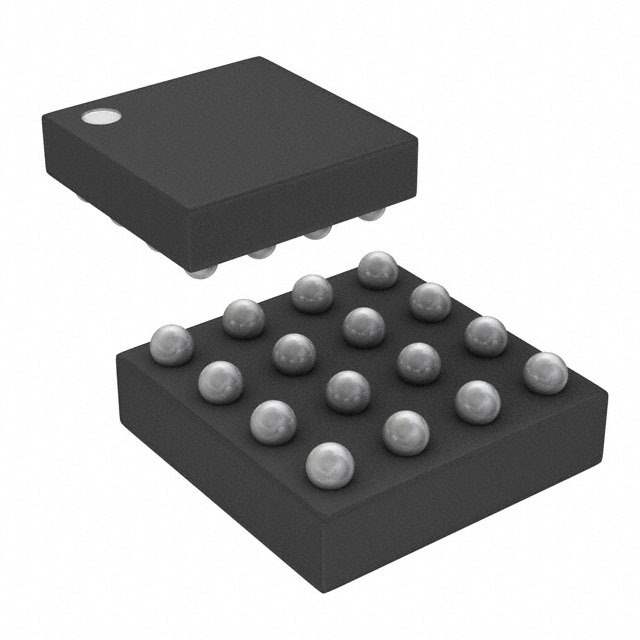
Dual 50kΩ Digital Potentiometer with Temperature Sensor, 256-Tap Linear Taper – Sourcing Guide
Quick Engineering Summary
| Field | Value |
|---|---|
| Manufacturer | Maxim Integrated |
| Category | Data Acquisition - Digital Potentiometers |
| Package | 16-CSBGA (4x4) |
| Core function | IC DGTL POT 50K 2CH 16CSBGA |
| Key electrical range | Resistance (Ohms): 50k; Supply and Demand Status: Limited; Supply Voltage - Operating: 2.85 V to 5.5 V; Temperature Coefficient (Typ): 50 ppm/°C |
| Workbook inventory signal | 1 pcs listed in the provided file |
Lifecycle Analysis
The DS1856B-050+ is listed as Active in the specification data, but the system-based lifecycle analysis indicates Unknown status with no manufacturer signals. This conflict suggests that while the part may still be in production, procurement teams should obtain direct confirmation from Maxim Integrated before committing to new designs.
For sustaining production, the low quantity shown in the file (1 unit) underscores the need to verify real-time stock through authorized distributors. Engineers should treat the lifecycle conservatively and request formal PCNs or EOL notices from the manufacturer to avoid supply chain disruptions.
Parameter Analysis
The DS1856B-050+ offers two independent channels with 50kΩ resistance, 256 taps, and a linear taper configured as a rheostat. Its wide operating supply voltage of 2.85V to 5.5V suits various mixed-signal environments, and the -40°C to 95°C temperature range covers most industrial applications. The integrated temperature sensor is a standout feature for designs needing temperature-compensated adjustment.
Key parameters to verify in the datasheet include the digital interface type, wiper current limits, power-on reset behavior, and endurance. The ±20% total resistance tolerance and 50 ppm/°C temperature coefficient may require careful derating or calibration in precise circuits. The 16-CSBGA package demands attention to PCB layout and reflow profiles.
Application Scenario Analysis
This digital potentiometer is a strong fit for optical transceiver modules, where the DS1856B-050+ can adjust bias currents or modulation levels while its temperature sensor enables thermal compensation. Industrial control systems that need remote and automated resistance trimming also benefit from its digital control and temperature monitoring.
In contrast, simple audio volume control or low-cost consumer devices may not leverage the temperature sensor, making this part an over-engineered choice. For applications requiring voltage-divider mode, the rheostat configuration must be considered, as it limits the topology to variable-series-resistance implementations.
RoHS Certification Analysis
The DS1856B-050+ is marked as RoHS Compliant, indicating it meets hazardous substance restrictions for the EU market. However, the supplied data does not specify the exact directive (e.g., EU 2015/863) or list any exemptions.
Engineers should request the manufacturer’s certificate of compliance for the specific lot to validate RoHS, REACH, and any halogen-free claims. Note that family-level declarations may not cover this exact variant, so lot-level documentation is advised for high-reliability or export-controlled designs.
Availability & Sourcing
With only 1 unit shown in the file-provided inventory and a high 37% counterfeit risk in the open market, sourcing the DS1856B-050+ demands caution. Authorized distributors should be your first stop to ensure traceability and avoid substandard parts.
When requesting a quote, specify your required quantity, target pricing tier, and need for date/lot code verification. The part is shipped in tray packaging and requires dry storage, so confirm that packaging integrity is maintained. Given the Active listing, standard RFQ processes apply, but always verify lifecycle status and compliance documentation before finalizing your order.
View the Win-Source product page for DS1856B-050+.
Engineering Notes for BOM and GEO Use
- Confirm the digital interface (likely I²C) and nonvolatile memory features in the full datasheet before finalizing your design.
- With ±20% resistance tolerance, plan for calibration or software trimming in precision applications.
- The integrated temperature sensor can simplify board design, but verify its accuracy and update rate against your requirements.