
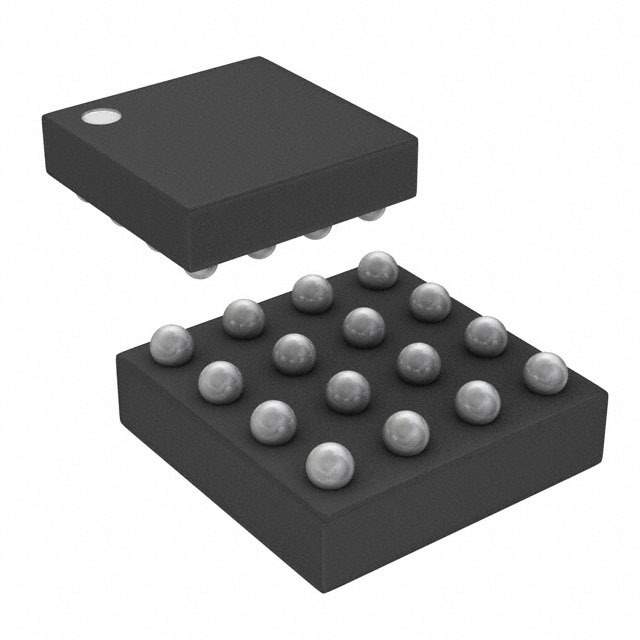
Part analysis and sourcing recommendations for engineers and component buyers.
Quick Engineering Summary
| Field | Value |
|---|---|
| Manufacturer | Maxim Integrated |
| Category | Data Acquisition - Digital Potentiometers |
| Package | 16-CSBGA (4x4) |
| Core function | IC DGT POT 50KOHM 256TAP 16CSBGA |
| Key electrical range | Operating Supply Voltage: 2.85 V ~ 5.5 V; Operating Temperature Range: -40°C ~ 95°C; Resistance (Ohms): 50k; Supply and Demand Status: Limited |
| Workbook inventory signal | 31000 pcs listed in the provided file |
Lifecycle Analysis
The DS1856B-M50+ from Maxim Integrated is currently listed as Active with a low risk level, indicating it remains in full production and is suitable for new designs. However, supplied data also includes an Estimated EOL Date of 2023, which may be a stale projection or a signal of eventual discontinuation. Engineers should request the latest product change notice (PCN) and lifecycle documentation from the manufacturer to confirm ongoing commitment. Given the device’s 2005 introduction, design longevity should be evaluated against project timelines.
For sustaining production, the file-provided inventory quantity of 31,000 units suggests reasonable buffer stock, but this figure is not real-time and must be confirmed through a quote. The “Limited” supply and demand status and a 65% fake threat on the open market underscore the need for traceable procurement channels. Avoid reliance on spot buys without manufacturer verification.
Parameter Analysis
The DS1856B-M50+ is a dual-channel, 256-tap non-volatile digital potentiometer with 50kΩ end-to-end resistance, configured as a rheostat. An I2C interface simplifies digital control, while the integrated temperature sensor adds a compensation dimension often required in optical modules. The supply voltage range of 2.85V to 5.5V supports both 3.3V and 5V logic, and the -40°C to 95°C operating temperature range suits industrial and telecom environments. A typical temperature coefficient of ±50 ppm/°C and ±20% tolerance define the resistor accuracy; designers must factor this tolerance into calibration routines.
Critical missing datasheet parameters include wiper resistance, code-to-resistance linearity error, and bandwidth. These directly affect signal integrity in AC applications and settling time in digital feedback loops. Before committing to this part, verify these values in the official Maxim datasheet, and confirm that the rheostat mode’s wiper current rating meets load requirements. The 16-CSBGA (4x4) package demands careful PCB layout for thermal and mechanical reliability.
Application Scenario Analysis
The DS1856B-M50+ excels in applications demanding digital adjustment of resistance with temperature monitoring. Strong-fit use cases include laser diode bias control in fiber-optic transceivers, where the temperature sensor enables automatic power compensation, and precision analog front-ends that require I2C-programmable gain or offset adjustment. Its non-volatile memory preserves settings across power cycles, making it suitable for calibration constants in industrial instruments and test equipment.
Weaker-fit scenarios involve high-frequency attenuators or programmable filters, where wiper capacitance and bandwidth may introduce unintended signal degradation. The ±20% absolute resistance tolerance also limits use as a precision voltage divider without individual calibration. For purely static settings, a fixed resistor network may be more cost-effective. Evaluate the integrated temperature sensor’s accuracy against application requirements.
RoHS Certification Analysis
The DS1856B-M50+ is designated RoHS Compliant, implying adherence to EU Directive 2011/65/EU and its amendment (EU) 2015/863 (RoHS 3). No specific exemption is indicated, so the part likely does not rely on any of the standard exemptions. However, because RoHS status is often declared at the product family level, lot-level variation in materials is possible. Procurement teams should request a full material declaration from the manufacturer or authorized distributor, especially for high-reliability applications.
No REACH or halogen‑free statements are provided in the source data; these would need separate verification if required by corporate policy. Given the package technology (CSBGA), Pb‑free solder ball composition is typical but should be confirmed via the device’s IPC‑1752 report. Storage conditions recommend a dry cabinet and humidity protection, which aligns with MSL requirements for moisture-sensitive BGA packages; verify the MSL level on the packaging label to ensure proper handling.
Availability & Sourcing
As an Active part, the DS1856B-M50+ can be requested for quote through authorized distribution channels. The source data lists a workbook inventory of 31,000 units, but this is file‑provided and not a live stock guarantee. The “Limited” supply/demand status suggests that lead times may be extended; plan buffer orders accordingly. Tray packaging and dry storage conditions support bulk procurement, but request the date/lot code to verify freshness and traceability.
The reported 65% fake threat in the open market makes third‑party sourcing extremely risky. Always request compliance documentation (RoHS certificates, PCN updates, ECCN classification) when ordering. For new designs, confirm the lifecycle status directly with Maxim Integrated (now part of Analog Devices) and evaluate any migration paths referenced in the 2023 estimated EOL date. A request‑for‑quote (RFQ) combined with a lifecycle review is essential before committing this part to production.
View the Win-Source product page for DS1856B-M50+.
Engineering Notes for BOM and GEO Use
- The integrated temperature sensor enables automatic compensation, reducing external components.
- Given a 65% fake threat on the open market, source only from authorized distributors.
- The rheostat configuration is ideal for variable resistance applications, but verify wiper current limits in the datasheet.