
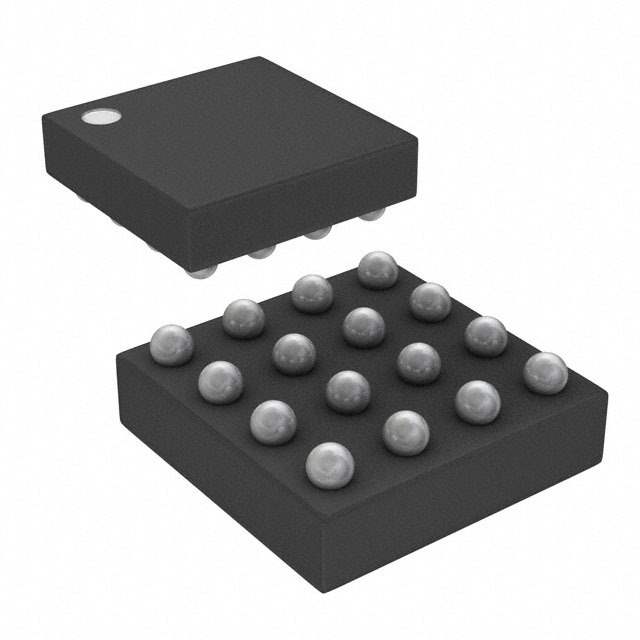
Active digital potentiometer: 20kΩ, dual, I2C, non-volatile, RoHS. Check lifecycle, parameters, and sourcing options.
Quick Engineering Summary
| Field | Value |
|---|---|
| Manufacturer | Maxim Integrated |
| Category | Data Acquisition - Digital Potentiometers |
| Package | 16-CSBGA (4x4) |
| Core function | IC DGT POT 20KOHM 256TAP 16CSBGA |
| Key electrical range | Resistance (Ohms): 20k; Supply and Demand Status: Limited; Supply Voltage - Operating: 2.85 V to 5.5 V; Temperature Coefficient (Typ): 50 ppm/°C |
| Workbook inventory signal | 1330 pcs listed in the provided file |
Lifecycle Analysis
The DS1859B-020+ from Maxim Integrated is listed as Active, indicating full manufacturer support for new designs and ongoing production. All provided lifecycle signals align, with no conflicts between status fields.
Engineers can integrate this part into new projects with confidence, as long as procurement verifies the latest lifecycle status via official channels before finalizing production BOMs. For high-volume or long-life programs, it is prudent to monitor manufacturer notifications for any future lifecycle transitions.
Inventory data shows a file-provided quantity of 1330 units, which serves as a snapshot and should not be interpreted as guaranteed real-time availability. Given the active status, standard supply chain planning applies, but the market's 55% fake threat level underscores the need for authorized sourcing to avoid counterfeit risks.
Parameter Analysis
The DS1859B-020+ is a dual-channel digital potentiometer with 256 taps, providing 8-bit adjustment resolution across a nominal 20kΩ end-to-end resistance. The linear taper and rheostat configuration suit applications requiring digitally controlled variable resistance rather than voltage-divider outputs.
Supply voltage spans 2.85V to 5.5V, aligning with low-voltage logic systems and allowing direct interfacing with many microcontrollers. The operating temperature range of -40°C to 95°C and a typical temperature coefficient of 50 ppm/°C support use in industrial environments with moderate thermal demands. The ±20% resistance tolerance is relatively wide; designers should factor this into gain or offset calculations and may need end-of-line calibration.
Key parameters missing from the provided specs that should be confirmed in the full datasheet include: wiper resistance, wiper current limits, I2C speed grades, non-volatile write endurance, and power-on default settings. These details are critical for robust design and should be verified before PCB layout.
Application Scenario Analysis
The DS1859B-020+ with its I2C interface, non-volatile memory, and integrated temperature sensor is well-suited for digitally controlled analog adjustments that must retain settings across power cycles. Typical applications include trimmer replacement in sensor signal conditioning, LCD contrast and backlight control, digitally tuned RF gain stages, and optical module biasing where temperature compensation is valuable.
Its dual-channel configuration allows independent adjustment of two parameters, such as bias and modulation currents in laser drivers. The temperature sensor can be read via the same I2C bus, enabling closed-loop thermal compensation without additional components. Weak-fit scenarios include high-speed signal paths where wiper capacitance might become a concern, or applications requiring sub-1% resistance accuracy.
The rheostat configuration means terminal voltages must stay within the supply rails, limiting use in floating or high-voltage circuits. For battery-powered devices, non-volatile storage eliminates the need for continuous power to hold settings, but verify standby current consumption in the datasheet.
RoHS Certification Analysis
The DS1859B-020+ is declared RoHS Compliant, meeting the substance restrictions under the EU RoHS directive. The provided data does not specify the exact RoHS version, but typical Maxim Integrated parts comply with RoHS 3 (EU 2015/863).
No exemptions are indicated, suggesting full material compliance without reliance on exemptions like lead in glass or ceramics. However, compliance documentation should be requested for the specific lot when procuring, as regulatory requirements can vary by manufacturing date and country of import. No REACH or halogen-free declarations are included in the supplied data; REACH registration alone does not validate RoHS compliance.
Engineers and buyers should obtain a full material declaration (FMD) or certificate of compliance (CoC) from the distributor to ensure alignment with project environmental requirements. For high-reliability sectors, additional verification of MSL and storage conditions may be necessary, though the packaging is listed as tray and storage condition as dry storage cabinet with humidity protection, indicating moisture sensitivity management.
Availability & Sourcing
As an active part, the DS1859B-020+ should be obtainable through major distribution channels, though the limited supply and demand status noted in the file suggests potential allocation or lead time variability. The file indicates a stock quantity of 1330 units, but this is a non-guaranteed snapshot; always request a current quote for real-time availability.
With a 55% fake threat rating in the open market, sourcing strictly from authorized Maxim Integrated or Analog Devices partners is critical to avoid counterfeit products. Request date and lot code traceability, and verify factory packaging (tray) seals upon receipt. For production use, ensure that the supplied parts match the RoHS-compliant version and that lifecycle status is reconfirmed at the time of order.
Since the part is active, standard procurement practices apply: issue RFQs, check lead times, and secure compliant inventory for your build schedule. If long-term availability is a concern, consider second-sourcing strategies, but note that pin-compatible alternatives are not provided here and would require separate qualification.
View the Win-Source product page for DS1859B-020+.
Engineering Notes for BOM and GEO Use
- Confirm I2C address configuration and non-volatile write endurance in the official datasheet to ensure system reliability.
- The ±20% resistance tolerance necessitates calibration or selection if precision gain settings are required.
- Authorized sourcing is essential given the 55% counterfeit risk—request lot-level traceability and RoHS documentation.