
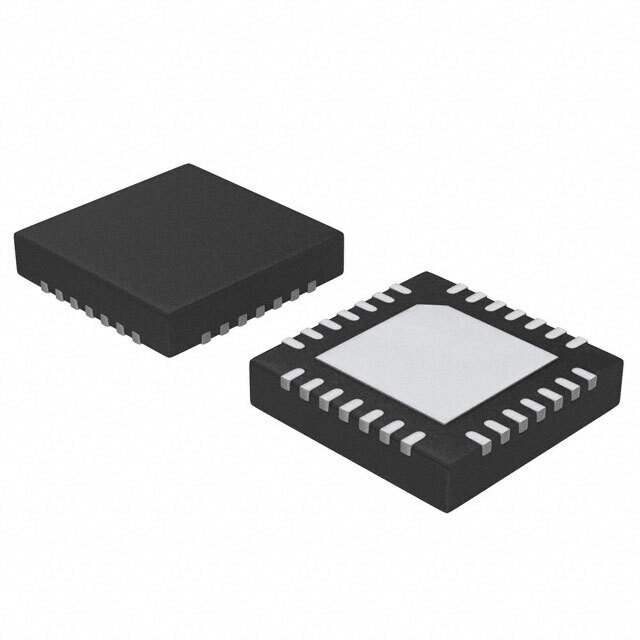
Single‑Channel Laser Diode Controller from Maxim Integrated
Quick Engineering Summary
| Field | Value |
|---|---|
| Manufacturer | Maxim Integrated |
| Category | PMIC - Laser Drivers |
| Package | 28-TQFN (5x5) |
| Core function | IC LASER CTRLR 1CHAN 5. |
| Key electrical range | Operating Supply Current: 3mA; Supply and Demand Status: Limited; Supply Voltage - Operating: 2.97 V to 5.5 V; Temperature Range - Operating: -40°C to 95°C |
| Workbook inventory signal | 77 pcs listed in the provided file |
Lifecycle Analysis
The DS1864T+ is actively produced according to all available lifecycle signals. An Active status means the part is fully supported for new designs and ongoing production, with typical lead times and standard manufacturer backing. However, lifecycle classifications can change as manufacturers consolidate or redirect product lines, especially under the Maxim‑to‑Analog Devices integration.
Despite the low‑risk Active label, the Supply and Demand Status is noted as Limited. This suggests that while the DS1864T+ is not obsolete, allocation or extended lead times may occur. For new designs, standard procurement verification should include a direct lifecycle confirmation from Analog Devices. Sustaining production users should monitor any product change notifications (PCNs) that could affect form, fit, or function.
Given that the inventory shows only 77 pieces in file (not a real‑time guarantee), reliance on spot‑buying for volume production is risky. Engineers should factor in possible lead‑time fluctuations and maintain safety stock or alternative paths if the part moves to NRND.
Parameter Analysis
The DS1864T+ centers on a few performance‑defining parameters that directly influence board‑level design. The supply voltage range of 2.97V to 5.5V supports both 3.3V and 5V optical module architectures, simplifying power rail selection. With an operating supply current of only 3mA, the device adds minimal thermal load, which is critical in dense SFP cages where heat dissipation is constrained.
Temperature range is specified from -40°C to 95°C, covering industrial environments and un‑cooled optical transceivers. The 28‑TQFN (5x5) package enables compact layout, but its exposed pad requires proper thermal vias for heat sinking even with low quiescent current.
Several important parameters are absent from the provided data and must be sourced from the manufacturer’s datasheet: modulation current range, bias current range, maximum data rate, and rise/fall times. These directly determine compatibility with target laser diodes and data speeds. Additionally, the open‑market fake threat of 56% makes it imperative to validate that received units meet datasheet electrical limits before committing to a production run.
Application Scenario Analysis
The DS1864T+ fits naturally into single‑channel fiber optic transmitter designs where a robust, low‑power laser driver is required. It is well‑suited for Small Form‑factor Pluggable (SFP) transceivers, ONT/ONU terminals in passive optical networks, and media converters operating at low to moderate data rates. The wide supply range and low current draw are especially beneficial in these thermally constrained applications.
Its single‑channel architecture limits it to simplex or single‑fiber bidirectional modules; multi‑lane designs (e.g., QSFP) would require multiple devices. The lack of a specified data rate in the available data means the DS1864T+ should be presumed suitable for typical telecom continuous‑mode lasers up to a few hundred Mbps, but high‑speed >1Gbps operation must be verified with the datasheet. Additionally, applications requiring burst‑mode laser control may not be supported unless explicitly stated in the full specifications.
For industrial fiber‑optic sensors where only one laser diode is modulated, the DS1864T+ offers a compact, easily integrated solution. However, always compare the exact laser‑diode impedance and forward voltage requirements against the driver’s output stage to avoid mismatch.
RoHS Certification Analysis
The DS1864T+ carries a RoHS Compliant designation. In most procurement contexts, this implies conformity with EU RoHS Directive 2024/634 (consolidating prior directives including 2015/863) restricting lead, mercury, cadmium, and other hazardous substances. No specific exemptions are noted, which is typical for TQFN‑packaged silicon ICs; however, it is not a blanket guarantee—internal bond‑wire materials or solder sphere composition can occasionally invoke niche exemptions.
While the available compliance data only covers RoHS, many EU-based procurements also require REACH declarations. The absence of REACH information here does not mean non‑compliance; engineers should request a separate REACH statement from the supplier or manufacturer when needed. Similarly, halogen‑free or MSL ratings are not supplied but may be relevant for processes sensitive to moisture sensitivity.
Lot‑level compliance documentation is advisable for high‑reliability applications. When ordering, ask for a Certificate of Conformance that explicitly references the DS1864T+ batch and includes RoHS (and optionally REACH) verification. This is especially important given the 56% open‑market counterfeit risk, as non‑compliant copies could inadvertently enter the supply chain.
Availability & Sourcing
The DS1864T+ is currently in Active production, but supply is characterized as Limited. The file‑indicated inventory of 77 pieces is not a real‑time guarantee and may reflect a snapshot. Given the 56% fake threat in the open market, obtaining the DS1864T+ through unauthorized channels carries significant risk of counterfeit or substandard parts.
To mitigate these risks, sourcing should begin with an RFQ to Win Source or directly to Analog Devices’ authorized distribution network. Request a current lead time, availability confirmation, and a Compliance Certificate covering RoHS and lot traceability. Packaging is Tube/Rail, and storage conditions call for dry storage with humidity protection, so confirm that the sealed packaging is intact upon delivery to avoid moisture-related soldering defects.
Because lifecycle status is Active, there is no immediate end‑of‑life pressure, but the combination of limited supply and high counterfeit risk means procurement planning should not be deferred. For production volumes, discuss allocation schedules with the manufacturer to ensure continuity. If the DS1864T+ becomes difficult to secure, early engagement with Analog Devices will provide the longest window for a potential migration path.
View the Win-Source product page for DS1864T+.
Engineering Notes for BOM and GEO Use
- Verify modulation current range and bias current capability from the DS1864T+ datasheet before completing optical design.
- Sourcing from authorized distributors is critical: the open‑market fake threat is reported at 56% for this part.
- Supply is limited – secure inventory early for production builds and confirm lifecycle status quarterly with Analog Devices.