
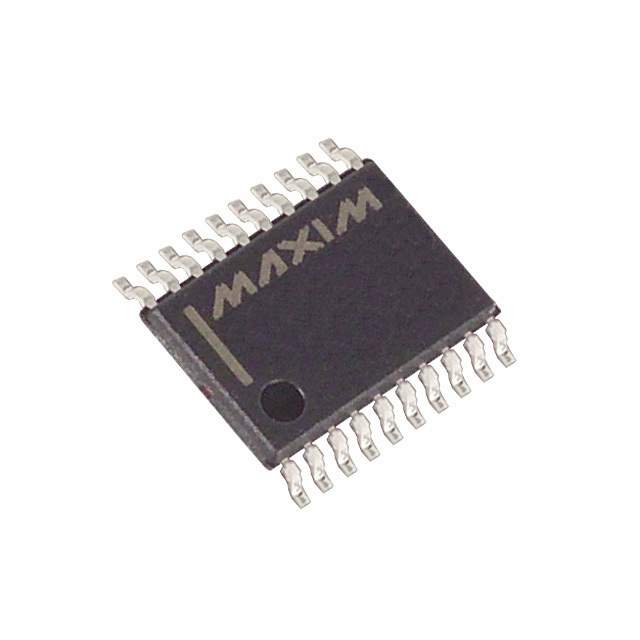
Dual 256‑Tap 10kΩ Serial Digital Potentiometer in 20‑TSSOP
Quick Engineering Summary
| Field | Value |
|---|---|
| Manufacturer | Maxim Integrated |
| Category | Data Acquisition - Digital Potentiometers |
| Package | Tube |
| Core function | IC DGT POT 10KOHM 256TAP 20TSSOP |
| Key electrical range | Resistance (Ohms): 10k; Resistance - Wiper (Ohms) (Typ): 900; Temperature Coefficient (Typ): 750ppm/°C; Temperature Range - Operating: -40°C ~ 85°C |
| Workbook inventory signal | 1 pcs listed in the provided file |
Lifecycle Analysis
The DS1868BE-010+ is currently listed as Active by Maxim Integrated/Analog Devices. All available lifecycle signals are consistent with full production, meaning there are no indications of planned discontinuation or last‑time‑buy notices. For new designs, this status represents low procurement risk, and the part can be specified with confidence for long‑life programs.
Despite the Active status, engineers and buyers must remain cautious. The part has a rated 77% counterfeit threat in the open market, which elevates sourcing risk regardless of lifecycle. This makes authorized distribution essential. The file‑provided inventory shows one unit, but that figure is not a real‑time stock guarantee and should be validated with a formal quote. To ensure continuity, verify the lifecycle directly with the manufacturer or an authorized source at the time of ordering, especially for production builds.
Parameter Analysis
The DS1868BE-010+ integrates two independent 256‑tap digital potentiometers with a nominal end‑to‑end resistance of 10kΩ and a linear taper. The serial interface simplifies daisy‑chaining via the cascade pin, and the part operates from 2.7V to 3.3V or 5V supplies, offering flexibility in mixed‑voltage systems. The wiper resistance is typically 900Ω, which is critical for calculating loading effects in voltage divider configurations. The ±20% total resistance tolerance and 750ppm/°C temperature coefficient are important for applications where absolute accuracy or stability over temperature is required.
Several parameters essential for design qualification are not detailed in the supplied data. Engineers should verify the datasheet for dynamic characteristics such as bandwidth, total harmonic distortion, and power‑on reset behavior. The volatile memory type means that wiper positions reset to mid‑scale on power‑up unless an external controller sets them, a behavior that must be accounted for in fail‑safe designs. Additionally, the 85°C maximum operating temperature and MSL 1 rating support standard industrial environments, but thermal derating should be considered for dense PCB layouts.
Application Scenario Analysis
This digital potentiometer fits well in applications requiring adjustable analog parameters under digital control. Typical strong‑fit scenarios include LCD contrast adjustment, audio volume control, programmable gain amplifiers, and bias voltage trimming in industrial sensors. The dual‑channel configuration and cascade pin enable multi‑potentiometer systems without additional chip‑select lines, simplifying SPI bus design. The 256‑step resolution provides adequate granularity for most low‑ to medium‑precision adjustments.
Weak‑fit scenarios would be precision voltage references or high‑stability automotive sensor calibration, where the ±20% tolerance and 750ppm/°C drift may introduce unacceptable errors. Similarly, applications demanding non‑volatile wiper storage would require an alternate part with internal EEPROM, as the DS1868BE-010+ is volatile. The part is not characterized for high‑frequency signal paths above the audio range, so RF or fast analog signal routing should be avoided unless thoroughly bench‑validated.
RoHS Certification Analysis
The DS1868BE-010+ is documented as RoHS Compliant and REACH Unaffected, meeting European Union environmental directives for lead‑free and hazardous substance restrictions. An MSL Level 1 rating indicates unlimited floor life before reflow, which reduces handling constraints in high‐volume SMT assembly. These certifications are typically issued at the component family level, meaning the manufacturer declares compliance for all variants, but lot‑to‑lot consistency should still be confirmed.
Buyers should request a current RoHS certificate of compliance for each receipt lot, especially if the parts pass through multiple intermediaries. Although the data indicates RoHS compliance, it does not explicitly confirm exemption usage for lead in glass or other permitted applications; engineers needing full material declaration should consult the official Analog Devices material content document. For export, the ECCN code EAR99 suggests no special license is required, but trade compliance should still be verified per destination.
Availability & Sourcing
At the time of analysis, the file‑provided stock quantity is one unit, packed in tube (standard package quantity 74). This number is not a real‑time inventory commitment and must be verified through a request‑for‑quote (RFQ) process. Because the DS1868BE-010+ is Active, standard lead times from authorized distributors should be available, but the 77% counterfeit threat makes it critical to source only through Maxim Integrated/Analog Devices authorized channels or reputable suppliers with thorough incoming inspection.
Buyers should request date/lot code information, RoHS certificates, and full manufacturer traceability when placing orders. For production builds, negotiate pricing and lead times directly with distributors rather than relying on spot stock. If longer‑term availability is a concern, discuss the product roadmap with Analog Devices. Request a quote today for a current delivery commitment, and factor in the high counterfeit risk when selecting alternative sources.
View the Win-Source product page for DS1868BE-010+.
Engineering Notes for BOM and GEO Use
- The 77% counterfeit threat in the open market demands strict traceability and sourcing only from authorized distribution.
- High 750ppm/°C temperature coefficient and ±20% resistance tolerance may necessitate system‑level calibration or external precision components.
- Volatile memory means wiper settings are lost at power‑off; verify that your application can tolerate this behavior or add non‑volatile storage externally.