
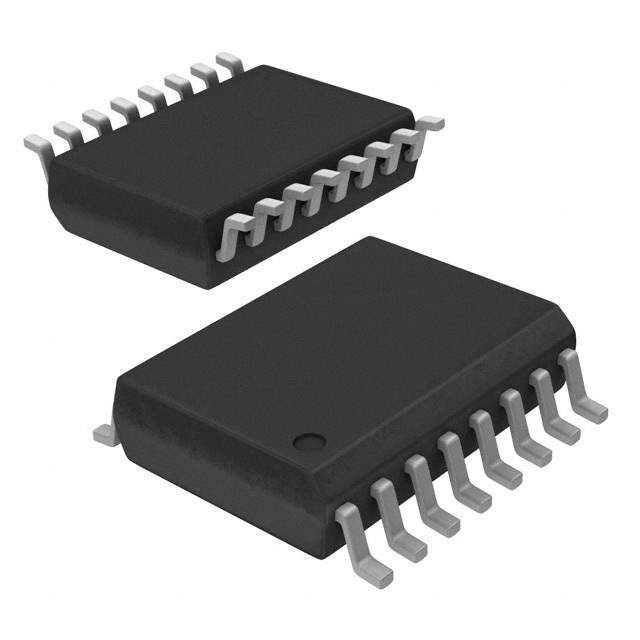
Dual 100kΩ, 256-Tap, Serial Interface, EOL 16-SOIC Device
Quick Engineering Summary
| Field | Value |
|---|---|
| Manufacturer | Maxim Integrated |
| Category | Data Acquisition - Digital Potentiometers |
| Package | 16-SOIC |
| Core function | IC DGT POT 100KOHM 256TAP 16SOIC |
| Key electrical range | Operating Supply Voltage: 2.7 V ~ 3.3 V, 5V; Operating Temperature Range: -40°C ~ 85°C; Resistance (Ohms): 100k; Resistance - Wiper (Ohms) (Typ): 400 |
| Workbook inventory signal | 26000 pcs listed in the provided file |
Lifecycle Analysis
The DS1868S-100 from Maxim Integrated is classified as End-of-Life (EOL) with high risk. This status indicates the manufacturer has discontinued the part, and it is no longer recommended for new designs. The introduction date was October 1999, and the estimated EOL date is marked as obsolete. For sustaining production, sourcing becomes critical; a last-time buy window may have already closed, and remaining inventory is constrained. The provided file inventory of 26,000 units should not be considered real-time; actual availability must be verified through a quote. Engineers should avoid using the DS1868S-100 in new projects and instead migrate to alternative active devices. Documentation and manufacturer notices should be revalidated to confirm the exact discontinuation timeline.
Parameter Analysis
Key parameters for the DS1868S-100 include its dual potentiometer configuration, 100kΩ end-to-end resistance with ±20% tolerance, and 256 taps with a linear taper. The serial interface (up/down protocol) and volatile memory define control architecture. The wiper resistance is typically 400Ω, and the temperature coefficient is 750 ppm/°C. Supply voltage ranges from 2.7V to 5.5V, and the operating temperature spans -40°C to 85°C. These specs influence derating, thermal margins, and PCB layout within a 16-SOIC package. Missing datasheet details such as wiper current limits, interface timing, and power-on reset behavior must be verified for correct integration. The loose tolerance and high tempco require careful assessment for precision circuits.
Application Scenario Analysis
The DS1868S-100 fits well in applications requiring adjustable analog control, such as volume adjustment, contrast control, or offset trimming in industrial and consumer equipment. Its dual channels and cascade pin enable multi-potentiometer daisy-chaining. Strong-fit scenarios include non-critical potentiometer replacement where tolerance and temperature drift are acceptable. Weak-fit scenarios arise in precision instrumentation, low-drift circuits, or environments demanding non-volatile memory – the DS1868S-100 has volatile memory, losing settings at power-off. The device is suitable for legacy systems sustaining production but not for new high-reliability designs.
RoHS Certification Analysis
RoHS compliance for the DS1868S-100 is ambiguous. The source data includes both “RoHS Compliant” and “RoHS Non-Compliant” designations. This conflict often reflects different manufacturing lots or versions. The EOL status may involve older non-compliant stock alongside later compliant batches. For procurement, lot-level documentation should be requested to confirm conformity with RoHS 3 (EU 2015/863) or earlier standards. No REACH, halogen-free, or MSL data is provided, so additional environmental compliance checks are necessary before purchase.
Availability & Sourcing
The DS1868S-100 is EOL with limited supply and a medium fake threat of 29 percent. A file-provided quantity of 26,000 units exists, but real-time availability cannot be guaranteed. Buyers should request a quote to confirm inventory, date/lot codes, and packaging (tube). Verify lifecycle status with the manufacturer and secure any remaining authorized stock. Given the high risk, consider evaluating migration to an active digital potentiometer from Analog Devices/Maxim Integrated. Traceability, storage conditions, and RoHS compliance per lot are critical to avoid counterfeit or non-compliant parts.
View the Win-Source product page for DS1868S-100.
Engineering Notes for BOM and GEO Use
- Validate RoHS status per lot due to conflicting compliance data; older stock may not meet current directives.
- Account for the 750 ppm/°C temperature coefficient and ±20% resistance tolerance in your design margins.
- For new designs, migrate to an active replacement to avoid EOL procurement risks.