
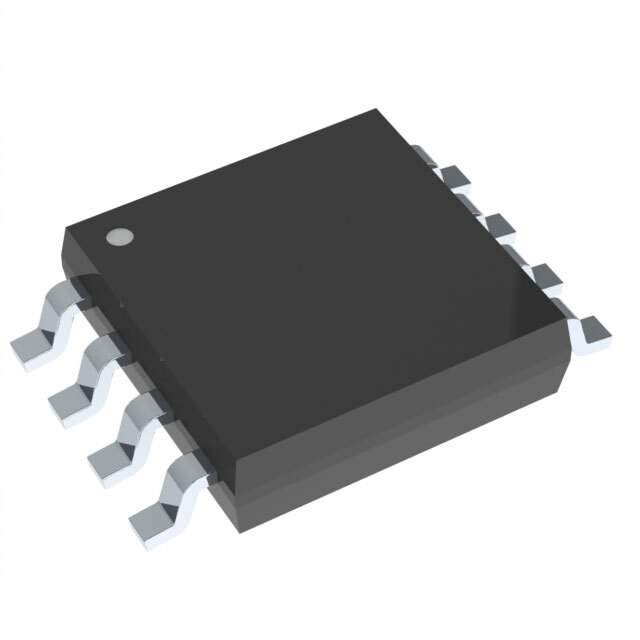
Part Status: Obsolete / EOL – High risk for new designs. Verify availability.
Quick Engineering Summary
| Field | Value |
|---|---|
| Manufacturer | Maxim Integrated |
| Category | Data Acquisition - Digital Potentiometers |
| Package | 8-SOIC |
| Core function | IC DGTL POT 10KOHM 64TAP 8SOIC |
| Key electrical range | Operating Temperature Range: -40°C ~ 85°C; Supply and Demand Status: Balance |
| Workbook inventory signal | 933 pcs listed in the provided file |
Lifecycle Analysis
The DS1869S-10 from Maxim Integrated is officially classified as End-of-Life (EOL) and part status is obsolete. This means the component is no longer recommended for new designs and may have limited or no future production runs. All available lifecycle signals, including the lifecycle status field and part status, consistently indicate EOL, so the risk level for procurement is high.
For sustaining existing production, this part may still be sourced from residual distributor inventory, but availability is not guaranteed. The file-provided stock of 933 units offers a snapshot, not a real-time commitment. Engineers should validate lifecycle status directly with Maxim Integrated or Analog Devices to confirm any last-time-buy (LTB) opportunities or extended support programs.
Any use in new designs is strongly discouraged. Teams should identify a pin-compatible or functionally equivalent replacement from the manufacturer's current portfolio to avoid future shortages. Requesting a life cycle forecast and obsolescence roadmap from the supplier is critical before committing to long-term builds.
Parameter Analysis
The DS1869S-10 is a 10kΩ digital potentiometer with 64 taps and non-volatile memory. Key parameters include a resistance tolerance of ±20%, a wiper resistance of 400Ω (typical), and a voltage supply range of ±2.7V to 8V. The pushbutton and serial interface allow flexible adjustment, and the 8-SOIC surface-mount package is standard for space-constrained layouts.
When evaluating this part for a replacement, matching the resistance range, tap count, and interface protocol is essential. The non-volatile memory ensures settings are retained across power cycles, which is critical for calibration applications. The operating temperature range of -40°C to +85°C supports industrial environments, but derating should be reviewed based on the specific system thermal profile. Missing datasheet details such as interface timing diagrams and power-on reset behavior must be verified against the manufacturer's documentation.
For new designs, potential parametric mismatches—like a different tap-to-tap linearity or end-to-end resistance tempco (750 ppm/°C typical)—can impact performance. Reviewing the original DS1869 datasheet thoroughly and cross-referencing substitution candidates is necessary to ensure integration without redesign.
Application Scenario Analysis
The DS1869S-10 is typically used for adjustable gain, offset trimming, and sensor calibration in industrial and instrumentation systems. Its serial/pushbutton interface suits both manual and microcontroller-driven adjustments. Given its EOL status, this part is a strong fit only for legacy systems that require a drop-in replacement without requalification, provided inventory can be secured.
For new projects, the DS1869S-10 is a weak fit because of the high obsolescence risk. Modern alternatives may offer better resolution, lower tempco, or digital I2C/SPI interfaces that simplify control. However, in a retrofit scenario where board re-layout is not feasible, the exact package and pinout compatibility of the DS1869S-10 may justify its limited use, provided the design is not intended for high-volume production.
Buyers should assess whether the 64‑tap resolution meets the required adjustment granularity. For applications needing finer control, a higher‑tap–count digital pot may be warranted. The 400Ω wiper resistance can introduce nonlinearity in low‑impedance circuits, so simulation or breadboarding with the actual tolerance range is advised before committing to procurement.
RoHS Certification Analysis
Supplier data lists the DS1869S-10 as RoHS Compliant. This typically indicates compliance with EU Directive 2011/65/EU and its amendments, including RoHS 3 (EU 2015/863). The component also carries a REACH Unaffected status and an MSL rating of 1 (Unlimited), which suggests no special moisture handling is required.
Because the DS1869S-10 is an EOL part, the RoHS status provided may be based on family‑level or historical documentation rather than lot‑specific testing. For high‑reliability applications, it is advisable to request a full material declaration or certificate of compliance from the supplier for the specific date/lot code being purchased. Some exemptions, such as lead in glass or ceramic, may apply but are not explicitly noted in the available data.
REACH unaffected status does not substitute for RoHS compliance; it addresses different substances. Buyers should ensure that the component meets any additional environmental regulations required for their target market, especially if the product is to be exported.
Availability & Sourcing
The DS1869S-10 is packaged in tubes with 88 units per tube, suitable for standard pick‑and‑place assembly. A file‑provided quantity of 933 units appears in the supply chain snapshot, but this is not guaranteed live inventory. Given the EOL status, interested buyers should request a quote immediately to verify real‑time stock and negotiate lot‑holding options.
Sourcing for an obsolete part demands rigorous traceability. Request date and lot codes, and if possible, obtain visual confirmation of markings and packaging to mitigate the noted 54% counterfeit threat in the open market. Documentation such as certificates of conformance and RoHS compliance should be obtained with every shipment. For high‑volume or long‑term requirements, consider a scheduled order or a consignment agreement to lock in available stock.
Because the DS1869S-10 is EOL, it is critical to confirm the manufacturer’s discontinuation notice and any last‑time‑buy windows. If no future supply is possible, accelerate migration efforts. Contacting an authorized distributor or Maxim Integrated directly will help validate the remaining pipeline and reduce the risk of purchasing substandard parts.
View the Win-Source product page for DS1869S-10.
Engineering Notes for BOM and GEO Use
- Verify EOL status and last-time-buy conditions with Maxim Integrated before committing to new production.
- Cross-reference the DS1869S-10 datasheet for interface timing and tap accuracy before retrofitting.
- Given high counterfeit risk (54%), insist on traceable date/lot codes and authorized supply chains.