
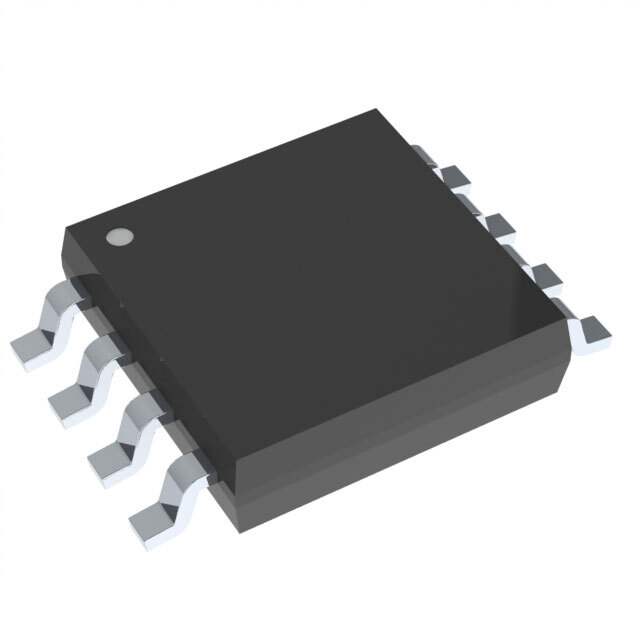
EOL 50kΩ digital potentiometer, 64-tap, 8-SOIC. Verify RoHS compliance and availability before ordering.
Quick Engineering Summary
| Field | Value |
|---|---|
| Manufacturer | Maxim Integrated |
| Category | Data Acquisition - Digital Potentiometers |
| Package | 8-SOIC |
| Core function | IC DGTL POT 50KOHM 64TAP 8SOIC |
| Key electrical range | Resistance (Ohms): 50k; Resistance - Wiper (Ohms) (Typ): 400; Supply and Demand Status: Limited; Supply Voltage - Operating: ±2.7 V to 8 V |
| Workbook inventory signal | 2 pcs listed in the provided file |
Lifecycle Analysis
The DS1869S-50 from Maxim Integrated is officially listed as End-of-Life (EOL). This status means the part is no longer recommended for new designs and the manufacturer has ceased or is phasing out production. Engineers and buyers should immediately stop designing this device into new products and begin evaluating migration paths for new projects.
For sustaining existing production, EOL status demands proactive inventory management. The part currently shows a file-provided quantity of 2 units, but this is not a real-time stock check and actual availability must be confirmed via quote. Given the high obsolescence risk, last-time-buy (LTB) windows may have already closed; contact Maxim Integrated or authorized distributors to verify if any remaining factory stock or LTB options exist. Without active production, future supply is uncertain and subject to market scarcity.
Documentation revalidation is critical at EOL. Cross-reference all design-in parameters against the latest datasheet revision, and confirm that the manufacturer has not issued any errata or discontinuation notices that affect reliability or qualification. The DS1869S-50’s lifecycle signals align—all supplied indicators show EOL—so treat the device with full end-of-life procurement rigor.
Parameter Analysis
The DS1869S-50 is a single-channel digital potentiometer with a 50 kΩ end-to-end resistance, 64 taps, and linear taper. The ±20% tolerance on resistance is relatively wide, meaning that in voltage-divider applications the output ratio may vary significantly unit-to-unit unless calibration is implemented. The typical wiper resistance of 400 Ω adds series impedance that should be accounted for in low-impedance signal paths.
Operating voltage spans ±2.7 V to 8 V (or dual supply), supporting both 3.3 V and 5 V systems. The temperature coefficient of 750 ppm/°C is typical for a non-precision pot and introduces additional drift over the -40°C to +85°C range, making it less suitable for closed-loop control without temperature compensation. The device is housed in an 8‑SOIC surface-mount package and shipped in tubes, aligning with standard pick-and-place assembly.
Key parameters not provided in the source data that must be verified from the official datasheet include: interface type (the device is described as push-button/serial in some records but not confirmed), non-volatile memory specification, maximum wiper current, and digital logic voltage levels. These missing details are essential for integration—especially the interface protocol and memory retention behavior, as some Maxim digital potentiometers store the wiper position in EEPROM. Until confirmed, designers should assume volatile operation and verify button debounce requirements if the push-button interface option is used.
Application Scenario Analysis
Given its EOL status, the DS1869S-50 is only relevant for legacy system support. It can serve as a replacement in existing designs where a 50 kΩ linear digital potentiometer with 64 positions is required. Typical historical applications include LCD contrast adjustment, op-amp gain setting, and analog offset calibration in industrial controllers or test equipment. The extended industrial temperature range of -40°C to +85°C made it suitable for field-deployed instruments.
The low tap count and loose tolerance, however, restrict its use in precision signal chains. For example, in a voltage divider with a 5 V supply, each tap step yields approximately 78 mV, but the ±20% end-to-end resistance variation adds significant uncertainty. The high 750 ppm/°C tempco further limits accuracy in thermally dynamic environments. Applications requiring stable gain over temperature, such as strain-gauge conditioning or medical devices, are weak-fit scenarios unless active compensation is designed in.
Because the DS1869S-50 is obsolete, new designs should avoid it entirely. Instead, engineers should select an active equivalent with similar resistance and interface, consulting Maxim Integrated’s (now Analog Devices) current digital potentiometer portfolio. For legacy repairs, test the part thoroughly as remaining stock may be aged or of uncertain provenance.
RoHS Certification Analysis
RoHS compliance information for the DS1869S-50 is contradictory. In the raw compliance section, the part is marked RoHS Compliant, but a detailed specification field explicitly lists it as ‘RoHS Non-Compliant’. This discrepancy must be resolved before the part is used in any product destined for markets requiring RoHS conformity.
The most conservative interpretation is to treat the device as non-compliant, aligning with the more explicit specification entry. The non-compliance may stem from the use of lead in the SOIC package termination or in the internal die-attach. However, without an official certificate of compliance from Maxim Integrated or its authorized distributors, no definitive statement can be made. The part does not list any REACH or halogen-free declarations, nor is an MSL rating provided in the source data.
For production use, buyers must request a lot-specific RoHS certificate for the exact date code being purchased. If non-compliant lots are the only option, the end product may require an exemption or be restricted from certain markets. Re-verify that any stocked DS1869S-50 units have clear documentation before assembly to avoid costly rework or export violations. Simply assuming compliance from ambiguous datasheet fields is not sufficient for RoHS enforcement.
Availability & Sourcing
The DS1869S-50 is in End-of-Life status with limited market availability. The file indicates an inventory of 2 units, but this is a static snapshot and not a live stock level. The open-market counterfeit risk is estimated at 59%, which is unusually high and demands rigorous sourcing practices.
To procure this part, submit a request for quote (RFQ) to verify current stock, packaging condition (tube/rail as specified), and date/lot codes. Given the EOL lifecycle and high counterfeiting threat, insist on full traceability documentation, including a certificate of conformance and manufacturer’s original labels. Avoid uncertified brokers and gray-market sources; if purchasing from a distributor, confirm that the DS1869S-50 was procured directly from Maxim Integrated or an authorized channel.
Because this component is no longer in production, long-term availability cannot be guaranteed. If you have a line-down situation requiring immediate units, evaluate alternative active parts with similar resistance, interface, and package. For ongoing production, accelerate the migration to a replacement device and purchase remaining inventory only as a bridge stock. Always re-qualify any received DS1869S-50 units through incoming inspection, including X‑ray or decapsulation if necessary, to mitigate the high counterfeit risk.
View the Win-Source product page for DS1869S-50.
Engineering Notes for BOM and GEO Use
- The DS1869S-50 is End-of-Life; do not design into new products. Secure remaining stock for existing production.
- A 59% counterfeit risk in the open market demands that sourcing be limited to authorized or verified channels.
- RoHS status is ambiguous; verify per lot as datasheet indicates non-compliant while some records list compliant.