
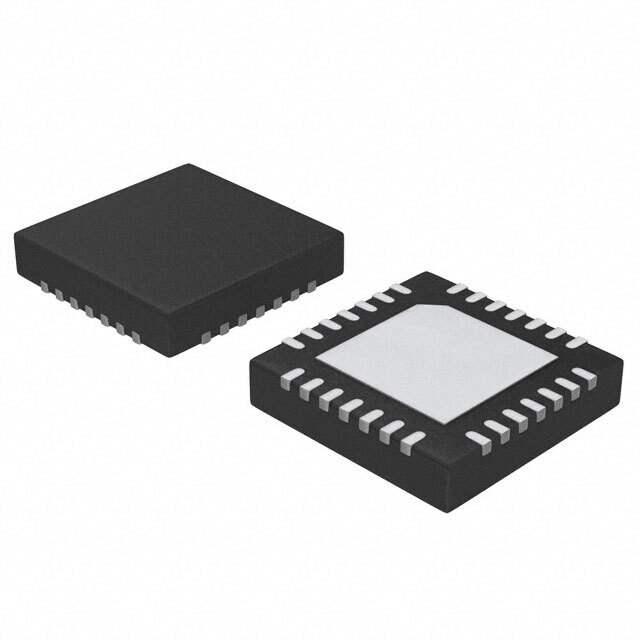
Maxim Integrated SFP Dual LDD Controller – Active, RoHS Compliant, 28‑TQFN Package
Quick Engineering Summary
| Field | Value |
|---|---|
| Manufacturer | Maxim Integrated |
| Category | Interface - Sensor and Detector Interfaces |
| Package | 28-TQFN (5x5) |
| Core function | IC CTRLR SFP DUAL LDD 28TQFN |
| Key electrical range | Input Type: Logic; Operating Supply Current: 10mA; Output Type: Logic; Supply and Demand Status: Limited |
| Workbook inventory signal | 1 pcs listed in the provided file |
Lifecycle Analysis
The DS1876T+ is currently in Active lifecycle, a status indicating full manufacturer support for new designs and ongoing production orders. No NRND or EOL notices have been identified, and all lifecycle signals in the supplied data align without conflict. For procurement teams, this means the component can be safely specified in new board layouts and volume builds without immediate risk of obsolescence.
Nonetheless, lifecycle status is not static. It is prudent to periodically revalidate the status through Maxim Integrated’s official product page or an authorized distributor, especially for programs with long production lifetimes. The file‑provided inventory shows only one unit, which is a snapshot and not a real‑time market view; it should not be interpreted as widespread availability. Active status supports RFQ‑based procurement and normal lead time expectations, but any future change to NRND would necessitate a migration study. For now, the DS1876T+ remains a low‑risk choice for sustaining and new SFP transceiver designs.
Parameter Analysis
Key parameters from the supplied data for the DS1876T+ include its 28‑TQFN (5x5 mm) package, logic‑level input and output, 10 mA operating supply current, and an operating temperature range of −40°C to +95°C. The compact 5x5 QFN package is critical for high‑density SFP module designs where PCB real estate is limited; careful land pattern design and thermal management are required to ensure reliable soldering and operation. The logic I/O simplifies interfacing with standard SFP host controllers and reduces level‑shifting complexity.
The 10 mA supply current aids power budgeting in multi‑channel optical transceivers, while the wide temperature range supports industrial and outdoor networking equipment. Missing from the available data are several parameters essential for design validation: output current capability to the laser diodes, timing characteristics (e.g., rise/fall times, latency), and the internal register map for I²C or serial configuration. Engineers must obtain the full Maxim Integrated datasheet to verify these values, derating margins, and any application‑specific performance curves before committing to production. Without that document, a thorough design review cannot be completed.
Application Scenario Analysis
The DS1876T+ is purpose‑built as a dual SFP laser diode driver controller, placing it squarely in the SFP/SFP+ optical transceiver ecosystem. Its strong‑fit applications include enterprise and data‑center networking switches, routers, fiber‑channel HBAs, and telecom line cards that require hot‑pluggable SFP modules. The dual‑channel architecture means it can control two independent laser diodes, making it suitable for bidirectional or dual‑rate transceivers. Designers of SFP+ 10G modules or legacy SFP 1G/2G transceivers will find its logic I/O and temperature range a natural match.
Weak‑fit scenarios involve non‑SFP applications, such as discrete laser diode control in medical or industrial equipment that lack the SFP management interface. While the part could theoretically be adapted, it would require significant engineering effort to mimic the SFP timing and register model, and other standalone laser drivers or microcontrollers may be more appropriate. Additionally, for applications needing digital diagnostics beyond the basic SFP‑8472 set, verification against the latest Maxim datasheet is essential to confirm register compatibility. This part is not recommended for new designs outside the optical networking sphere without a detailed feasibility study.
RoHS Certification Analysis
The DS1876T+ is marked as RoHS Compliant in the supplier data. This generally indicates conformance to the EU RoHS directive (2011/65/EU) and its amendments, including the 10 restricted substances under EU 2015/863 (RoHS 3). However, no explicit reference to RoHS 3 appears in the provided documentation; buyers should not assume compliance to the latest amendment without confirmation. The absence of exemption details also means that any RoHS exemption used (e.g., lead in solders for internal connections) must be verified through the manufacturer’s certificate of compliance.
For production‑grade procurement, lot‑level RoHS documentation is critical. A family‑level declaration may not account for process changes or specific material sets used in the 28‑TQFN variant. Request a full material declaration from Maxim Integrated or an authorized distributor to ensure the part meets your company’s environmental compliance requirements. REACH status is not provided, so if SVHC information is needed, a separate inquiry is necessary. In summary, while the part is likely compliant, a formal lot‑specific attestation is the best practice before closing a purchase order.
Availability & Sourcing
The DS1876T+ is an active part with standard procurement channels available. The supply and demand status is noted as Limited, and the file-provided inventory of one unit suggests that spot availability may be constrained. To secure parts, engineers and buyers should request a quote through authorized Maxim Integrated distributors or via a reliable sourcing platform. Standard packaging is Tube/Rail, which is typical for small‑to‑medium volume production; for high volumes, alternative packaging methods like tape‑and‑reel should be inquired about.
High open‑market fake threat (41%) makes traceability essential. Always source from franchised distributors or request full traceability documentation, including date codes, lot codes, and certificates of conformance. Verify lifecycle status with the manufacturer before placing large orders, and insist on lot‑specific RoHS certificates. For this active component, the recommended workflow is to request a quote for firm lead time and current pricing, then validate compliance before payment. If long‑term availability becomes a concern, consider a second‑source risk assessment, but no direct substitute is offered in the provided data.
View the Win-Source product page for DS1876T+.
Engineering Notes for BOM and GEO Use
- When purchasing, request date and lot codes to mitigate the 41% fake threat rate observed in the open market.
- Confirm RoHS compliance at the lot level for the latest EU 2015/863 standard, as family‐level declarations may not cover all variants.
- Review the manufacturer datasheet for missing parameters such as output current drive and detailed register maps before finalizing your design.