
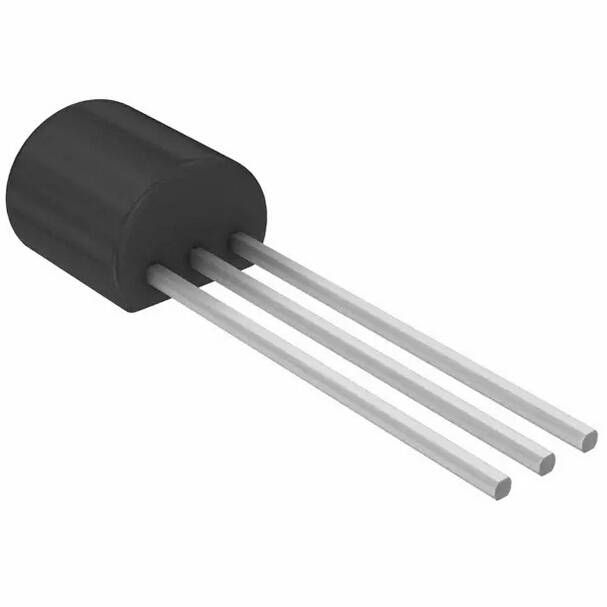
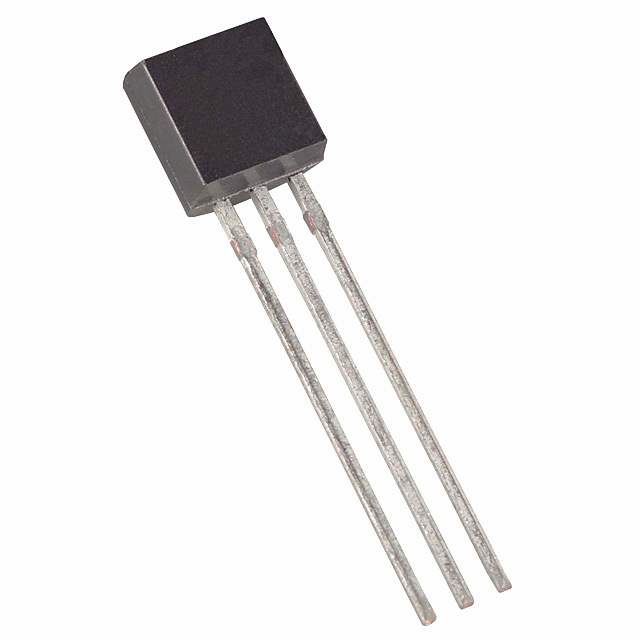
EOL digital temperature sensor from NXP / Nexperia with 1-Wire interface and high accuracy. Verify lifecycle before new designs.
Quick Engineering Summary
| Field | Value |
|---|---|
| Manufacturer | NXP / Nexperia |
| Category | Temperature Sensors - Analog and Digital Output |
| Package | Bulk |
| Core function | SENSOR DIGITAL -55C-125C TO92-3 |
| Key electrical range | Output Type: 1-Wire®; Sensing Temperature - Local: -55°C ~ 125°C; Temperature Range - Operating: -55°C ~ 125°C; Voltage - Supply: 2.5V ~ 5.5V |
| Workbook inventory signal | 30000 pcs listed in the provided file |
Lifecycle Analysis
The DS18B20 is officially designated as End-of-Life (EOL) according to Lifecycle Status signals, although a conflicting Product Status field shows Active. For sourcing and engineering decisions, EOL status takes precedence: this part is no longer recommended for new designs and should only be procured for sustaining legacy systems or repair. The EOL classification carries high procurement risk, as manufacturer support and future availability cannot be guaranteed.
Current file data indicates an inventory quantity of 30,000 units, but this figure is neither real-time nor guaranteed. Buyers must treat it as a snapshot and request up‑to‑date stock confirmation. Additionally, conservative interpretation of the lifecycle conflicts is essential; do not rely on the Active status for production planning. Direct engagement with NXP / Nexperia is advised to clarify the product change notification and any last‑time‑buy opportunities.
Engineering teams should initiate migration planning immediately, identifying alternative temperature sensors that meet form, fit, and function requirements while ensuring long‑term availability.
Parameter Analysis
The DS18B20 offers a digital temperature sensing solution with key parameters that influence integration decisions. The configurable resolution spans 9‑bit to 12‑bit, corresponding to 0.5°C to 0.0625°C step sizes, and the accuracy of ±0.4°C (within -10°C to 70°C) sets the foundation for precision‑sensitive designs. The wide supply voltage range of 2.5V to 5.5V grants flexibility in system power architecture, and the 1‑Wire® output type simplifies wiring by allowing multiple sensors on a single data line.
Operating temperature coverage from -55°C to 125°C suits many industrial and outdoor environments, but the through‑hole TO‑92‑3 package limits miniaturization. Standby mode adds value in battery‑powered applications. However, several datasheet details remain critical for full qualification: parasitic power capability, conversion time versus resolution, EEPROM write endurance, and 1‑Wire protocol timing specifics are not fully enumerated in the source data. Engineers should verify these parameters directly from the official datasheet to ensure design margin and reliability.
The combination of moderate accuracy, simple interfacing, and robust temperature range makes the DS18B20 a pragmatic choice for legacy designs, but the EOL status mandates a thorough parametric comparison with available successors to avoid future redesign risk.
Application Scenario Analysis
The DS18B20’s digital output and 1‑Wire interface make it a strong fit for distributed temperature monitoring in industrial control systems, HVAC equipment, and environmental sensing networks. Its ability to report temperature digitally over long cable runs with minimal pin count is ideal for retrofit or maintenance of existing installations. Consumer appliances such as thermostats or refrigerators also benefit from its simple integration.
However, weak‑fit scenarios emerge in high‑precision laboratory instrumentation requiring better than ±0.4°C accuracy, or in high‑speed data logging where conversion time may bottleneck throughput. Applications demanding many sensors on a single bus must validate bus‑loading constraints and parasitic power limitations, which are not fully specified in the available data. Additionally, new designs that require long‑term availability should avoid this part given its EOL status; a pin‑compatible replacement is not assured.
The device remains serviceable for sustaining legacy platforms, but any new product development should consider alternative sensors with active lifecycle status and comparable 1‑Wire or I²C/SPI outputs.
RoHS Certification Analysis
RoHS compliance data for the DS18B20 is inconsistent. The primary compliance field reports “RoHS Compliant,” yet a supplemental specification lists “RoHS Non‑Compliant.” This conflict introduces uncertainty that must be resolved through lot‑level certification or direct manufacturer inquiry. For EU market shipments, compliance with RoHS 3 (Directive 2015/863) is mandatory, and relying on contradictory statements risks import or production delays.
Moisture Sensitivity Level (MSL) is rated 1 (Unlimited), indicating no special handling requirements for moisture, which eases production logistics. However, REACH compliance and halogen‑free status are not provided in the source data. Given the EOL lifecycle, buyers should request full material declarations and test reports from the supplier before committing to bulk purchases.
Ultimately, RoHS certification cannot be assumed; each procurement lot requires verification to ensure it meets current environmental regulations. The discrepancy suggests that different production periods may have varying compliance; thus, traceability to specific date codes is critical for both compliance and inventory management.
Availability & Sourcing
Sourcing the DS18B20 demands a conservative, verification‑heavy approach due to EOL status, a 53% fake threat level in the open market, and conflicting compliance data. The file indicates 30,000 units, but this quantity is not a live inventory count; it must be requoted to confirm actual stock, date codes, and packaging. Bulk packaging is standard, and the standard package quantity is 2,000 pieces.
Procurement teams should submit a request for quote (RFQ) specifying date‑code and lot‑code traceability requirements. Counterfeit risk mitigation is essential—authorized distribution or direct NXP / Nexperia channels are strongly preferred. Request documentation proving RoHS compliance and lifecycle status confirmation to avoid surprises. For legacy maintenance, secure inventory promptly, but do not treat this part as a long‑term supply solution.
To initiate procurement, contact your sourcing partner with the part number DS18B20 and explicitly ask for EOL verification, current availability, and compliance certificates. This part should only be acquired for existing equipment support, not for new production runs.
View the Win-Source product page for DS18B20.
Engineering Notes for BOM and GEO Use
- Verify EOL status with NXP / Nexperia; conflicting Active product status may indicate limited last-time-buy or special sourcing.
- Assess 1-Wire bus loading and parasitic power requirements; accuracy varies with resolution and supply voltage; confirm with datasheet.
- Inspect for counterfeit risk; the 53% fake threat in open market necessitates traceability and authorized source verification.