
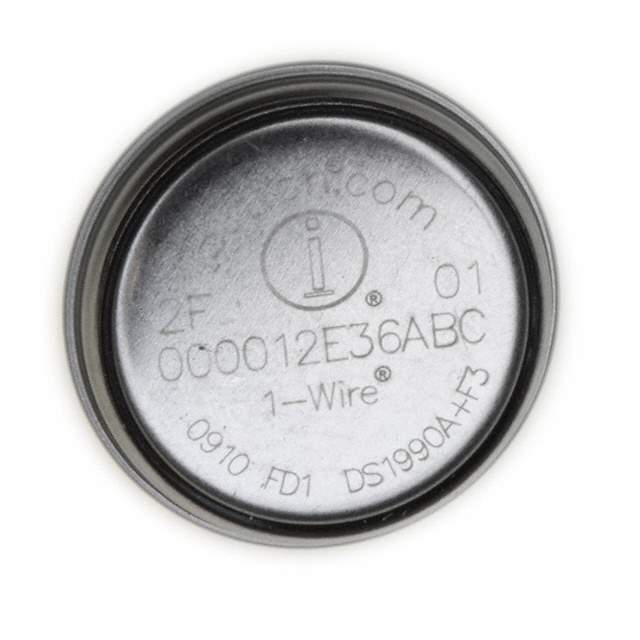
Specialized iButton 16Kbit Add-Only EPROM Memory Module
Quick Engineering Summary
| Field | Value |
|---|---|
| Manufacturer | Maxim Integrated |
| Category | Specialized |
| Package | Not available in supplied data |
| Core function | IBUTTON 16KBIT ADD-ONLY F5 |
| Key electrical range | Supply and Demand Status: Limited |
| Workbook inventory signal | 120 pcs listed in the provided file |
Lifecycle Analysis
The DS1985-F5+ is currently listed as Active in the manufacturer’s lifecycle data. However, a specification field includes an estimated EOL date of 2023, which introduces a conflict. This discrepancy suggests that the part may be approaching end-of-life or that the EOL date was set but later extended. For design and procurement teams, this warrants conservative planning.
An Active lifecycle status normally implies that the part is suitable for new designs and will be available for the foreseeable future. The conflicting EOL date contradicts that assurance, raising the risk from low to medium. Buyers should not assume unlimited availability, and engineering teams should treat this component as potential NRND (Not Recommended for New Designs) until the lifecycle is confirmed.
It is essential to contact Maxim Integrated (now part of Analog Devices) or an authorized distributor to clarify the production roadmap. If the part is indeed being phased out, a lifetime buy may be necessary for sustaining programs. For new projects, consider alternative iButton solutions or upgrade paths. The limited supply and demand status further supports the need for proactive lifecycle verification.
Parameter Analysis
The DS1985-F5+ provides 16Kbit (2KB) of EPROM memory in an add-only configuration. This means new data can be appended to unused memory pages, but existing bits cannot be erased or overwritten. The memory type is critical for applications requiring permanent, tamper‑evident storage. As an iButton, the part comes in a stainless steel F5 can, offering mechanical robustness and resistance to moisture and physical abuse.
Key parameters include the memory size and type, but several detailed specifications are not available in the provided data. Engineers should consult the official datasheet for operating voltage, 1‑Wire timing, access speed, data retention, and endurance ratings. The storage condition note—dry storage cabinet and humidity protection—indicates that the device may have moisture sensitivity, so proper handling during assembly is advised.
For PCB layout or system integration, the mechanical dimensions of the iButton can and the required 1‑Wire interface circuitry are important. The DS1985 family is known for its simple two‑pin serial protocol, but exact timing and read/write sequences must be verified. Without these details, the part’s fit for high‑speed or low‑power designs cannot be fully evaluated. Always cross‑check the memory organization (pages, protection registers) in the full datasheet before finalizing a design.
Application Scenario Analysis
The add‑only EPROM of the DS1985-F5+ makes it well‑suited for applications where data must be permanently and securely stored in a portable, rugged token. Typical use cases include device authentication, access control badges, equipment calibration records, and asset tracking tags. The iButton form factor allows attachment to keyfobs, panels, or embedded into machinery, enabling contact‑based read/write via a 1‑Wire probe.
Strong‑fit scenarios involve writing unique serial numbers, manufacturing dates, or configuration parameters once during production, then reading them in the field. For example, a machine could store its calibration coefficients in the iButton, allowing easy transfer to a service tool. The add‑only feature prevents accidental erasure, a key advantage over EEPROM for safety‑critical identifiers.
Weak‑fit scenarios include applications that need frequent data updates or large log storage, because the memory cannot be cleared and is limited to 2KB. Similarly, high‑volume consumer products may find the DS1985-F5+ cost‑prohibitive or mechanically awkward compared to surface‑mount serial memories. Designers should also evaluate the contact‑based interface, which may wear over time, against wireless alternatives. Overall, the part excels in industrial and niche security applications where durability and permanent records are paramount.
RoHS Certification Analysis
The DS1985-F5+ is identified as RoHS Compliant, suggesting that it meets the European Union’s Restriction of Hazardous Substances directive. However, the specific version of the directive (e.g., RoHS 2, RoHS 3) is not stated. Given the long production history since 1999, it is possible that older non‑compliant stock may still circulate in the supply chain; therefore, lot‑level compliance should be confirmed when sourcing.
No REACH declaration is provided, and REACH compliance alone does not guarantee RoHS compliance, as they address different substance restrictions. The iButton’s stainless steel can and internal materials may be subject to exemptions, such as lead in high‑melting‑temperature solder. Without explicit exemption information, assume standard RoHS compliance but verify with the manufacturer or supplier.
From a procurement perspective, request a Certificate of Compliance (CoC) with each shipment. This is especially important given the medium counterfeit risk and the part’s age. Proper RoHS documentation ensures regulatory acceptance in EU markets and reduces liability for OEMs. If your product must meet China RoHS or other regional standards, additional testing may be needed.
Availability & Sourcing
The DS1985-F5+ shows a file‑provided quantity of 120 units, with a supply and demand status of Limited. This limited availability, combined with the conflicting lifecycle signals, makes sourcing a careful exercise. Do not assume that the listed stock is real‑time or guaranteed; it represents a snapshot and may change quickly. For current availability, always request a quote (RFQ) from authorized distributors or the manufacturer.
Given the 64% fake threat in the open market, procuring from unauthorized brokers carries high risk. Counterfeit iButtons can exhibit altered memory or non‑functional 1‑Wire interfaces. Sourcing teams should insist on traceability documentation, original packaging, and date/lot code verification. Storage conditions (dry cabinet, humidity protection) must be maintained to prevent moisture damage, which is critical for EPROM reliability.
Because the part is listed as Active but with an EOL date of 2023, a conservative approach is recommended. For sustaining production, secure inventory now and negotiate a last‑time‑buy if the EOL is confirmed. For new designs, evaluate replacement options or prepare a migration path. The DS1985 family may have alternatives; consult Analog Devices for guidance. To mitigate supply chain risk, partner with a supplier that provides lifecycle monitoring and counterfeit detection services.
View the Win-Source product page for DS1985-F5+.
Engineering Notes for BOM and GEO Use
- Verify the EOL status with Maxim Integrated despite the Active designation, as an estimated EOL date of 2023 is specified.
- The EPROM memory is one-time programmable (add-only); ensure your production workflow includes the required 1-Wire programming interface, typically detailed in the iButton datasheet.
- Counterfeit threat is rated at 64% in open market sources; procure only through authorized channels and validate date codes, packaging, and compliance documentation.