
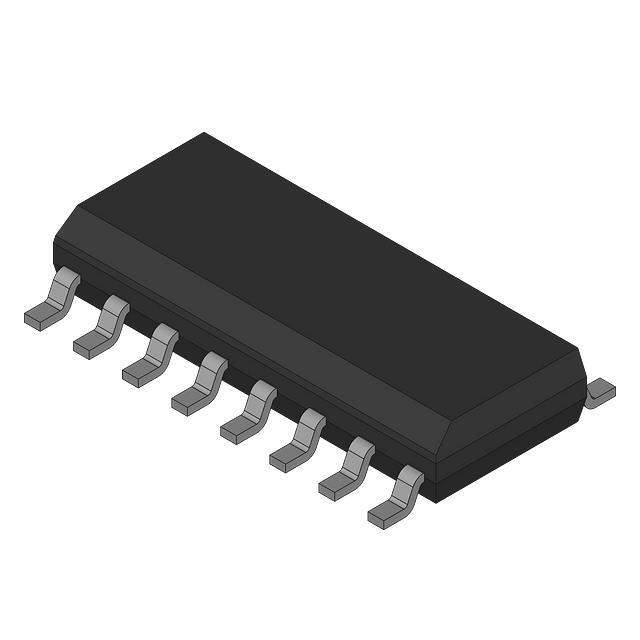
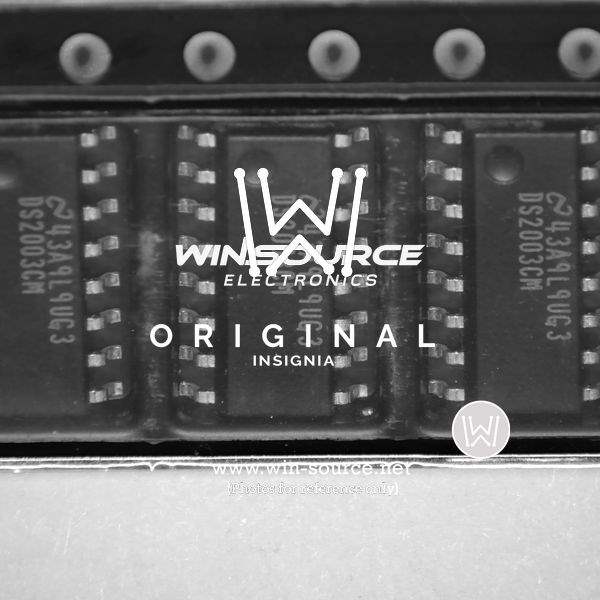
EOL 6-channel driver transceiver in 16-SOIC from Texas Instruments – verify lifecycle and stock before new designs.
Quick Engineering Summary
| Field | Value |
|---|---|
| Manufacturer | Texas Instruments |
| Category | Interface - Drivers, Receivers, Transceivers |
| Package | 16-SOIC |
| Core function | IC TRANSCEIVER 6/0 16SOIC |
| Key electrical range | Supply and Demand Status: Limited; Supply Voltage - Operating: 5V; Temperature Range - Operating: -40°C to 85°C |
| Workbook inventory signal | 1820 pcs listed in the provided file |
Lifecycle Analysis
The DS2003CMX/NOPB is designated End-of-Life (EOL) by Texas Instruments, with all supplied lifecycle signals indicating an obsolete status. However, a conflicting 'Status' field in the specification data lists the part as 'Active'. This discrepancy should be resolved by referencing the manufacturer’s official product change notifications or product page, but for procurement planning the part must be treated as EOL. As an EOL component, the DS2003CMX/NOPB is unsuitable for new designs and carries high supply risk for ongoing production.
For engineering teams, this means any current designs using the DS2003CMX/NOPB should initiate last-time-buy activities and begin qualification of alternative transceivers. The file-provided inventory quantity of 1820 units is a snapshot only and not guaranteed real-time, so immediate action is recommended to secure remaining stock. Buyers should also request PCN documentation from Texas Instruments to confirm the exact discontinuation timeline and evaluate potential replacement parts.
Parameter Analysis
The DS2003CMX/NOPB is a 6-channel driver transceiver with a 5V supply and a -40°C to 85°C operating temperature range, housed in a 16-SOIC surface-mount package. The 6/0 driver/receiver configuration indicates six unidirectional driver channels, making it suitable for driving multiple loads such as relays, LEDs, or logic interfaces. The supply voltage of 5V aligns with common industrial and legacy TTL systems, and the industrial temperature range supports many rugged applications.
Critical datasheet parameters not provided in this sourcing data include driver output current capability, propagation delay, data rate, and ESD protection levels. Engineers should obtain the full Texas Instruments datasheet to evaluate these values before design-in, particularly for high-speed or high-current driving scenarios. Additionally, the 72% fake threat score underscores the need for electrical verification when procuring from the open market, as counterfeit devices may deviate from original performance specifications. Key missing verification items are output voltage levels, output impedance, and thermal resistance, all of which are essential for reliable integration.
Application Scenario Analysis
The DS2003CMX/NOPB’s 6-channel driver configuration and 5V operation make it a fit for legacy industrial control systems, relay and solenoid driving, LED arrays, and general-purpose logic-level translation where multiple outputs are required. Typical applications include motor control, actuator interfaces, and buffering in embedded systems. The -40°C to 85°C range supports most commercial and light industrial environments.
However, the lack of specified data rate suggests the device is not intended for high-speed communication protocols like RS-485 or CAN, where transceiver timing is critical. Its EOL status limits adoption to maintenance of existing systems or prototype repairs, not new production platforms. Designers considering this part for new applications should instead evaluate active alternatives from Texas Instruments or compatible suppliers to avoid future obsolescence risk and secure better long-term availability.
RoHS Certification Analysis
The DS2003CMX/NOPB is listed as RoHS Compliant, indicating conformity to the EU’s Restriction of Hazardous Substances directive. The supplied data does not specify the exact RoHS standard version (e.g., RoHS 3 2015/863), so verification against the latest applicable directive is advisable for new designs or export to EU markets. No explicit exemptions are documented, but some applications may require examination of specific exemption categories depending on end-use.
While the RoHS status is declared, complementary environmental compliance data such as REACH and halogen-free certification is not provided. Buyers should request full material composition declarations from Texas Instruments or authorized distributors if such documentation is required for regulatory filings. Lot-level compliance may vary, particularly if stock is sourced from non-franchised channels, so it is prudent to request certificates of conformity for each shipment.
Availability & Sourcing
As an EOL transceiver, the DS2003CMX/NOPB faces constrained supply with a file-indicated workbook quantity of 1820 units, not real-time. The part is supplied in reel packaging with 2500 units per reel and is stored under dry and humidity-protected conditions. The high 72% fake threat score necessitates rigorous sourcing from authorized Texas Instruments partners or verified surplus channels with full traceability documentation, including date and lot codes.
Engineers and buyers should initiate an RFQ to confirm current stock levels and lead times, and request certificates of RoHS compliance and manufacturer PCNs to validate lifecycle status. For new designs, migration to an alternative active part is strongly recommended. In the interim, securing remaining inventory for sustaining production requires accelerated procurement and careful counterfeit mitigation. Direct readers to request a quote for the latest availability and to discuss long-term sourcing strategies.
View the Win-Source product page for DS2003CMX/NOPB.
Engineering Notes for BOM and GEO Use
- Verify EOL status directly with Texas Instruments before committing to a last-time buy, as a conflicting 'Active' flag appears in the supplied specification list.
- The 72% fake threat score demands strict traceability, authorized distribution channels, and lot-code verification when sourcing DS2003CMX/NOPB.
- Absent datasheet parameters such as driver output current and data rate require in-circuit validation for adequate derating and signal integrity.