
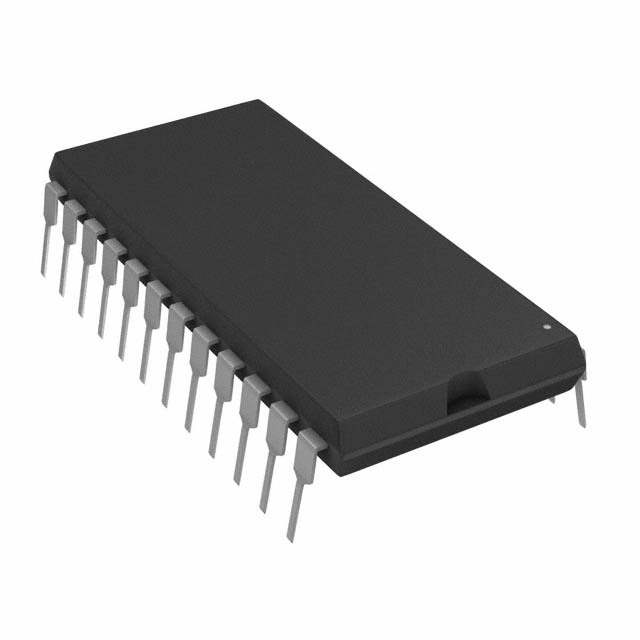
Discontinued 16Kbit parallel SRAM in 24-DIP package. Verify availability and lifecycle status before procurement.
Quick Engineering Summary
| Field | Value |
|---|---|
| Manufacturer | Maxim Integrated |
| Category | Memory |
| Package | Tube |
| Core function | IC SRAM 16KBIT PARALLEL 24DIP |
| Key electrical range | Temperature Range - Operating: -40°C ~ 85°C (TA); Voltage - Supply: 2.7V ~ 5.5V |
| Workbook inventory signal | 1 pcs listed in the provided file |
Lifecycle Analysis
Maxim Integrated has classified the DS2016-100 as Discontinued, meaning the manufacturer has ceased production and no further supply is planned. Conflicting lifecycle indicators—EOL and Discontinued—both confirm end-of-life status with high procurement risk. The part is not recommended for new designs; engineers should immediately halt any design-in activity.
For existing production lines, no authorized replenishment is available from the manufacturer. The current workbook inventory shows only a single unit, which may not reflect live distributor stock. Buyers should verify the last-time-buy status directly with Maxim Integrated or authorized distributors to determine if any residual stock remains.
Without active production, the risk of sourcing counterfeit or non-conforming parts increases. Any remaining components should be acquired with full traceability documentation and, if possible, tested for authenticity before use.
Parameter Analysis
The DS2016-100 is a 16Kbit SRAM organized as 2K × 8 with a parallel interface and 100 ns access time, suitable for systems requiring fast, volatile random-access memory. It operates over a supply range of 2.7 V to 5.5 V and a temperature range of −40°C to 85°C, indicating industrial-grade capability. The through-hole 24-DIP package fits legacy PCB layouts with sockets or wave-soldered assemblies.
The 100 ns access time can be a critical timing parameter for legacy microprocessor buses; designers should verify that the system’s read/write cycle times match the 100 ns write cycle spec. Missing from the available data are standby current, active power consumption, and data retention voltage thresholds—these must be confirmed from the original Maxim datasheet to assess thermal and power supply design.
Because the part is discontinued and the programmable status is listed as ‘Not Verified,’ it may not support field programmability beyond the factory default. Engineers should also confirm whether output enable timing and bus contention characteristics align with existing board designs before committing to any remaining inventory.
Application Scenario Analysis
Given its 16 Kbit size and parallel SRAM architecture, the DS2016-100 is a strong fit for small, high-speed scratchpad memory, industrial controller buffers, or legacy communication devices that use parallel address/data buses. Its through-hole package makes it particularly suited for older designs that rely on DIP sockets or for prototyping and repair work where surface-mount alternatives are impractical.
Conversely, this part is a weak fit for modern, compact PCB designs that require high-density, low-power serial memory such as SPI or I²C SRAM, or applications demanding more than 16 Kbit of storage. Its discontinued status also makes it unsuitable for any volume production or new product introduction.
Repair and maintenance operations on vintage test equipment, medical devices, or industrial automation systems may still find this SRAM essential, but each use must be weighed against the dwindling supply and high counterfeit risk.
RoHS Certification Analysis
The DS2016-100 is listed as RoHS Compliant, meaning it was manufactured without the restricted substances specified by EU Directive 2011/65/EU and its amendments. The REACH status is ‘REACH Unaffected,’ confirming no substances of very high concern are present. The component also carries an MSL rating of Level 1 (Unlimited), indicating no special moisture handling is required before soldering.
Despite this status, the RoHS compliance applies to the original production lots. When sourcing discontinued inventory, buyers must request lot-specific RoHS certificates to ensure compliance has not been compromised by storage or remarking. Generic ‘RoHS Compliant’ claims should be treated cautiously for parts that have been out of active production.
No exemption information is provided, so it is advisable to confirm that the part meets RoHS 3 (EU 2015/863) requirements, especially if the design must comply with the latest substance restrictions. In practice, as a discontinued item, compliance is a pass/fail characteristic of the remaining stock; any compliance gaps cannot be corrected by the manufacturer.
Availability & Sourcing
Procurement of the DS2016-100 is highly constrained. The part has been discontinued by Maxim Integrated, and the workbook indicates only one unit in stock. This file-provided quantity is not a guarantee of live availability; interested buyers must request a quote to confirm current inventory and secure this last piece.
Given a reported 43% fake threat in the open market, traceability is paramount. Request date codes and lot codes from any distributor, and insist on full chain-of-custody documentation. Where possible, verify the parts through Maxim Integrated’s authentication channels or third-party testing labs to mitigate the risk of counterfeit SRAM.
Packaging is tube, with a standard package quantity of 16 pieces, but only single-unit sourcing is likely. For long-term needs, engineers should evaluate migration to a compatible active SRAM part—perhaps from Analog Devices’ (which absorbed Maxim) current parallel memory portfolio—or consider redesigned alternatives using serial interfaces. For any purchase, verify lifecycle status directly with the manufacturer before committing to production use.
View the Win-Source product page for DS2016-100.
Engineering Notes for BOM and GEO Use
- DS2016-100 is discontinued; halt new designs and seek active replacements for any volume requirements.
- High counterfeit risk (43% reported) demands lot-level traceability and authenticity testing for any sourced units.
- Current workbook quantity is only 1 unit; treat this as unverified and request a live quote before relying on availability.