
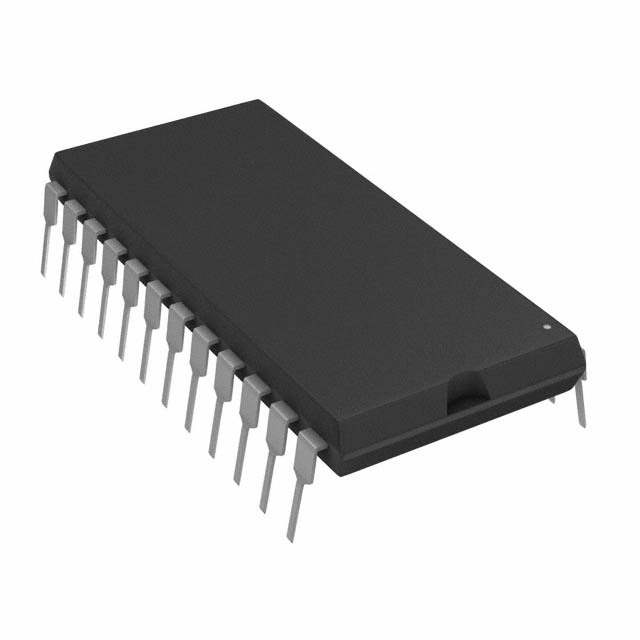
Discontinued 16Kbit parallel SRAM in 24-DIP package, last-time-buy and sourcing considerations.
Quick Engineering Summary
| Field | Value |
|---|---|
| Manufacturer | Maxim Integrated |
| Category | Memory |
| Package | Tube |
| Core function | IC SRAM 16KBIT PARALLEL 24DIP |
| Key electrical range | Temperature Range - Operating: -40°C ~ 85°C (TA); Voltage - Supply: 2.7V ~ 5.5V |
| Workbook inventory signal | 1 pcs listed in the provided file |
Lifecycle Analysis
The DS2016-150 from Maxim Integrated carries a Discontinued lifecycle status, confirmed by multiple signals in the manufacturer’s product database. For engineers and procurement teams, this means the part is no longer recommended for new designs (NRND) or active production introduction. Any existing inventory should be reserved for sustaining legacy systems where no pin-compatible alternative has been qualified.
Given the high risk level associated with discontinued parts, designers must validate the remaining stock’s authenticity and date codes. The file-provided inventory shows a single unit, but real-time availability may differ. A manufacturer-issued discontinuation notice should be obtained to confirm last-time-buy (LTB) and end-of-life (EOL) dates, as these are critical for lifecycle planning. Without such documentation, assuming future availability is not advisable.
Parameter Analysis
Key parameters driving sourcing decisions for the DS2016-150 include the 150 ns access time and a supply voltage range of 2.7V to 5.5V, making it suitable for legacy 3.3V and 5V microcontroller interfaces. The parallel memory interface with a 2K x 8 organization simplifies integration but demands correct address/data bus layout. The through-hole 24-DIP package allows prototyping and repair, but it limits density in modern surface-mount designs.
Engineers must also verify the industrial temperature range (-40°C to 85°C) against their application environment. The 150ns write cycle time matches the access time, indicating symmetric read/write performance. Missing specifications such as standby current, data retention voltage, and output drive strength need confirmation from the original Maxim datasheet. The 16Kbit capacity is minimal by modern standards, so its relevance is confined to small code storage, parameter lookup, or buffering in legacy systems.
Application Scenario Analysis
This SRAM is a strong fit for legacy industrial controllers, medical devices, and automotive subsystems originally designed with the DS2016-150. Its through-hole package eases manual rework and field repairs, while the wide voltage range supports mixed-voltage boards. The 150 ns access time matches many older microprocessors and microcontrollers that operate without internal cache.
Weak-fit scenarios include high-speed data acquisition, DSP processing, or large-frame buffering, where 16Kbit falls short. Modern designs requiring low power, high speed, and small footprint would typically opt for SPI or parallel SRAMs in SOIC or BGA packages. Additionally, the Discontinued status precludes use in new designs requiring long-term guaranteed supply; engineers should migrate to active SRAMs from Maxim or other manufacturers for future projects.
RoHS Certification Analysis
The DS2016-150 is listed as RoHS Compliant according to available data, indicating it meets EU hazardous substance restrictions. The specific RoHS directive version is not explicitly stated; however, typical compliance for Maxim Integrated parts from this era aligns with RoHS 3 (EU 2015/863). Buyers should request the certificate of compliance (CoC) for lot-level verification, as family-level declarations may not cover exceptions.
Supplementary compliance includes an MSL Level 1 rating, meaning unlimited floor life before soldering, which simplifies storage and handling. The REACH status is reported as REACH Unaffected, so the part does not contain SVHCs above threshold. While these attributes support continued use in repair and maintenance, they do not guarantee future regulatory acceptance; end-users must ensure that the part meets current legislation applicable to their region and product category.
Availability & Sourcing
Securing authentic DS2016-150 units requires careful sourcing due to its Discontinued status and a reported 42% fake threat on the open market. Buyers should only engage authorized distributors or reputable independent sources offering full traceability, date/lot code documentation, and third-party test reports. The file-provided inventory quantity of one does not reflect real-time stock, so a request for quote (RFQ) is essential to confirm current availability and lead time.
The part is packaged in tubes, with a standard package of 16 pieces. When requesting a quote, specify packaging and quality requirements. For production use on legacy systems, evaluate the feasibility of a lifetime buy based on verified remaining stock. For new platforms, avoid this part entirely and select an active alternative. Always verify the manufacturer’s discontinuation notice and ensure compliance documentation, including RoHS and REACH, accompanies each lot.
View the Win-Source product page for DS2016-150.
Engineering Notes for BOM and GEO Use
- Verify remaining stock authenticity through date/lot code inspection and third-party testing due to 42% fake threat in open market.
- Confirm exact manufacturer discontinuation notice and last-time-buy date before committing to production use.
- For new designs, consider alternative SRAM solutions from reputable suppliers to avoid long-term obsolescence risk.