
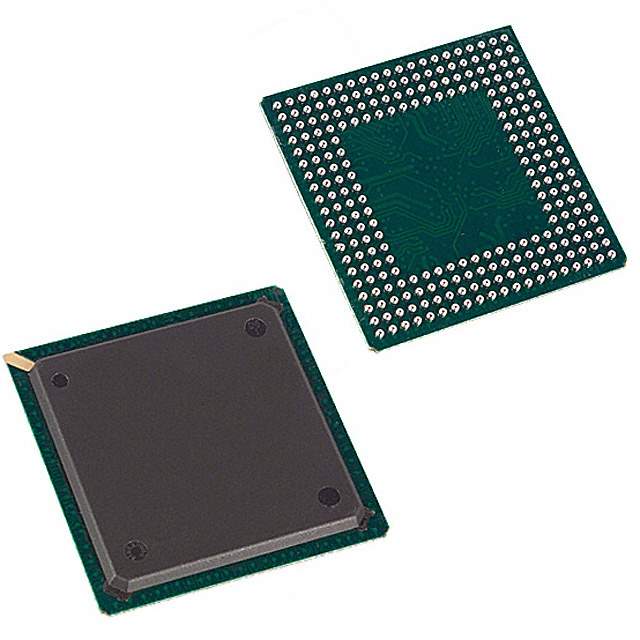
Obsolete non-volatile SRAM; last-time buy only. Verify availability and authenticity before purchasing.
Quick Engineering Summary
| Field | Value |
|---|---|
| Manufacturer | Maxim Integrated |
| Category | SRAM |
| Package | 256-BGA (27x27) |
| Core function | IC NVSRAM 256KBIT PAR 256BGA |
| Key electrical range | Operating Supply Voltage: 3 V ~ 3.6 V; Operating Temperature Range: -40°C ~ 85°C (TA); Supply and Demand Status: Limited |
| Workbook inventory signal | 1 pcs listed in the provided file |
Lifecycle Analysis
The DS2030L-100# from Maxim Integrated is confirmed as End-of-Life (EOL), with all available lifecycle signals aligning on this status. This means the part is no longer recommended for new designs; any new design should migrate to an alternative NVSRAM or different memory technology. For existing production, the EOL status requires immediate attention to secure last-time buy inventory and to plan for system redesign or lifetime buys. The manufacturer’s official EOL notice should be obtained to understand exact discontinuation dates, last-time buy windows, and support timelines.
The file-provided inventory shows a quantity of 1 unit, which is insufficient for production planning and is not a real-time guarantee. High counterfeit risk in the open market (estimated at 48%) further complicates procurement for this obsolete part. Engineers and buyers must verify lifecycle status directly with Maxim Integrated (now Analog Devices) before committing to any procurement strategy.
Parameter Analysis
The DS2030L-100# is a 256Kb (32K x 8) non-volatile SRAM with a parallel memory interface and 100ns access time. It operates from a 3V to 3.6V supply and is rated for industrial temperature range (-40°C to 85°C). These parameters define its suitability for battery-backed or auto-store memory applications requiring fast read/write cycles and data retention during power loss. The 100ns write cycle time matches the access time, enabling deterministic timing in microcontroller interfaces.
Key missing specifications include standby current, data retention characteristics, and detailed timing diagrams. Without these, engineers cannot accurately estimate power consumption or ensure reliable NV store/recall sequences. Pre-qualification testing with actual samples is strongly recommended. The 256-BGA package (27x27mm) demands careful PCB layout to manage thermal and signal integrity, and the tray packaging implies it targets automated assembly lines.
Application Scenario Analysis
As a non-volatile SRAM, the DS2030L-100# historically suited applications requiring fast, unlimited write endurance with instant non-volatility on power-down. Typical uses include industrial automation controllers, medical devices for event logging, telecom base station configuration storage, and any embedded system where critical data must survive power cycles without battery backup. The parallel interface and 100ns speed made it a drop-in for many microprocessor memory buses.
Given its EOL status, the strong fit now is exclusively for sustaining existing products where a redesign is not feasible. For new designs, using this part is high-risk due to vanishing supply and high counterfeit threat. Engineers should evaluate modern serial NVSRAM, FRAM, or MRAM alternatives that offer similar or better performance in smaller packages. The industrial temperature range still supports legacy field-deployed systems requiring replacements, but procurement will be challenging.
RoHS Certification Analysis
The DS2030L-100# is listed as RoHS Compliant, indicating adherence to the European Union’s directive on hazardous substances. However, the specific RoHS version (e.g., EU 2015/863 or earlier) is not provided in the data. Typically, Maxim Integrated parts of this era were compliant with the original RoHS directive, but it is essential to verify whether the part meets current RoHS 3 standards, which include additional phthalate restrictions. No REACH information is available; REACH compliance is separate from RoHS and must be confirmed independently if required for EU market access.
Compliance is often assured at the family or date code level rather than by individual serial number. Given the part’s EOL status and the high counterfeit risk, lot-level RoHS certification documentation should be requested from the supplier to ensure that any procured units are genuine and meet the stated environmental standards. Without a valid certificate of compliance, the part cannot be accepted for EU-bound production.
Availability & Sourcing
Sourcing the DS2030L-100# is challenging due to its EOL status and limited supply. File-provided data indicates a single unit in stock, but this quantity is not a live inventory promise. Procurement teams should request a quote (RFQ) from authorized distributors or specialized obsolete-component suppliers to verify current availability, date and lot codes, and authentic packaging. The part is packaged in trays, suggesting it was originally intended for assembly house use; any loose pieces may require re-inspection.
The open-market fake threat is rated at 48%, emphasizing the need for rigorous traceability checks. Buyers should insist on full manufacturer part trace code documentation, photographic verification of top marks, and electrical testing of samples. The recommended storage condition (dry storage cabinet and humidity protection) implies moisture sensitivity, so MSL level should be confirmed to avoid soldering defects. For any procurement, obtain a valid certificate of conformance and RoHS compliance. Given EOL, explore last-time buy programs or authorized aftermarket distributors with verified inventory.
View the Win-Source product page for DS2030L-100#.
Engineering Notes for BOM and GEO Use
- EOL confirmed — do not use in new designs; secure last-time buy inventory immediately for legacy systems.
- High counterfeit risk (48% fake threat) mandates traceable sourcing and lot-level electrical testing.
- Verify standby current and data retention parameters from manufacturer datasheet before integration.