
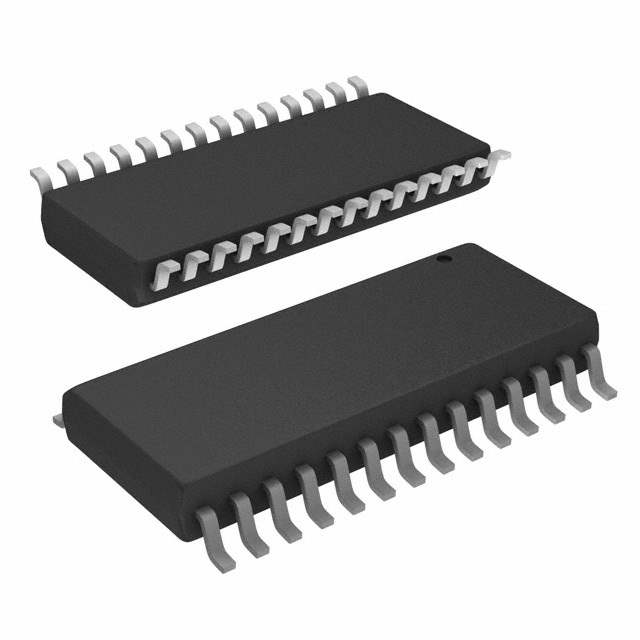
18-Line SCSI Plug-and-Play Terminator in 28-SOIC – EOL Part
Quick Engineering Summary
| Field | Value |
|---|---|
| Manufacturer | Maxim Integrated |
| Category | Interface - Signal Terminators |
| Package | 28-SOIC |
| Core function | IC TERM SCSI PLUG/PLAY 28-SOIC |
| Key electrical range | Supply and Demand Status: Balance; Supply Voltage - Operating: 4 V to 5.25 V; Temperature Range - Operating: 0°C to 70°C |
| Workbook inventory signal | 3670 pcs listed in the provided file |
Lifecycle Analysis
The DS2109S is confirmed End-of-Life (EOL) by all available lifecycle signals. This status indicates that Maxim Integrated has discontinued production, and no further manufacturing is planned. For new designs, this part should be excluded entirely. For existing production, immediate action is required to secure remaining stock and begin qualification of an alternative.
The supplied inventory data lists 3,670 units, but this is a file-provided quantity and not a real-time guarantee. Buyers should verify actual stock levels, date codes, and authenticity before committing to procurement. The high fake threat probability (47%) underscores the need for traceable sourcing from authorized channels.
Given the high risk level, engineers and buyers must revalidate all documentation, including last-time buy notices and end-of-life advisories from Maxim Integrated. Any reliance on this component in long-life systems should be accompanied by a rigorous migration roadmap.
Parameter Analysis
The DS2109S provides 18 terminations, matching common narrow and wide SCSI bus widths (8‑bit or 16‑bit with parity). The operating voltage range of 4 V to 5.25 V aligns with standard 5 V SCSI signaling, but designers must ensure power supply tolerance and decoupling meet the part’s needs. The commercial temperature range (0°C to 70°C) limits use to office or light industrial environments; extended or harsh conditions exceed the specification.
The 28‑SOIC package (surface‑mount) requires careful thermal management and footprint verification. While the part is listed as a SCSI plug‑and‑play terminator, critical parameters missing from the supplied data include termination resistance, bandwidth, channel capacitance, and power dissipation. These must be verified against the original Maxim datasheet to avoid signal integrity issues.
For qualification, engineers should also confirm the exact SCSI generation (e.g., SCSI‑1, Fast SCSI) and any required regulator or passive component integration. Without these details, a pin‑compatible drop‑in cannot be guaranteed.
Application Scenario Analysis
The DS2109S is best suited for legacy SCSI systems operating within commercial temperature ranges, such as older workstations, servers, or test equipment that still rely on parallel SCSI interfaces. Its 18 termination lines can handle both 8‑bit and 16‑bit SCSI buses when used in single‑ended configurations. The plug‑and‑play designation suggests minimal external components, simplifying integration in existing designs.
It is a weak fit for modern differential SCSI (LVD/HVD) implementations, higher‑speed Ultra SCSI, or any application requiring wide temperature tolerance. The EOL status further disqualifies it for new product development, as sustained supply cannot be assured. In migration scenarios, designers should evaluate active terminators from current suppliers that offer multiple SCSI generations and extended temperature grades.
For applications where exact functional fit is critical, a thorough signal integrity analysis is required. This part should only be considered for repairs or small‑run sustaining builds where a form‑fit‑function equivalent is available and the RoHS compliance conflict has been resolved.
RoHS Certification Analysis
The DS2109S presents a significant compliance conflict: one data field states RoHS Compliant, while the detailed specification lists RoHS Non‑Compliant. This inconsistency likely stems from different production epochs or data sources, but for a sourcing decision it must be treated conservatively. Without a definitive manufacturer certificate, the part should be assumed non‑compliant to avoid regulatory risk.
RoHS status for EOL components can be ambiguous. Even if originally compliant, exemptions may have expired, or the original documentation may no longer be maintained. For EU and similar markets, a valid Declaration of Conformity is mandatory. Engineers must request batch‑level compliance evidence from the supplier before acquisition.
No REACH, MSL, or halogen‑free data were provided. These should be verified in parallel, especially if the parts will be stored for extended periods. Until the conflict is resolved, the DS2109S cannot be considered safe for new compliance‑sensitive designs.
Availability & Sourcing
As an EOL component, the DS2109S is subject to limited and declining availability. The workbook inventory shows 3,670 units, but this figure is not real‑time and must be confirmed through a formal RFQ. Buyers should request current stock levels, packaging (Tube/Rail), date codes, and lot traceability to guard against counterfeit material, especially given the 47% fake threat indicator.
Procurement teams should insist on compliance documentation—resolving the RoHS conflict—and, if possible, source from Maxim‑authorized distributors or reputable excess‑inventory specialists. Visual inspection and electrical testing of samples are strongly recommended for critical applications.
For migration, identify active alternatives from Maxim Integrated or other manufacturers. Even if inventory is available now, lead times, minimum order quantities, and shipping restrictions may impose hidden constraints. Given the high risk, this part should only be procured under a clearly defined last‑time buy strategy, with full awareness that no further supply will be forthcoming.
View the Win-Source product page for DS2109S.
Engineering Notes for BOM and GEO Use
- Verify supply voltage compatibility: 4 V to 5.25 V with 0°C–70°C operating temperature range.
- EOL status requires immediate migration planning and careful verification of remaining inventory authenticity.
- Resolve RoHS compliance conflict through manufacturer documentation before procurement.