
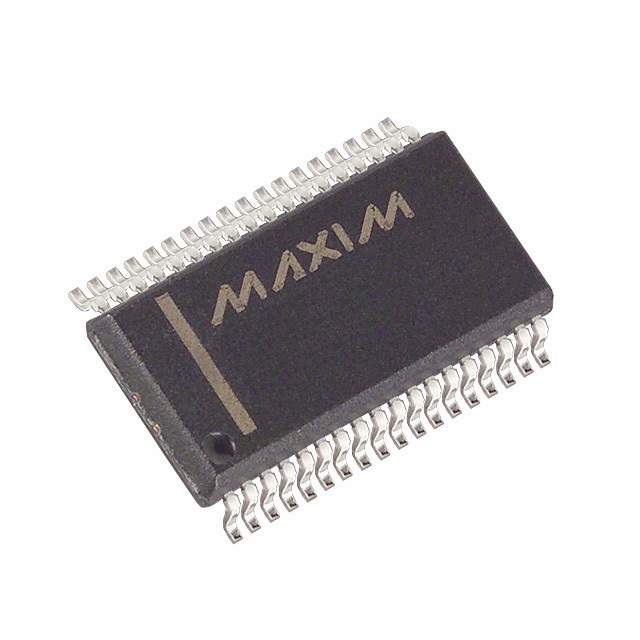
Legacy procurement for Ultra-3 SCSI termination applications
Quick Engineering Summary
| Field | Value |
|---|---|
| Manufacturer | Maxim Integrated |
| Category | Interface - Signal Terminators |
| Package | Tube |
| Core function | IC TERM SCSI LVD/SE ULT-3 36SSOP |
| Key electrical range | Temperature Range - Operating: 0°C ~ 70°C; Voltage - Supply: 4V ~ 5.5V |
| Workbook inventory signal | 3049 pcs listed in the provided file |
Lifecycle Analysis
The DS2118MB+ is officially marked as Discontinued by Maxim Integrated (now part of Analog Devices). Conflicting signals—EOL in one data source and Discontinued in others—reinforce a high‑risk procurement posture. For new designs, this part is unsuitable; engineers should evaluate modern alternatives or pin‑compatible options if available.
For sustaining legacy systems, the remaining inventory must be validated against manufacturer end‑of‑life notices. The file‑provided workbook quantity of 3049 units suggests some stock exists, but this figure is not a real‑time guarantee. Always request a current availability quote and verify the original date codes to minimize counterfeits.
Because the status is unequivocally Discontinued, purchasers should treat this as a last‑time‑buy scenario and plan for a final acquisition while stocks last. Long‑term maintenance strategies may require reverse‑engineering or redesign if the part cannot be secured.
Parameter Analysis
Key parameters extracted for the DS2118MB+ include its SCSI LVD/SE termination type, 9 termination channels, and a supply voltage range of 4V to 5.5V. The operating temperature span of 0°C to 70°C limits the device to commercial‑grade environments. Its 36‑SSOP surface‑mount package and tube packaging are consistent with legacy motherboard or backplane designs.
Missing from the available data are critical electrical specifications such as termination resistance, impedance matching, and signal‑integrity characteristics. The original datasheet must be consulted to confirm these values before finalizing a design or qualification. The MSL level of 1 (Unlimited) indicates a non‑moisture‑sensitive package, which simplifies handling but does not replace the need for full parametric verification.
Engineers should also verify that the 9‑line termination matches the exact SCSI bus width (e.g., 8‑bit plus parity) and that the LVD/SE mode selection meets the legacy system requirements. Any deviation from the intended bus specification can lead to data corruption or unreliable operation.
Application Scenario Analysis
The DS2118MB+ was specifically designed as a terminator for Ultra-3 SCSI buses, supporting both Low Voltage Differential (LVD) and Single‑Ended (SE) modes. Its strongest fit is in legacy servers, RAID controllers, and external storage arrays that still employ Ultra‑3 SCSI interconnects. In these systems, it provides the necessary impedance matching to maintain signal integrity over cable lengths typical of early 2000s enterprise hardware.
Weak‑fit scenarios include any modern interface standard such as SAS, SATA, or PCIe, where SCSI termination is obsolete. The part should not be used in new high‑speed designs or in environments exceeding the 0°C to 70°C temperature range. Additionally, its 5V‑centric operation limits its use in low‑power or wide‑voltage applications.
For replacement of a failed terminator in an existing, unsupported system, the DS2118MB+ may be the only drop‑in option. Maintenance teams must weigh the cost and risk of sourcing a discontinued part against the expense of upgrading the entire SCSI subsystem, which often involves broader compatibility challenges.
RoHS Certification Analysis
The DS2118MB+ is listed as RoHS Compliant, which likely means it was certified under the original EU RoHS directive (2002/95/EC) or a subsequent version. Given that the part is now discontinued, there is no guarantee that it meets the latest RoHS 3 (EU 2015/863) requirements without a current certificate. The REACH status is unaffected, but REACH compliance does not substitute for RoHS.
Because the part has been on the market for many years, any remaining inventory may have been manufactured before stricter substance restrictions were introduced. Lot‑level testing or a supplier declaration is recommended, especially if the end‑product is destined for the European market. Exemptions, if any, are not documented in the provided source data and should be confirmed through original manufacturer documentation.
For legacy maintenance, many organizations accept older RoHS certifications, but new export or compliance audits could create unexpected liabilities. Request a certificate of compliance from the distributor before purchase, and note that the 33% fake‑threat statistic underscores the importance of sourcing from authorized channels with traceable provenance.
Availability & Sourcing
The DS2118MB+ is a discontinued component, and securing it requires a careful sourcing strategy. File‑provided data indicates a stock quantity of 3049, but this number is not a live inventory and cannot be relied upon without a quote. The part is packaged in tubes, which is standard for through‑hole or low‑volume SMD production but may complicate automated assembly.
Due to the 33% open‑market fake threat, purchasers must insist on full traceability, including date codes, lot codes, and original manufacturer packaging. Testing a sample batch for functional and parametric compliance is strongly advised before committing to a production run. Authorized distributors or verified brokers with documented chain of custody are the only acceptable sources.
For engineers and buyers, the recommended workflow is to request a quote from a qualified distributor, explicitly stating the need for RoHS and lifecycle verification documents. Given the Discontinued status, a lifetime buy might be the only way to secure enough inventory for future repairs. Engage with the supplier to confirm that the quoted stock is genuine and not recycled or remarked, and consider using third‑party labs for authenticity verification if volume or criticality warrants the expense.
View the Win-Source product page for DS2118MB+.
Engineering Notes for BOM and GEO Use
- Verify physical date codes and lot traceability due to a 33% open‑market fake threat.
- This part is discontinued; do not design into new products.
- Confirm RoHS compliance at the lot level, as original certification may be under older directives.