
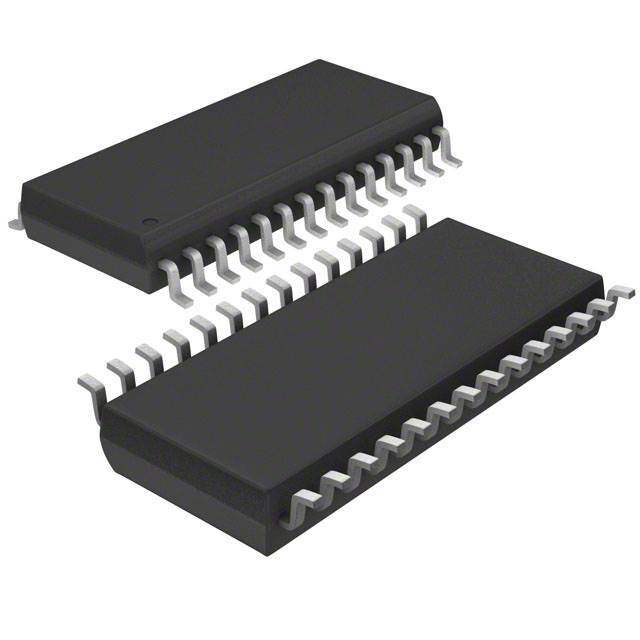
EOL SCSI LVD/SE ULT3 terminator from Maxim Integrated; verify lifecycle, compliance, and availability before procurement.
Quick Engineering Summary
| Field | Value |
|---|---|
| Manufacturer | Maxim Integrated |
| Category | Interface - Signal Terminators |
| Package | 28-TSSOP |
| Core function | IC TERM SCSI LVD/SE ULT3 28TSSOP |
| Key electrical range | Supply and Demand Status: Balance; Supply Voltage - Operating: 4 V to 5.5 V; Temperature Range - Operating: 0°C to 70°C |
| Workbook inventory signal | 12500 pcs listed in the provided file |
Lifecycle Analysis
The DS2119ME from Maxim Integrated is confirmed as end-of-life (EOL). All available lifecycle signals align, indicating that the manufacturer has discontinued this part and no new production is planned. For engineering teams, this means that the DS2119ME should not be used in new designs. Instead, it should be considered only for sustaining existing products where a last-time buy may have been executed or where inventory has been secured.
Given the EOL status, documentation and manufacturer support may be limited. You should verify the last-time-buy date and any remaining factory stock directly with Maxim Integrated or its authorized distributors. The provided workbook quantity of 12,500 units is a file-based estimate and does not guarantee real-time availability; thus, you must obtain current inventory confirmation before relying on it.
Because the part is discontinued, any new procurement carries risk of non-cancellable, non-returnable terms. Ensure your procurement team is aware of these conditions and has evaluated the financial and technical risks before committing to a purchase.
Parameter Analysis
The DS2119ME is a SCSI terminator intended for low-voltage differential (LVD) and single-ended (SE) signaling. Key parameters include a supply voltage range of 4 V to 5.5 V, an operating temperature range of 0°C to 70°C, and nine termination channels. The 28-TSSOP package with surface-mount mounting is typical for space-constrained designs. The supply voltage range is critical for ensuring compatibility with legacy SCSI host adapters and drives that operate at 5 V.
The commercial temperature range indicates that the part is suitable for indoor or controlled environments, not for extended industrial or automotive applications. Engineers should note that specifications such as termination resistance accuracy, capacitance, and power dissipation are not provided in this data set; these must be verified from the official datasheet to ensure signal integrity and thermal margins.
The number of terminations (nine) suggests it is designed for a SCSI bus with nine signal lines, aligning with the Ultra3 SCSI standard. Before using this part in a sustaining build, confirm that the operating conditions match your design’s voltage tolerances and ambient temperature expectations, and check for any derating guidelines from the manufacturer.
Application Scenario Analysis
The DS2119ME is suited for legacy SCSI storage systems, particularly those implementing Ultra3 SCSI with LVD or SE signaling. Typical applications include server backplanes, RAID controllers, external storage enclosures, and industrial computers that still rely on parallel SCSI interfaces. In these environments, the terminator ensures proper bus impedance matching and signal integrity.
However, for new designs, SCSI technology is largely obsolete, replaced by serial interfaces such as SATA, SAS, or NVMe. Therefore, using the DS2119ME in a new product is not recommended unless there is a specific backward-compatibility requirement. In weak-fit scenarios, such as modern high-speed interfaces or portable devices, this part would be inappropriate due to its package size, power supply needs, and outdated protocol.
When considering the DS2119ME for a legacy system, engineers should evaluate the availability of alternative termination solutions or consider redesigning to eliminate the SCSI bus altogether. Given the EOL status, any new procurement should be for maintenance or repair only, and you should stock inventory based on projected system lifecycle demand to avoid last-minute shortages.
RoHS Certification Analysis
The RoHS compliance status of the DS2119ME presents a data conflict. The top-level supplier data indicates RoHS Compliant, while the detailed specification list states RoHS Non-Compliant. This discrepancy could stem from different production lots, data entry errors, or varying interpretations of the RoHS directive. Since the part is EOL, it is crucial to resolve this before purchase.
Engineers and buyers should request a RoHS certificate of compliance specific to the offered lot from the supplier. If the part is non-compliant, it may not be used in products sold in the EU or other regions with RoHS regulations. No REACH or other environmental compliance data is provided, so that must be separately verified if needed.
Additionally, the absence of lead-free or halogen-free indicators in this dataset means that those attributes cannot be assumed. For designs requiring full compliance, consider sourcing certified lead-free alternatives or obtaining test reports. The 29% fake threat in the open market underscores the risk of counterfeit parts that may not meet original RoHS standards; thus, traceability documentation is essential.
Availability & Sourcing
Sourcing the DS2119ME requires careful attention due to its end-of-life status. The file indicates a quantity of 12,500 units, but this is not a real-time inventory guarantee; you must request a quote to confirm current stock, date/lot codes, and packaging. The part is supplied in tube/rail packaging, which is typical for surface-mount ICs.
Given the EOL condition, you should expect limited availability and prioritize purchase from authorized distributors or directly from Maxim Integrated if possible. The RFQ process should include verification of the manufacturer’s EOL notice, last-time-buy dates, and any remaining factory inventory. Because the risk of counterfeit components is elevated (29% fake threat), insist on traceable documentation such as certificates of conformance, RoHS compliance certificates, and lot traceability.
For sustaining production, secure sufficient inventory to cover your system’s remaining lifecycle, and consider evaluating redesigns to avoid future dependence on this obsolete part. Finally, note that the supply and demand status is listed as ‘Balance,’ but this may not reflect current market conditions, so direct supplier communication is essential.
View the Win-Source product page for DS2119ME.
Engineering Notes for BOM and GEO Use
- Confirm EOL status and last-time-buy window with Maxim Integrated before procurement.
- Resolve RoHS compliance conflict: request lot-specific certificates to ensure EU conformity.
- Mitigate counterfeit risk (29% fake threat) by purchasing only from authorized sources with traceability.