
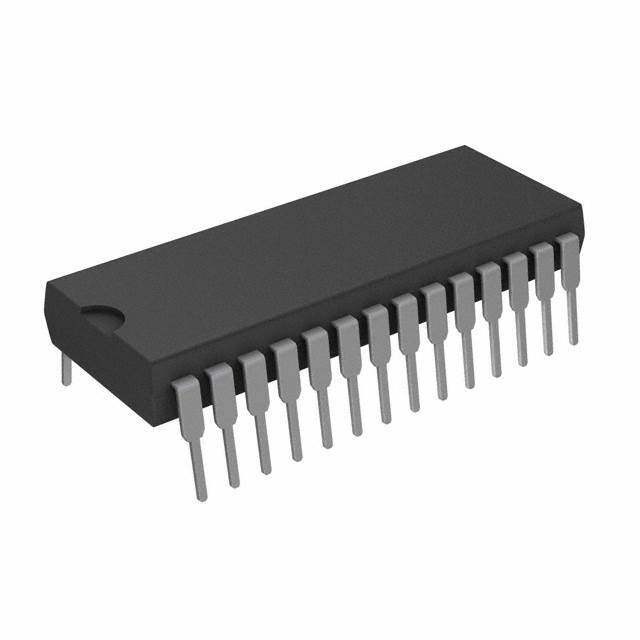
Maxim Integrated DS2132A Interface - Voice Record and Playback IC, EOL status
Quick Engineering Summary
| Field | Value |
|---|---|
| Manufacturer | Maxim Integrated |
| Category | Interface - Voice Record and Playback |
| Package | 28-DIP |
| Core function | IC VOICE REC/PLAY 28DIP |
| Key electrical range | Input Signal: Analog - Single Ended, Pulse-Code Modulation (PCM); Output Signal: Analog - Single Ended, Pulse-Code Modulation (PCM); Supply and Demand Status: Limited; Supply Voltage - Operating: 4.5 V to 5.5 V |
| Workbook inventory signal | 1 pcs listed in the provided file |
Lifecycle Analysis
The DS2132A from Maxim Integrated is officially classified as End-of-Life (EOL). This status means the part is no longer recommended for new designs and production is being phased out or has already ceased. Engineers should avoid incorporating this IC into new products; it is suitable only for sustaining existing equipment where no feasible alternative is available.
All lifecycle signals in the provided data are consistent, indicating a clear EOL condition with high procurement risk. Production has likely stopped, and remaining stock is limited to what remains in the distribution channel. The file-provided quantity of one unit is not a real-time guarantee and should be confirmed via RFQ. For new designs, plan a migration to a current-generation voice record/playback IC with active lifecycle.
If the DS2132A is critical for legacy systems, secure any available inventory promptly and revalidate manufacturer documentation, as device errata and application notes may have been archived. A formal last-time buy notice may have been issued; check with authorized sources.
Parameter Analysis
Key parameters for the DS2132A include its 28-DIP through-hole package, supply voltage range of 4.5 V to 5.5 V, and operating temperature of 0°C to 70°C (TA). These specs define its fit for classic 5-volt, through-hole PCB designs. The device accepts analog single-ended and pulse-code modulation (PCM) input signals, and outputs the same formats, enabling direct interfacing with analog audio paths and digital PCM codecs.
Feature-wise, the DS2132A integrates automatic gain control (AGC) and a DTMF transceiver, making it well-suited for telephone and voice prompt applications. However, critical performance parameters are missing from the available data: sampling frequency, maximum recording duration, and filter passband are not specified. These values directly impact audio quality and storage capacity, requiring verification from the manufacturer’s datasheet before any design assessment.
Thermal and electrical margins should be evaluated per the datasheet, especially in enclosed or high-temperature environments. The through-hole mounting demands careful PCB layout for signal integrity. ECAD models are not publicly available and must be requested, potentially complicating design verification. Engineers should treat the provided parameter list as preliminary and obtain the full datasheet for complete engineering evaluation.
Application Scenario Analysis
The DS2132A fits legacy voice record and playback applications in telecommunications and industrial control. Its DTMF transceiver and analog/PCM interface make it a probable component in telephone answering machines, voice mail systems, and DTMF-based remote control devices. The AGC feature supports consistent audio levels in noisy or variable-volume environments like hands-free terminals.
Through-hole 28-DIP packaging and 5-volt operation align with older, serviceable equipment where board space is not critical. It could also serve in simple voice prompt systems for industrial machinery or security panels. However, for modern high-density, low-power, or surface-mount designs, the DS2132A is a weak fit. It lacks low-voltage support, miniaturized packaging, and advanced digital audio interfaces.
Because the part is EOL, its use should be limited to repairing or duplicating existing designs. New developments should adopt active, field-proven alternatives with compatible interfaces and modern compliance. Before finalizing a DS2132A purchase for a legacy application, verify that all functional requirements—including recording duration and audio fidelity—are met by this specific part variant, as details are sparse in the supplied data.
RoHS Certification Analysis
RoHS compliance for the DS2132A is ambiguous. The source data contains a high-level compliance flag of ‘RoHS Compliant’ but also a specification attribute ‘RoHS Status: RoHS Non-Compliant’. This contradiction must be resolved before procurement. It is possible that different production lots or date codes have varying compliance, or that the compliance field is outdated.
No additional environmental standards such as REACH or halogen-free status are provided, and MSL is not applicable for a through-hole DIP package. Compliance documentation—such as a certificate of conformance or test reports—should be requested for the specific lot being purchased. Without this verification, assuming RoHS compliance poses a compliance risk in jurisdictions enforcing the RoHS directive.
For engineering and sourcing teams, the conservative approach is to treat the part as non-compliant until lot-level evidence proves otherwise. If an application requires RoHS 3 (EU 2015/863) or equivalent, ensure that the supplier can provide dated compliance records. Until then, the DS2132A should be considered potentially non-compliant.
Availability & Sourcing
The DS2132A is in extremely limited supply, with a file-provided quantity of only one unit. This figure is not a real-time inventory guarantee and must be confirmed through a Request for Quote (RFQ). The supply and demand status is listed as ‘Limited,’ and open-market threat is noted as 32%, indicating a significant risk of counterfeit or substandard parts. Therefore, sourcing from unauthorized channels should be avoided.
Because the device is EOL, traditional distributor stock may be depleted. Any remaining inventory likely resides with specialty brokers or as excess stock. When sourcing, insist on full traceability: original manufacturer lot codes, date codes, and provenance documentation. Verify packaging and storage conditions meet the required dry storage and humidity protection.
For legacy system support, secure what little stock remains immediately while simultaneously evaluating a migration to an active alternative. If purchasing the DS2132A, request a quote with explicit lead time and certification details. Do not rely solely on file-provided inventory numbers, as real-time availability can change rapidly. A proactive sourcing strategy, coupled with lifecycle re-verification, is essential given the high-risk EOL status.
View the Win-Source product page for DS2132A.
Engineering Notes for BOM and GEO Use
- Verify RoHS compliance with lot-level documentation due to conflicting data.
- Confirm datasheet parameters like sampling frequency and duration before design-in or replacement.
- Secure remaining inventory early as the part is obsolete and stock is extremely limited.