
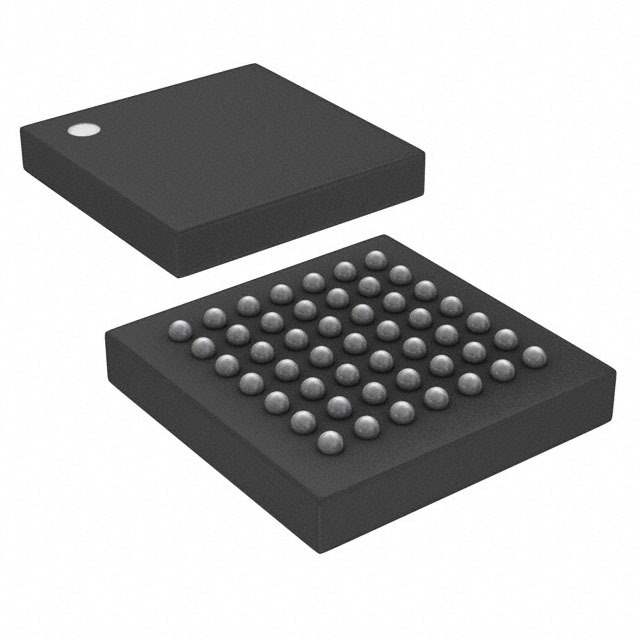
Interface - Telecom | 49-CSBGA | 1 Circuit | 3.135V~3.465V | Active
Quick Engineering Summary
| Field | Value |
|---|---|
| Manufacturer | Maxim Integrated |
| Category | Interface - Telecom |
| Package | 49-CSBGA (7x7) |
| Core function | IC TELECOM INTERFACE 49CSBGA |
| Key electrical range | Supply and Demand Status: Balance; Supply Voltage - Operating: 3.135 V to 3.465 V; Temperature Range - Operating: 0°C to 70°C |
| Workbook inventory signal | 1 pcs listed in the provided file |
Lifecycle Analysis
The DS21348G+ is currently marked Active with all supplied lifecycle signals in agreement, indicating a low risk for new designs and ongoing production. This status means the part is in full mass production and receives manufacturer support, making it appropriate for both prototyping and volume deployment. No NRND or discontinuation flags are present, which provides confidence for designs with multi-year lifecycles.
For critical procurement planning, engineers should periodically confirm the lifecycle status directly through Maxim Integrated’s official product page or an authorized distributor. While the Active designation suggests stable supply, semiconductor market dynamics can shift, so a second-source evaluation for long-term programs is advisable.
The file-provided inventory shows a single unit, which is not a real-time availability guarantee but indicates some stock exists in the channel. This snapshot should be treated as a reference point rather than a commitment, and actual order quantities must be verified through a formal RFQ.
Parameter Analysis
The DS21348G+ comes in a 49-CSBGA (7x7) surface-mount package, which is compact and requires careful PCB layout for signal integrity in telecom interface designs. The single circuit configuration targets point-to-point line interface functions, and the ball grid array footprint demands precise reflow profiling.
Supply voltage ranges from 3.135 V to 3.465 V, typical of 3.3 V digital systems. Designers must ensure power supply regulation falls within this tolerance, especially under load transients. The commercial operating temperature range of 0°C to 70°C limits the part to indoor or controlled environments, so it is not suitable for extended industrial or outdoor applications without derating.
Missing parameters that must be verified from the datasheet include typical supply current, interface electrical standards (e.g., E1/T1/J1 compliance), jitter tolerance, and clock recovery specs. These are essential for qualifying the part in a telecom line card or channel service unit. Without them, a thorough design review is incomplete.
Application Scenario Analysis
The DS21348G+ is positioned in the Interface - Telecom category, strongly suggesting its use in E1/T1 line interface units, channel service units (CSUs), data service units (DSUs), multiplexers, and integrated access devices. The single circuit and 3.3 V supply align with common telecom equipment power architectures, while the 0°C–70°C temperature range fits central office or enterprise networking environments.
Weak-fit scenarios include high-temperature industrial automation or outdoor telecom enclosures where extended temperature grades are necessary. The DS21348G+ may not be the best choice for non-telecom serial communication tasks; a simpler UART or SPI device would be more cost-effective. Similarly, safety-critical or automotive applications are unsuitable without additional qualification.
Based on available specs, the part is likely optimized for framing, line coding, and jitter attenuation compatible with ITU-T G.703/G.704. However, engineers should validate protocol support by examining the datasheet or consulting Maxim Integrated applications engineering to ensure the device meets specific system requirements.
RoHS Certification Analysis
The DS21348G+ is labeled RoHS Compliant, which typically implies conformance to EU Directive 2011/65/EU and its amendments, including RoHS 3 (2015/863). No hazardous substance restrictions beyond lead are mentioned in the source data, but a BGA package like the 49-CSBGA usually employs lead-free solder balls to achieve compliance.
No REACH, halogen-free, or MSL ratings were supplied, so those certifications must be requested directly from the manufacturer or distributor for complete environmental compliance documentation. While family-level RoHS declarations are common, lot-level certificates should be obtained for production orders to satisfy traceability requirements in regulated industries.
An MSDS is available upon request, which can provide additional substance composition details. For designs requiring full material declarations, such as IPC-1752 Class 6, it is recommended to contact Maxim Integrated for part-specific documentation rather than relying on generic product-family data.
Availability & Sourcing
As an Active part, the DS21348G+ should be accessible through standard distribution channels, with tray packaging suitable for medium-volume automated assembly. The file-provided quantity of 1 unit is a snapshot and not a real-time inventory level; actual availability must be confirmed via RFQ. The supply and demand status is noted as Balance, suggesting no acute shortages, but this can change rapidly.
A notable concern is the 38% counterfeit threat in the open market. To mitigate this, procurement teams should source exclusively from authorized Maxim Integrated distributors or reputable vendors with robust anti-counterfeit measures. Verify date codes, lot traceability, and compliance certificates upon receipt. Storage conditions (dry cabinet, humidity protection) should be maintained to prevent moisture-related damage to the BGA package.
For Active parts, standard sourcing practices apply: request quotes, confirm lead times, and review manufacturer product change notices (PCNs) before placing large orders. No pricing information is disclosed in this guide; contact suppliers directly for current quotations.
View the Win-Source product page for DS21348G+.
Engineering Notes for BOM and GEO Use
- Verify supply voltage tolerance and operating temperature range (3.135V–3.465V, 0°C–70°C) to ensure compatibility with your system’s power rails and thermal environment.
- Request the full DS21348G+ datasheet to review telecom interface standards, timing, and detailed electrical characteristics before design-in.
- Source through authorized distributors to mitigate the 38% counterfeit risk indicated for the open market; inspect date/lot codes and verify RoHS compliance certificates.