
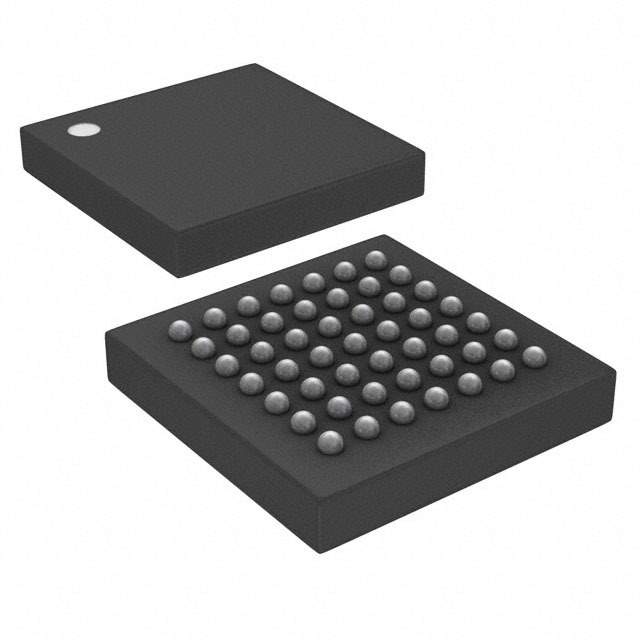
EOL telecom interface IC, serial, 49-CSBGA, RoHS conflict. Verify before new designs.
Quick Engineering Summary
| Field | Value |
|---|---|
| Manufacturer | Maxim Integrated |
| Category | Interface - Telecom |
| Package | 49-LFBGA, CSPBGA |
| Core function | IC TELECOM INTERFACE 49CSBGA |
| Key electrical range | Supply and Demand Status: Limited; Supply Voltage (V): 3.135V ~ 3.465V; Temperature Range - Operating: -40°C ~ 85°C |
| Workbook inventory signal | 1 pcs listed in the provided file |
Lifecycle Analysis
The DS21348GN from Maxim Integrated (now Analog Devices) is confirmed as End-of-Life (EOL) with all available lifecycle signals aligning. EOL status means the manufacturer has discontinued production, and remaining inventory is limited to existing distributor stock or the open market. For new designs, this part should not be considered; engineers should seek a replacement or migration path. For sustaining production, immediate action to secure any available stock is advised, as lead times are effectively infinite and last-time-buy opportunities may have passed.
According to the data, the workbook indicates a single unit of inventory, but this is file-provided and not guaranteed real-time. Buyers should treat this as a snapshot and verify actual availability through authorized channels. Given Maxim’s acquisition by Analog Devices, it is prudent to check with Analog Devices for official lifecycle documentation and any remaining stock. Procuring EOL components carries increased risk of obsolescence, so a qualified alternative should be identified for long-term supply.
Parameter Analysis
The DS21348GN is a single-circuit telecom interface IC with a serial interface, supplied in a 49-pin CSBGA (7x7 mm) package. Key electrical parameters include a supply voltage range of 3.135V to 3.465V, placing it firmly in the 3.3V nominal domain, and an operating temperature range of -40°C to 85°C, suitable for industrial environments. The surface-mount package has an MSL (Moisture Sensitivity Level) of 3, requiring careful handling to avoid moisture-induced damage during reflow; standard baking procedures may be needed based on floor life exposure.
The serial interface implies a reduced pin count compared to parallel alternatives, which can simplify PCB routing in space-constrained telecom line card designs. However, missing from the provided data are critical parameters such as data rate (e.g., T1/E1/J1 rates), jitter tolerance, framing support, and channel density. Designers must consult the full manufacturer datasheet to verify these values and ensure compatibility with their specific telecom standard. Additionally, power dissipation and I/O voltage levels are not specified and should be confirmed to avoid marginal operation.
Application Scenario Analysis
This telecom interface IC is typically used in legacy telecommunications equipment, such as T1/E1 line cards, digital cross-connect systems, PBX systems, and other network termination equipment where serial interfaces to telecom lines are required. The industrial temperature range and small BGA footprint made it suitable for high-density, ruggedized designs. However, with EOL status and unclear RoHS compliance, its use in new projects is highly discouraged.
In a strong-fit scenario, the DS21348GN might still serve as a drop-in replacement in existing fielded systems that were originally designed around it, provided remaining stock can be sourced and verified. Conversely, for new designs or products seeking long lifecycles, the EOL status, low inventory, and high counterfeit risk make this a weak fit. Engineers should evaluate alternative parts from Analog Devices or other suppliers that offer active lifecycle and clear compliance documentation.
RoHS Certification Analysis
The RoHS status of the DS21348GN presents a conflict: the top-level compliance field indicates RoHS Compliant, but a detailed specification lists RoHS Non-Compliant. This discrepancy likely stems from different data sources or date codes; early production lots may have been non-compliant, while later ones could have been compliant. Without a definitive manufacturer statement, the part should be treated as potentially non-compliant.
For EU market access, RoHS 3 (EU 2015/863) compliance is essential, and non-compliance would restrict sales. The device is MSL 3, but no REACH or halogen-free data are provided. Buyers must request lot-specific RoHS certificates and, if non-compliant, consider whether a compliant alternate or exemption applies. Given the EOL status, obtaining updated compliance documentation from Analog Devices may be difficult. Verification at receiving inspection is strongly recommended.
Availability & Sourcing
The DS21348GN is an EOL part with extremely limited availability; the file-provided inventory shows only one unit. This low quantity, combined with a 31% open-market fake threat rate, necessitates rigorous sourcing practices. The original manufacturer pack quantity is 416 per tray, suggesting this is a tray-packaged BGA component, which aids in automation but requires careful MSL handling.
Procurement teams should employ a request-for-quote (RFQ) process to confirm current stock from authorized distributors or vetted independent sources. Key verification steps include checking date codes, lot codes, and physical inspection for BGA ball integrity. Additionally, lifecycle verification with Analog Devices is critical, as the EOL status may have later amendments. For compliance, request RoHS and MSL certification for the specific lot, given the documented RoHS conflict. Since the part is discontinued, secure any needed inventory immediately and plan a redesign to an active alternative to avoid production gaps.
View the Win-Source product page for DS21348GN.
Engineering Notes for BOM and GEO Use
- Secure what inventory remains and validate authenticity through lot/date code inspection and electrical testing.
- Resolve the RoHS compliance conflict before use in regulated markets; request manufacturer certification for the specific date code.
- Plan migration to an active telecom interface IC with clear lifecycle and compliance status to ensure long-term supply.