
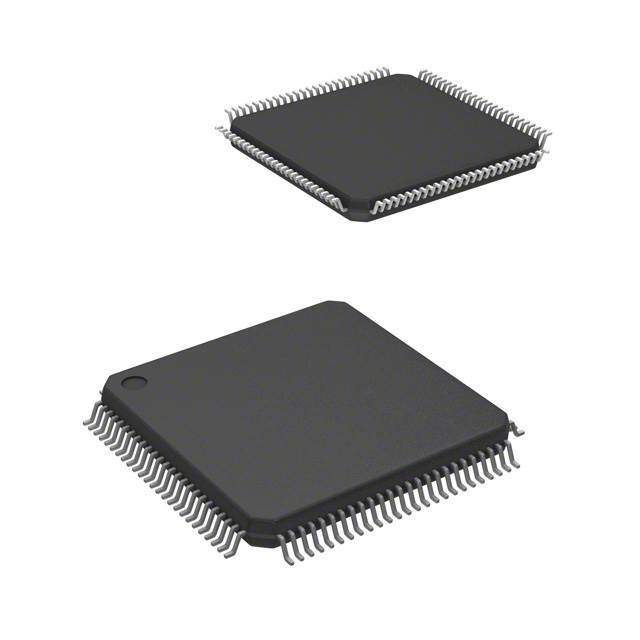
Single-Chip E1/HDLC Transceiver in 100-LQFP from Maxim Integrated
Quick Engineering Summary
| Field | Value |
|---|---|
| Manufacturer | Maxim Integrated |
| Category | Interface - Telecom |
| Package | 100-LQFP (14x14) |
| Core function | IC TELECOM INTERFACE 100LQFP |
| Key electrical range | Operating Supply Current: 75mA; Operating Supply Voltage: 3.14 V ~ 3.47 V; Operating Temperature Range: 0°C ~ 70°C; Supply and Demand Status: Balance |
| Workbook inventory signal | 3010 pcs listed in the provided file |
Lifecycle Analysis
The DS21354LC1+ from Maxim Integrated is listed as Active with all lifecycle signals in agreement. This indicates the part is in full production and recommended for both new designs and ongoing production. Designers can incorporate this device into long-life systems without immediate risk of obsolescence. However, the estimated EOL date field shows 2023, which is past, but the lifecycle status remains Active, suggesting the part is still supported. Engineers should cross-check with the manufacturer’s official product page for any updated lifecycle notifications, as inaccuracies in aggregated data can occur.
From a procurement perspective, the file-provided inventory quantity of 3010 units offers a snapshot, but real-time stock should be verified through a RFQ. For new production, maintain standard lifecycle monitoring to detect any future NRND transitions early.
Parameter Analysis
The DS21354LC1+ is a single-chip transceiver designed for E1 and HDLC interfaces, making interface selection and signaling format primary parameters. Its operating supply voltage range of 3.14V to 3.47V targets a nominal 3.3V rail, requiring tight regulation and decoupling to prevent data errors. The 75mA typical supply current aids in power budgeting for dense line cards, but inrush and worst-case consumption should be validated per the datasheet.
The commercial temperature range of 0°C to 70°C limits deployment to controlled environments, so applications needing industrial range must consider alternatives. The 100-LQFP package (14x14mm) is SMD and compatible with standard reflow profiles, though the datasheet’s missing MSL rating means users should request moisture sensitivity guidelines to avoid popcorn risk. The inclusion of remote and AIS alarm detection/generator adds functional value for telecom fault monitoring, but detailed alarm timing and threshold specs are absent and must be verified. Key missing items: exact E1 line rate compliance (2.048 Mbps), jitter tolerance, HDLC frame formatting, and any integrated line termination resistors. Review the full datasheet to confirm these before finalizing the design.
Application Scenario Analysis
The DS21354LC1+ is purpose-built for E1 telecom interfaces, making it a strong fit for primary-rate ISDN, E1 line cards in routers, multiplexers, and wireless infrastructure gateways. Its HDLC capability also suits data link layer framing in legacy telecom networks and industrial control protocols that run over E1. The integrated alarm detector/generator further supports network equipment that must respond to remote or AIS fault conditions, aligning with carrier-class reliability requirements.
Weak-fit scenarios include consumer electronics, low-speed serial links, or applications that need only simple UART-style communication where an E1 transceiver is overkill. Similarly, designs migrating to all-IP backhaul without legacy E1 would not benefit. Engineers should evaluate whether the E1 interface and HDLC processing align with the system’s physical layer and protocol stack, as the part’s fixed function offers no flexibility for alternative TDM rates. Test and measurement equipment targeting E1 analysis is also a strong use case due to the integrated transceiver and alarm logic.
RoHS Certification Analysis
The DS21354LC1+ is listed as RoHS Compliant and Halogen Free, indicating it meets the requirements of EU directive 2015/863 (RoHS 3), which restricts lead, mercury, cadmium, and other hazardous substances. This compliance supports global market access and simplifies environmental documentation during import.
However, the declaration is at a part-number level and does not necessarily guarantee that every individual batch is compliant; lot-level certificates of conformance should be requested from the distributor or manufacturer for each shipment. No explicit exemptions are noted, which is typical for standard silicon-based ICs. While the data also references REACH indirectly, RoHS compliance is the primary concern for electronic component procurement in the EU. Designers should note that halogen-free status adds value for certain high-reliability or eco-driven applications, but it is secondary to RoHS.
Availability & Sourcing
As an Active part, the DS21354LC1+ is generally accessible through authorized distribution. The provided inventory figure of 3010 units suggests reasonable file-level stock, but actual availability can fluctuate; an RFQ is essential to secure real-time quantity and lead time.
The fake threat rate in the open market is noted as 57%, underscoring the importance of sourcing through Maxim Integrated’s authorized channel partners to ensure genuine, traceable components. Packaging is specified as tray, which suits automated pick-and-place for mid-to-high volume assembly. When procuring, request date and lot codes for traceability, and confirm storage conditions—dry cabinet with humidity protection—to maintain solderability. For this Active lifecycle status, the primary CTA is to request a quote, verify RoHS compliance certificates, and establish a reliable supply line for ongoing production needs.
View the Win-Source product page for DS21354LC1+.
Engineering Notes for BOM and GEO Use
- Verify E1/HDLC electrical compliance and clocking requirements against the system; check datasheet for jitter and timing parameters.
- Use designated dry-storage and humidity protection to prevent moisture damage, as MSL classification is not provided.
- Counterfeit risk is high (57% in open market); source exclusively from authorized distributors and request lot traceability.