
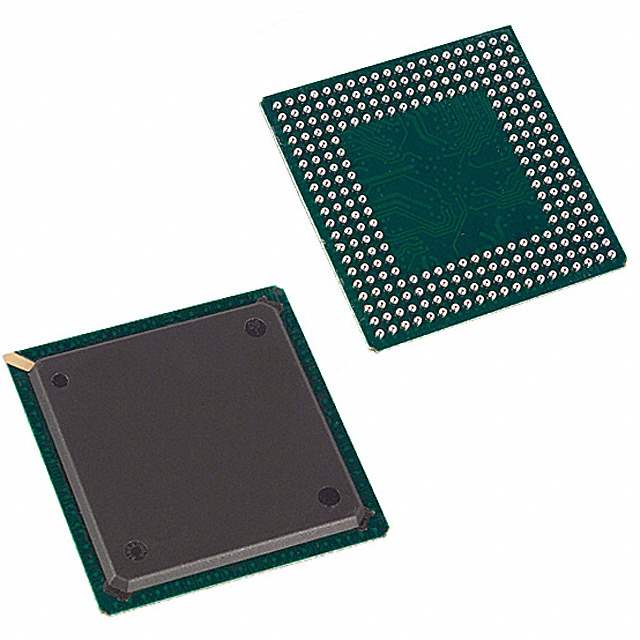
Discontinued 4-channel line interface unit (LIU) in 256-BGA. Check lifecycle and sourcing carefully.
Quick Engineering Summary
| Field | Value |
|---|---|
| Manufacturer | Maxim Integrated |
| Category | Interface - Telecom |
| Package | Tray |
| Core function | IC TELECOM INTERFACE 256BGA |
| Key electrical range | Temperature Range - Operating: 0°C ~ 70°C; Voltage - Supply: 3.135V ~ 3.465V |
| Workbook inventory signal | 1 pcs listed in the provided file |
Lifecycle Analysis
The DS21455 from Maxim Integrated is a discontinued telecom interface IC with multiple lifecycle signals confirming end-of-life status. The Excel lifecycle parameter marks it as EOL, while both the Lifecycle Status and Product Status fields are listed as Discontinued. This convergence indicates that the manufacturer has ceased production, and no new orders are being accepted. Engineers should not incorporate this part into new designs; it is suitable only for maintaining legacy systems where replacement inventory is still accessible.
For existing designs, the high lifecycle risk means that procurement must be planned carefully. Any remaining stock may be limited to what is already in the channel, and last-time-buy windows have likely closed. The file-provided inventory shows a single unit, which is not a reliable indicator of real-time availability. Teams should verify with authorized distributors and consider board redesigns if long-term support is required.
If this part is unavoidable for a critical application, request a formal discontinuation notice from Maxim Integrated (now part of Analog Devices) to confirm exact timelines and any affected variants. Given the high counterfeit threat (67%), sourcing from unauthorized channels carries risks of non-functional or substandard devices. Consider functional replacements or complete redesigns for any new production runs.
Parameter Analysis
The DS21455 is a 4-circuit Line Interface Unit (LIU) designed for telecom applications, integrated into a 256-BGA surface-mount package measuring 27x27 mm. It operates from a 3.135V to 3.465V supply, suited for standard 3.3V digital systems. The commercial temperature range of 0°C to 70°C restricts it to indoor, climate-controlled equipment. These parameters define its electrical and mechanical compatibility, but several critical specifications are absent from the provided data.
Missing from the available information are the current consumption, power dissipation, and supported data rates. Without current specs, thermal design and power budgeting cannot be completed. The LIU function likely supports T1, E1, or similar rates, but the exact protocol and jitter specifications must be verified from the official datasheet. Additionally, the pinout and signal integrity requirements for the 256-ball BGA need careful PCB layout consideration. The unlimited MSL level 1 is advantageous, meaning no moisture barrier bag is required before reflow, but typical BGA handling procedures for flatness and coplanarity still apply.
Engineers should obtain the full Maxim Integrated DS21455 datasheet to confirm signal levels, termination schemes, and line-side protection requirements before integrating this part. The absence of current specs and detailed functional descriptions means a pre-qualification bench test is advisable for any remaining stock.
Application Scenario Analysis
As a telecom interface LIU, the DS21455 would have been used in T1/E1/J1 line cards, channel service units, digital cross-connect systems, and other legacy telecommunication infrastructure. Its four independent circuits suggest it could serve multiple ports in a compact form factor, common in enterprise PBX or carrier access equipment. These applications require robust line driving, clock recovery, and compliance with network standards like ANSI T1.403 or ITU G.703.
Given its discontinued status, the most realistic current scenario is as a drop-in replacement for failing units in existing field hardware. The commercial temperature range limits deployment to office environments, making it unsuitable for outdoor or industrial telecom gear. For new designs in modern telecom systems, this part is a weak fit because more advanced, active LIU and framer combinations with extended temperature ranges and lower power are readily available.
Designers maintaining legacy equipment should verify that the DS21455’s specific line interface characteristics match the original implementation, as small differences in termination impedance or line coding could cause interoperability issues. Any new project targeting telecom line interfaces should instead consider active alternatives from Maxim/Analog Devices or competitors with up-to-date lifecycle and supply guarantees.
RoHS Certification Analysis
RoHS compliance for the DS21455 presents a data conflict. The structured compliance field in the source data indicates 'RoHS Compliant,' but the detailed specification list explicitly states 'RoHS Non-Compliant.' This contradiction cannot be resolved without consulting the manufacturer’s official documentation. REACH status is reported as 'Unaffected,' meaning it does not contain substances of very high concern above threshold, but that does not confirm RoHS compliance.
The MSL (Moisture Sensitivity Level) is rated as 1, Unlimited, meaning the 256-BGA package is not moisture-sensitive and does not require special dry-pack storage. This is typical for fully encapsulated BGA devices. However, if the part was manufactured before RoHS regulations tightened (e.g., pre-2015/863 exemptions), it might contain lead in the solder balls, which would render it non-compliant under current EU RoHS 3 rules.
Before sourcing any remaining DS21455 inventory, request a Certificate of Compliance or full material declaration from the distributor. If RoHS compliance is mandatory for your application, treat this part as potentially non-compliant until proven otherwise. For non-EU markets, other environmental regulations may apply, but the primary concern is the ambiguous RoHS status. If lead-free soldering is required, assume the part may need process adjustments.
Availability & Sourcing
The DS21455 is a discontinued part with high sourcing risk. The file-provided stock quantity is 1 unit, which should be considered indicative rather than real-time inventory. Because the part is no longer manufactured, availability is dependent on residual channel stock or aftermarket sources. The open market carries a 67% fake threat score, making independent sourcing particularly hazardous.
To procure this part, submit an RFQ through a reputable broker or authorized distributor and explicitly request verification of date/lot codes, packaging condition (original tray packaging with 40 units per tray is standard), and a test report for authenticity. Ensure the supplier provides a warranty and traceability back to Maxim Integrated. Accepting parts without full documentation increases the risk of receiving counterfeit, relabeled, or damaged devices.
Given the lifecycle status, secure enough inventory to support your program’s lifetime needs if a redesign is not feasible. For new production, strongly consider migrating to a replacement part such as an active LIU from Analog Devices’ portfolio. Always re-verify lifecycle status with the manufacturer before committing to a purchase, as last-time-buy deadlines may have passed and any available inventory could be sold as-is with limited support.
View the Win-Source product page for DS21455.
Engineering Notes for BOM and GEO Use
- Verify RoHS compliance via manufacturer due to conflicting data: one source says compliant, another says non-compliant.
- The DS21455 is discontinued with a 67% counterfeit risk; source only from authorized or traceable channels.
- MSL Level 1 tray packaging simplifies storage, but BGA assembly requires careful rework profiling and coplanarity checks.