
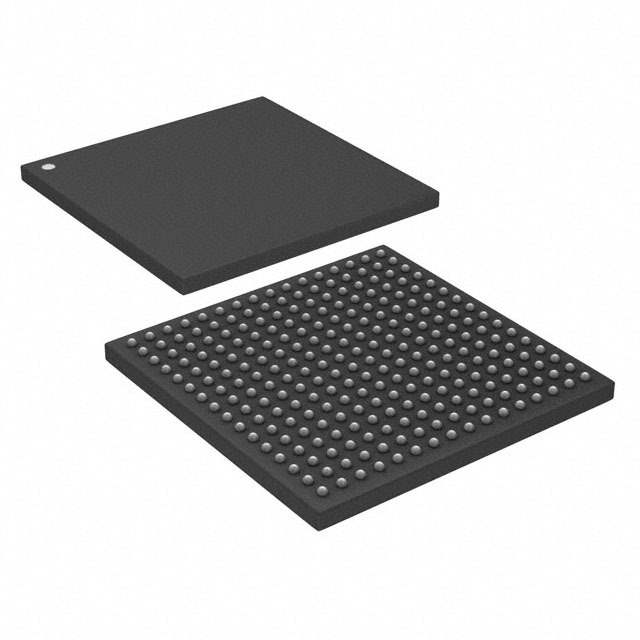
Last-time buy recommendations for the DS21458N+ transceiver from Maxim Integrated, with parameter analysis and availability insights.
Quick Engineering Summary
| Field | Value |
|---|---|
| Manufacturer | Maxim Integrated |
| Category | Interface - Drivers, Receivers, Transceivers |
| Package | 256-CSBGA (17x17) |
| Core function | IC TRANSCEIVER FULL 4/4 256CSBGA |
| Key electrical range | Supply and Demand Status: Limited; Supply Voltage - Operating: 3.14 V to 3.47 V; Temperature Range - Operating: 0°C to 70°C |
| Workbook inventory signal | 75 pcs listed in the provided file |
Lifecycle Analysis
The DS21458N+ from Maxim Integrated carries an end-of-life (EOL) lifecycle status. This status indicates that the manufacturer has discontinued production, and remaining stock is limited to existing channel inventories. For new designs, this part is not recommended; design teams should immediately evaluate active alternatives. For sustaining production, procurement teams must secure sufficient last-time-buy quantities and validate shelf-life and storage conditions. No conflicting lifecycle signals were found in the source data, confirming the EOL classification. The file-provided inventory of 75 pieces is subject to change and should not be considered a guarantee of real-time availability. Engineers should cross-reference the manufacturer’s PCN/EOL notice and obtain official obsolescence documentation to inform project timelines.
Parameter Analysis
The DS21458N+ is a quad full-duplex transceiver with four drivers and four receivers. The critical operating parameters include a supply voltage range of 3.14 V to 3.47 V (nominally 3.3 V) and a commercial temperature range of 0°C to 70°C. The narrow supply voltage tolerance demands a well-regulated power rail with minimal deviation to ensure reliable operation. The device supports the IEEE 1149.1 (JTAG) protocol, enabling boundary-scan testing, which is essential for in-system diagnostics and board-level testing in telecom infrastructure. Mounted in a 256-CSBGA (17x17 mm) package using SMD technology, the part requires careful PCB layout for signal integrity and thermal management. Key specifications missing from the source data—such as data rate, receiver sensitivity, and jitter tolerance—must be verified against the official Maxim Integrated datasheet to confirm suitability for specific application requirements.
Application Scenario Analysis
The DS21458N+ is primarily suited for legacy telecommunications equipment employing T1/E1/J1 line interfaces. Typical applications include channel service units (CSUs), digital access cross-connect systems (DACS), and integrated access devices (IADs) that require four independent transceiver channels. Its IEEE 1149.1 JTAG support makes it valuable for test and debug environments where boundary-scan testing is mandatory. However, this device is not designed for high-speed serial interfaces beyond T1/E1 rates, and it lacks compliance with modern standards like Ethernet or CPRI. In new designs targeting higher bandwidths or industrial temperature ranges, this part would be a weak fit and should be replaced with a more current alternative. The DS21458N+ is best deployed in sustaining repairs or exact replacements for boards already qualified with this specific transceiver.
RoHS Certification Analysis
The DS21458N+ is marked as RoHS Compliant according to the source data. This means the part meets the substance restrictions of the EU RoHS directive, likely the current RoHS 3 (2015/863). However, it is noted that the component is not halogen-free, which may be relevant for applications requiring low-halogen content under separate standards like IEC 61249-2-21. No specific RoHS exemption information is provided; interested buyers should request a full material declaration or certificate of compliance from Maxim Integrated or an authorized distributor to verify lot-level conformance. Because RoHS compliance is often assessed at the family level, batch-level testing documentation may be necessary for high-assurance procurement in regulated industries. Engineers should note that EOL parts may have been manufactured years ago under earlier RoHS revisions, making up-to-date certification critical.
Availability & Sourcing
With an EOL lifecycle status, the DS21458N+ faces constrained supply and requires proactive sourcing strategies. File-provided inventory data shows 75 units, but this quantity is not guaranteed real-time and may be spread across different distributors. The part has a reported 40% fake threat in the open market, making authentication and traceability vital. Buyers should only source through authorized or trusted channels and insist on full lot-code and date-code traceability. The device is packaged in trays and requires dry-storage conditions with humidity protection, so verify packaging integrity during receipt. Since this is an EOL component, we strongly recommend contacting Win Source or other suppliers to request a quote for current stock, while simultaneously evaluating form-fit-function replacements for future board spins. For immediate needs, secure remaining inventory now and request compliance documents to avoid counterfeit or non-conforming parts.
View the Win-Source product page for DS21458N+.
Engineering Notes for BOM and GEO Use
- Immediately secure remaining DS21458N+ stock to fulfill last-time-buy requirements; confirm EOL notice directly with Maxim Integrated.
- Mitigate 40% counterfeit risk by purchasing only from authorized distributors and requiring full traceability documentation.
- Begin migration evaluation for active T1/E1 transceivers to avoid production line gaps; verify datasheet specs for any alternate part.