
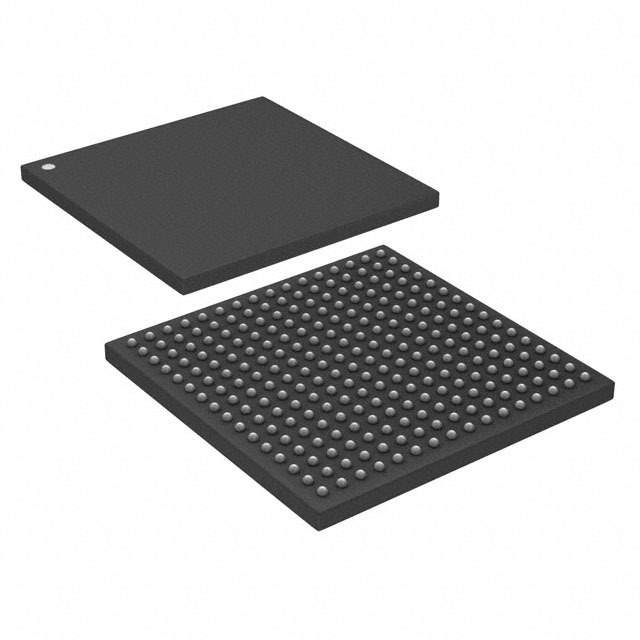
Interface Transceiver (EOL) – Sourcing & Verification Guide
Quick Engineering Summary
| Field | Value |
|---|---|
| Manufacturer | Maxim Integrated |
| Category | Interface - Drivers, Receivers, Transceivers |
| Package | 256-CSBGA (17x17) |
| Core function | IC TRANSCEIVER FULL 4/4 256CSBGA |
| Key electrical range | Operating Temperature Range: 0°C ~ 70°C; Supply and Demand Status: Balance |
| Workbook inventory signal | 75 pcs listed in the provided file |
Lifecycle Analysis
The DS21458N from Maxim Integrated is in End-of-Life (EOL) status, as confirmed by multiple lifecycle signals including the manufacturer’s Part Status of Obsolete. This high-risk designation means new designs should not incorporate this device; existing production should assess remaining inventory and begin migration planning.
File-provided stock shows 75 units, but real-time availability is not guaranteed. Procurement teams should verify current inventory directly with suppliers and consider the elevated counterfeit threat in the open market (31 pct.). Secure only from authorized or traceable sources, and request lot and date code documentation to ensure authenticity.
For sustaining production, evaluate the feasibility of last-time-buy orders through authorized channels. Contact the manufacturer or official distributors to confirm any remaining supply and to obtain formal end-of-life notifications.
Parameter Analysis
The DS21458N is a full-duplex 4/4 transceiver supporting the IEEE 1149.1 boundary-scan protocol, housed in a 256-CSBGA (17mm × 17mm) surface-mount package. Key electrical constraints include a supply voltage range of 3.14V to 3.47V and an operating temperature span of 0°C to 70°C, making it suitable for commercial-grade environments.
Critical missing parameters from the provided data are the data rate and receiver hysteresis values. These directly affect signal integrity and timing closure in high-speed designs. Engineers must consult the official Maxim Integrated datasheet to verify these specifications and ensure compatibility with existing designs.
Additional verification items include ESD protection levels, input/output capacitance, and thermal resistance figures. The integrated IEEE 1149.1 feature implies test infrastructure, but its exact implementation details should be cross-referenced with the manufacturer’s documentation to guarantee proper boundary-scan chain configuration.
Application Scenario Analysis
The DS21458N fits applications requiring multi-channel full-duplex communication with IEEE 1149.1 test access, such as telecom line cards, networking backplanes, and industrial data acquisition systems. Its 4-driver/4-receiver architecture serves well in mid-range I/O expansion where JTAG-based testing is mandatory.
Weak-fit scenarios include battery-powered or portable devices due to the 3.14V–3.47V supply and 0°C–70°C operating range, which lacks low-power modes and extended temperature tolerance. Also, designs needing automotive (-40°C to +125°C) or harsh-industrial reliability should avoid this part.
Designs migrating from this transceiver should evaluate alternatives with at least equivalent channel count, supply voltage, and protocol support. Since the device is EOL, new applications should not adopt it; instead, select a recommended replacement from Maxim Integrated or a pin-compatible second source after thorough functional verification.
RoHS Certification Analysis
The DS21458N is listed as RoHS Compliant, indicating it meets the EU Directive 2011/65/EU and related amendments. The supplier also reports REACH Unaffected status, which is a separate regulation and does not substitute for RoHS conformance.
With an MSL rating of 1 (Unlimited), the device can be handled and stored without strict moisture control, simplifying logistics. However, RoHS compliance is typically declared at the family level; for high-reliability procurement, request lot-specific certificates of compliance.
If your assembly process requires lead-free qualification or additional substance restrictions (e.g., halogen-free), verify those details directly with the manufacturer or through a formal material declaration. The absence of explicit exemption notes means any exemptions would need to be confirmed per Directive Annex III or III.
Availability & Sourcing
Given the DS21458N’s EOL status, sourcing requires a careful approach. File-provided inventory indicates 75 units, but this is not real-time guaranteed; contact the supplier to confirm current stock levels and lead time.
Request a quote for remaining inventory and secure units as necessary for bridging production. Validate traceability by reviewing lot codes, date codes, and manufacturer certificates. With a 31 pct. open-market counterfeit risk, authenticate parts through visual inspection, electrical testing, or third-party labs.
To ensure design continuity, investigate official last-time-buy opportunities or locate alternate parts through manufacturer roadmaps. The transition demands proactive communication with Maxim Integrated or authorized distributors to avoid production disruptions.
View the Win-Source product page for DS21458N.
Engineering Notes for BOM and GEO Use
- Verify full electrical specifications from Maxim Integrated datasheet before design integration, as data rate and hysteresis are not provided.
- Due to EOL status and 31 pct. open market counterfeit risk, source only from authorized or traceable suppliers with lot code documentation.
- Ensure supply voltage 3.14V–3.47V and 0°C–70°C operating range are met, and confirm package footprint for 256-CSBGA (17x17).