
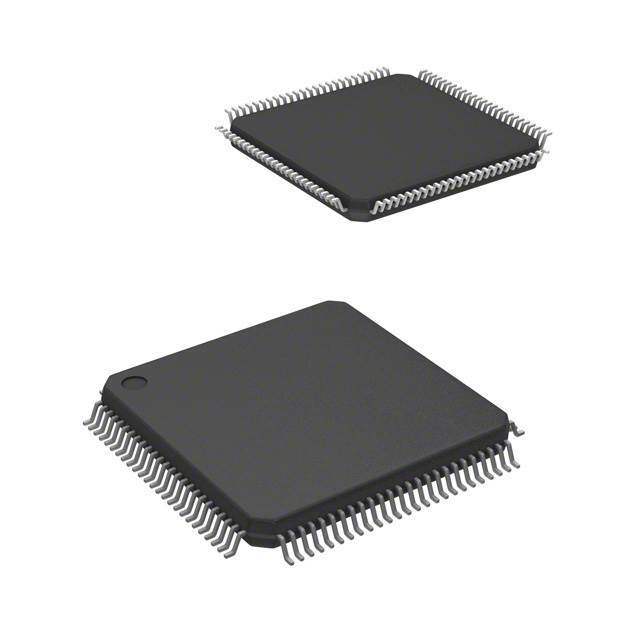
Single-chip T1/E1/J1 transceiver in 100-LQFP with HDLC controller and line build-out generator.
Quick Engineering Summary
| Field | Value |
|---|---|
| Manufacturer | Maxim Integrated |
| Category | Interface - Telecom |
| Package | 100-LQFP (14x14) |
| Core function | IC TELECOM INTERFACE 100LQFP |
| Key electrical range | Operating Supply Current: 75mA; Supply and Demand Status: Limited; Supply Voltage - Operating: 4.75 V to 5.25 V; Temperature Range - Operating: 0°C to 70°C |
| Workbook inventory signal | 2 pcs listed in the provided file |
Lifecycle Analysis
The DS21552L+ from Maxim Integrated is officially listed as Active, but an internal lifecycle parameter explicitly states 'Not applicable for new design.' This conflict must be taken seriously by procurement and engineering teams. For new product development, the part should be treated as NRND (Not Recommended for New Design); designers should begin evaluating migration paths and avoid committing DS21552L+ into fresh BOMs unless the manufacturer can provide written confirmation that production will continue for the required design horizon.
For existing designs already in production, the Active status suggests that the part is still being manufactured and stocked, though the 'limited' supply and demand status indicates that availability may be constrained. Production buyers should engage with Maxim Integrated (or Analog Devices, the parent company) to obtain a formal product lifecycle roadmap and a last-time-buy notice if any. The medium risk level reflects this ambiguity, and sustaining customers should plan inventory buffers accordingly.
Documentation verification is essential: request the latest PCN (Product Change Notification) history and any planned obsolescence notices. The part's long service in telecom infrastructure implies it has a broad installed base, but continued availability is not guaranteed without proactive lifecycle management. Use the RFQ process to clarify lead times and minimum order quantities from authorized sources.
Parameter Analysis
The DS21552L+ is a single-chip transceiver for T1/E1/J1 interfaces, housed in a 100-LQFP package (14x14 mm body). Key operational parameters include a supply voltage range of 4.75 V to 5.25 V and a nominal operating current of 75 mA, which is typical for 5 V legacy telecom ICs. The 0°C to 70°C commercial temperature range limits deployment to climate-controlled environments, excluding extended industrial applications. These parameters are critical for power budget allocation and thermal design on line card PCBs.
The device integrates a DSX-1 and CSU line build-out generator, an HDLC controller, and an in‑band loop code generator/detector—these functional blocks directly affect link performance and compliance with ANSI T1.102/ITU G.703. When qualifying the part, engineers must verify jitter generation, jitter tolerance, and return loss against their specific line rate (T1 at 1.544 Mbps, E1 at 2.048 Mbps). The data sheet should be consulted for exact bit error rate performance and framing options (SF, ESF, G.704).
Missing data points that require verification include: input/output impedance, ESD ratings, maximum power dissipation, and any internal termination resistances. Also, while the tray packaging suggests a standard moisture sensitivity level (MSL), the specific level should be confirmed for solder reflow profiles. The high counterfeit risk (66%) means that actual parametric performance in received lots must be validated against the manufacturer’s original specifications, especially for parameters like supply current and voltage thresholds.
Application Scenario Analysis
The DS21552L+ is purpose‑built for legacy T1/E1/J1 telecom interface designs. It excels in channel service units (CSUs), data service units (DSUs), channel banks, digital cross‑connect systems, and integrated access devices that still rely on primary rate TDM circuits. The built‑in HDLC controller supports clear‑channel and framed data links commonly used in SS7 signaling or PPP over T1/E1. The loop code generator and detector facilitate network diagnostics and maintenance without external components, which is a strong fit for test equipment and demarcation devices.
In modern telecom equipment that adopts higher‑density, lower‑voltage solutions or all‑IP architectures, the DS21552L+ is a weaker fit. Its requirement for a 5 V rail and limited temperature range exclude it from most newer, compact line cards that operate from 3.3 V or lower and need industrial grade temperatures. However, it remains relevant for aftermarket replacement boards, legacy infrastructure maintenance, and low‑volume industrial controls that still interface to T1 trunks. The part’s ‘not for new design’ flag aligns with this niche, sustaining‑only role.
Engineers evaluating the DS21552L+ should compare its feature set with newer single‑chip transceivers that integrate LIU, framer, and HDLC in one package but offer wider voltage tolerances and extended temperature ranges. If the application is purely a form‑fit‑function replacement, the DS21552L+ may still be sourced, but a thorough functional verification in the target system is mandatory, especially with regard to software‑compatible register sets and interrupt handling.
RoHS Certification Analysis
According to the provided source data, DS21552L+ is RoHS Compliant. This designation generally indicates that the part is free from the six hazardous substances restricted by the original EU RoHS directive (lead, mercury, cadmium, hexavalent chromium, PBBs, and PBDEs) and likely the additional four phthalates under RoHS 3 (EU 2015/863). However, the data does not explicitly cite a RoHS revision number, so buyers should assume compliance with the applicable directive at the time of manufacture.
There is no REACH or halogen‑free certification mentioned in the records, meaning those compliances have not been verified within this data set. REACH is a separate regulation, and the presence of a RoHS statement does not automatically fulfill REACH obligations; if your company requires REACH declarations, you must request them from the supplier.
Lot‑level compliance is crucial for high‑reliability telecom equipment. The MSDS (Material Safety Data Sheet) is listed as ‘Get Access,’ indicating that a full material declaration may be available upon request. Engineering and quality teams should obtain the latest certificate of compliance for the specific date and lot code before releasing the parts into production, especially given the counterfeit risk profile. Storage conditions (dry storage cabinet and humidity protection) also suggest a moisture sensitivity level that must be respected during assembly.
Availability & Sourcing
The DS21552L+ is a Maxim Integrated telecom interface IC that appears in limited supply according to the file‑based inventory signal of 2 pieces. This quantity is not a real‑time, guaranteed figure; it represents a snapshot from the data source and should be verified through a formal RFQ. Given the ‘limited’ supply and demand status, spot availability may vary, and standard lead times may be extended. Buyers are strongly advised to request a current quote to secure stock.
Sourcing requires special caution: the part carries a 66 percent ‘Fake Threat in the Open Market’ rating, which is extremely high. Only authorized Maxim Integrated distributors (now Analog Devices) or their franchisees should be used. Accepting parts from independent brokers without rigorous incoming inspection is risky. Insist on full chain‑of‑custody documentation, including date codes, lot codes, and original manufacturer certificates. A third‑party test lab may be warranted to verify authenticity through die inspection or electrical testing.
The DS21552L+ comes in tray packaging, typical for low‑volume production and prototyping. When requesting a quote, confirm the pack quantity per tray and any potential for partial tray orders. Also, reconcile lifecycle status: with the ‘not applicable for new design’ warning, the RFQ process should include a question about ongoing production support. If the part is only available as end‑of‑life stock, secure the required volume in one purchase and arrange for long‑term storage. For all orders, verify RoHS compliance and MSL documentation before assembly.
View the Win-Source product page for DS21552L+.
Engineering Notes for BOM and GEO Use
- Verify lifecycle status with Maxim Integrated/Analog Devices before using DS21552L+ in any new design, due to internal 'not for new design' caution.
- With a 66% counterfeit threat in the open market, source only from authorized distributors and insist on full traceability and lot-code verification.
- The 0°C to 70°C operating range and 5V supply may limit DS21552L+ use in industrial or low-power modern designs; review environmental requirements carefully.