
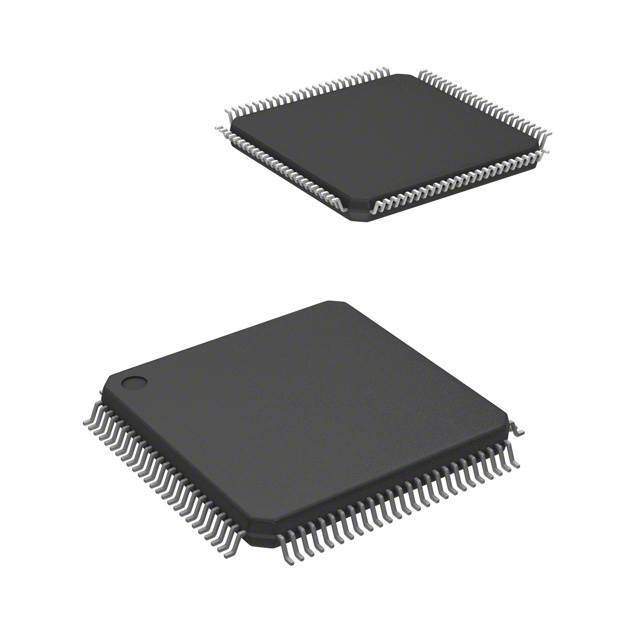
Single-Chip E1/T1/J1 Transceiver – Lifecycle, Compliance & Sourcing Guide
Quick Engineering Summary
| Field | Value |
|---|---|
| Manufacturer | Maxim Integrated |
| Category | Interface - Telecom |
| Package | 100-LQFP (14x14) |
| Core function | IC TELECOM INTERFACE 100LQFP |
| Key electrical range | Operating Supply Current: 75mA; Operating Supply Voltage: 4.75 V ~ 5.25 V; Operating Temperature Range: -40°C ~ 85°C; Supply and Demand Status: Limited |
| Workbook inventory signal | 2600 pcs listed in the provided file |
Lifecycle Analysis
The Maxim DS21554LN+ is currently listed as an Active component. This status implies the part is in full production and supported for new designs, with no immediate discontinuation or obsolescence risk. All supplied lifecycle signals are consistent, showing Active status in multiple fields.
However, one specification field mentions an Estimated EOL Date of 2023. This date likely originates from an earlier forecast or internal note and does not align with the current Active designation. While no official product change notification (PCN) has been flagged, engineers should contact Maxim Integrated (now part of Analog Devices) to confirm the updated product roadmap and longevity. For new production programs, securing a formal lifecycle commitment from the manufacturer is advisable before finalizing the BOM.
For sustaining production, the Active status supports ongoing procurement, but the 2023 EOL estimate introduces a note of caution. Designers integrating the DS21554LN+ into long-lifecycle equipment should plan for potential future migration or last-time-buy scenarios. The file-provided inventory quantity of 2600 units should not be treated as a real-time guarantee and requires verification through a quote request.
Parameter Analysis
The DS21554LN+ is a single-chip transceiver supporting E1, T1, and J1 interfaces, integrating both a framer and a line interface unit. Key operational parameters include a supply voltage range of 4.75V to 5.25V and an operating supply current of 75mA, resulting in typical power consumption around 375mW. The -40°C to +85°C operating temperature range qualifies it for industrial environments. These values are critical for power budgeting, thermal management, and ensuring compatibility with existing 5V infrastructure.
The device is housed in a 100-LQFP package with a 14x14mm body, using SMD mounting. Its single-circuit design makes it suitable for applications where one port is sufficient. The integrated remote and AIS alarm detector/generator reduces external component count. However, several decision-relevant parameters are not covered in the provided data, including jitter tolerance and generation, pulse mask compliance, receiver sensitivity, and clock synthesis specifications. Engineers must consult the full Maxim datasheet and relevant ITU-T G.703/G.704 standards to validate these aspects.
For layout, the 100-LQFP package demands careful trace routing and thermal relief. At 75mA typical draw, the thermal load is modest, but quality ground planes and decoupling are essential. Missing data on moisture sensitivity level (MSL) should be verified from the packaging label, as the noted dry storage requirement hints at a level 3 or higher device.
Application Scenario Analysis
The DS21554LN+ is ideally suited for telecom and networking equipment requiring a single E1, T1, or J1 line termination. Typical scenarios include channel service units/data service units (CSU/DSU), private branch exchanges (PBX), cellular base station backhaul links, digital access cross-connect systems, and TDM-over-IP gateways. Its single-chip integration simplifies board design for low-density line cards or customer premise equipment.
In applications where multiple ports are needed, a different multi-channel transceiver or multiple DS21554LN+ devices would be required, which may not be the most efficient solution. The part fits legacy designs that still rely on TDM interfaces, as well as new designs in markets where E1/T1 remains prevalent (e.g., certain industrial, utility, or defense communications). Weak-fit scenarios include systems that need only a standalone framer without an integrated line interface, or those requiring higher-rate interfaces such as E3 or DS3. For those, alternative Maxim/Analog Devices products should be considered.
The integrated alarm detection and generation features benefit systems that must monitor line status and generate AIS alarms compliant with telecom standards. Designers should evaluate whether the available I/O and HDLC features align with their specific protocol requirements.
RoHS Certification Analysis
The DS21554LN+ is marked as RoHS Compliant, indicating that it meets the EU RoHS Directive 2015/863 (RoHS 3) restrictions on hazardous substances. In addition, the component is listed as halogen-free compliant, which is an extra environmental attribute often requested in telecom and consumer electronics supply chains.
RoHS compliance for integrated circuits is typically certified at the product family level by the manufacturer, but for formal compliance documentation in volume production, lot-specific certificates may be required. The provided data does not include a specific REACH statement, though REACH and RoHS are separate regulatory frameworks. Distinguishing between them is important for full material content reporting.
For applications with strict environmental requirements, such as medical or aerospace derivatives, requesting a detailed RoHS certificate of compliance from the distributor is recommended. The component's dry storage specification suggests attention to MSL management, though no explicit MSL level is stated in the source data.
Availability & Sourcing
With an Active lifecycle status, the DS21554LN+ should be available through authorized Maxim Integrated (Analog Devices) distributors, though the supply and demand status is noted as Limited. The file-provided inventory shows 2600 units, but this is not a real-time figure. Buyers should request a quote to confirm current stock, lead times, and pricing.
A notable concern is the 59% fake threat rating in the open market, emphasizing the importance of sourcing through verified channels. Counterfeit risks for telecom interface ICs can lead to field failures and compliance issues. Traceability measures such as date code verification, lot code tracking, and original packaging inspection (tray format) are critical. The component's dry storage condition suggests moisture sensitivity; therefore, the integrity of the humidity protection packaging should be verified upon receipt.
For designs entering new production, a formal lifecycle confirmation from Maxim/Analog Devices is advisable, given the ambiguous 2023 EOL date. Buyers should also request RoHS and halogen-free compliance certificates, and consider the lead time implications of the Limited supply status. Contact Win Source for a current quotation and availability check, and ensure all compliance documentation is provided before order placement.
View the Win-Source product page for DS21554LN+.
Engineering Notes for BOM and GEO Use
- Verify datasheet AC characteristics and line interface specifications for precise clock and jitter requirements before PCB design.
- Given the 59% fake threat rating in the open market, prioritize authorized Maxim/Analog Devices distributors or request full traceability documentation.
- Confirm lot-specific RoHS and halogen-free compliance certificates if required by your end-product certification process.