
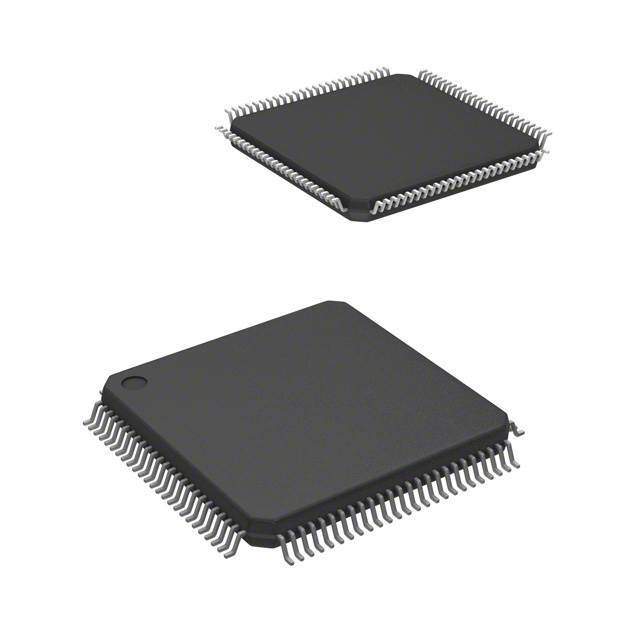
Single-chip telecom interface with E1, T1, J1, and HDLC support in 100-LQFP
Quick Engineering Summary
| Field | Value |
|---|---|
| Manufacturer | Maxim Integrated |
| Category | Interface - Telecom |
| Package | Tray |
| Core function | IC TELECOM INTERFACE 100LQFP |
| Key electrical range | Current - Supply: 75mA; Temperature Range - Operating: -40°C ~ 85°C; Voltage - Supply: 4.75V ~ 5.25V |
| Workbook inventory signal | 2600 pcs listed in the provided file |
Lifecycle Analysis
The Maxim Integrated DS21554LN is officially discontinued according to manufacturer status. For new designs, this part must not be used; engineers need to select alternative active components. In production sustainment, remaining inventory may still be sourced, but it carries high risk of obsolescence.
File-provided inventory of 2600 units is not a live number and should be reconfirmed. The presence of conflicting lifecycle signals (both EOL and Discontinued) reinforces the conservative interpretation: treat the DS21554LN as end-of-life and unsuitable for any new production. Any procurement should include manufacturer revalidation of date/lot codes and authenticity checks, and a migration plan to an active device should be initiated immediately.
Parameter Analysis
The DS21554LN is a single-chip transceiver supporting E1, T1, J1, and HDLC interfaces, which makes it a flexible building block for legacy telecom line cards. It operates from a 4.75V to 5.25V supply with a typical current draw of 75mA, so careful 5V rail design with adequate decoupling is needed. The industrial temperature range of -40°C to +85°C broadens its environmental suitability.
The 100-LQFP package is surface-mount with a 14x14 mm body, and its Moisture Sensitivity Level is 3 (168-hour floor life), demanding proper dry-pack handling during assembly. Critical parameters not available in this data set—such as jitter tolerance, receiver sensitivity, and detailed timing—must be verified from the original Maxim Integrated datasheet before integration. Engineers should also confirm voltage tolerances and power dissipation under worst-case conditions.
Application Scenario Analysis
The DS21554LN is targeted at telecom interface tasks where T1/E1/J1 line termination, framing, and HDLC processing are required. Its strongest fit is in legacy telecommunications equipment: line cards, channel service units (CSUs), data service units (DSUs), and PBX systems that still utilize TDM backplanes.
It can also serve in industrial telemetry or SCADA systems that rely on E1 links. However, for modern designs that demand higher speeds, Ethernet-over-PDH, or native packet processing, the DS21554LN is a weak fit due to its discontinued status and limited data-rate support. Designers maintaining existing systems should evaluate active replacements from Maxim Integrated (now Analog Devices) to ensure long-term availability and compliance.
RoHS Certification Analysis
RoHS compliance for the DS21554LN presents a direct conflict in the available data: the high-level status is shown as 'RoHS Compliant' while a specific parameter field lists 'RoHS Non-Compliant'. This discrepancy means that no blanket assumption can be made; every procurement lot must be individually verified.
Request a formal Certificate of Compliance from the distributor that references the exact date and lot codes. REACH status is indicated as unaffected, which is a separate regulation and does not resolve the RoHS uncertainty. For any new design, it is safer to migrate to a pin-to-pin replacement with guaranteed RoHS 3 (EU 2015/863) compliance. If exemptions apply (e.g., lead in solders for repair of legacy equipment), those must also be documented.
Availability & Sourcing
As a discontinued component, the DS21554LN demands a cautious sourcing approach. The file-provided stock of 2600 units is offered in tray packaging with a standard package quantity of 90 pieces, but this is not a live inventory promise. A formal request for quotation is necessary to confirm current availability, production date codes, and traceability.
With a reported 44% counterfeit threat in the open market, procurement teams must insist on full traceability documentation, including manufacturer certificate of conformance and lot-specific RoHS status. For sustaining production, secure the needed volume now while simultaneously qualifying an alternative active device. Always verify lifecycle status directly with the manufacturer before committing to a purchase, and avoid using this part in any new design.
View the Win-Source product page for DS21554LN.
Engineering Notes for BOM and GEO Use
- Discontinued part; verify lifecycle and secure inventory for sustaining production only.
- Conflicting RoHS data—require lot-specific compliance certificate before purchase.
- High counterfeit risk (44% in open market)—insist on traceable sourcing and authenticity testing.