
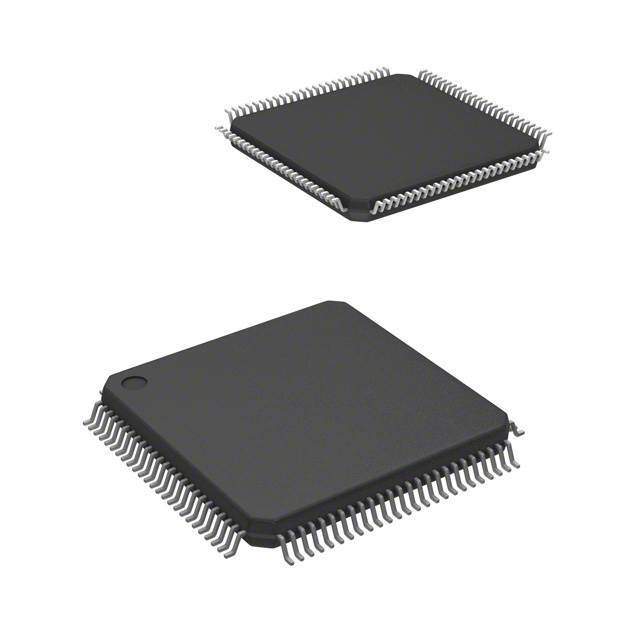
An engineering-focused look at the Maxim Integrated DS2155L, highlighting lifecycle, key specs, and procurement considerations for E1/T1/J1 applications.
Quick Engineering Summary
| Field | Value |
|---|---|
| Manufacturer | Maxim Integrated |
| Category | Interface - Telecom |
| Package | 100-LQFP |
| Core function | IC TELECOM INTERFACE 100LQFP |
| Key electrical range | Current - Supply: 75mA; Supply and Demand Status: Limited; Supply Voltage (V): 3.14V ~ 3.47V; Temperature Range - Operating: 0°C ~ 70°C |
| Workbook inventory signal | 1153 pcs listed in the provided file |
Lifecycle Analysis
The DS2155L has reached End-of-Life (EOL) status, as indicated by both the lifecycle status field and the manufacturer's classification as obsolete. This means the part is no longer recommended for new designs, and ongoing production should be migrated to a recommended alternative. For existing products that still rely on the DS2155L, it is critical to secure sufficient inventory for the remaining product lifecycle and validate the authenticity of available stock, especially given the reported 46% fake threat in the open market.
The lifecycle signals are consistent, with no conflicts observed. Engineers and buyers should immediately consult Maxim Integrated’s official discontinuation notices and roadmaps to identify alternative parts. Without a direct replacement specified, a full system redesign or qualification of a drop-in equivalent may be necessary. Sustaining production will require careful management of limited remaining stock, which the provided data shows as 1153 units (not guaranteed real-time). Lifecycle verification should be performed with each procurement lot to avoid unexpected shortages.
Parameter Analysis
The DS2155L is a single-chip transceiver supporting E1, T1, J1, and HDLC interfaces, with an integrated BERT generator/detector and CMI coder/decoder. Key electrical parameters include a supply voltage range of 3.14 V to 3.47 V and a supply current of 75 mA, which dictate power supply design and thermal considerations. The part operates over a commercial temperature range of 0°C to 70°C, making it suitable for controlled indoor environments but not for industrial extended ranges.
The 100-LQFP (14x14) package with an MSL level of 3 (168 hours) requires careful handling during assembly to prevent moisture damage. The data sheet should be consulted for missing parameters such as jitter tolerance, return loss, and clock recovery specifications, which are critical for telecom interface compliance. Additionally, the absence of detailed timing and electrical characteristics for the HDLC controller and BERT modules means engineers must verify these against the system requirements. Given the EOL status, a thorough parameter review is essential to assess whether existing designs can be supported without modification.
Application Scenario Analysis
The DS2155L is designed for legacy telecommunications infrastructure, including E1/T1 line cards, enterprise routers, and channel banks. Its integration of HDLC controller, BERT, and CMI coding makes it suitable for applications requiring framing, line monitoring, and encoding in a single chip. Strong-fit scenarios include legacy telecom equipment maintenance, where a drop-in replacement is needed for a failed DS2155L, and small-scale test equipment for E1/T1 network testing.
Weak-fit areas include new designs for modern packet-based networks (where Ethernet or optical interfaces are preferred), or applications requiring extended temperature ranges (-40°C to +85°C) or very low power consumption. The part's commercial temperature range limits its use in outdoor or uncontrolled environments, and its EOL status makes it risky for new product introductions. For sustaining existing deployments, the DS2155L may still be appropriate if authentic stock is available, but designers should evaluate whether a more modern transceiver with software-compatible interfaces can serve as a migration path.
RoHS Certification Analysis
The RoHS status of the DS2155L presents a conflict in the provided data: the compliance summary indicates “RoHS Compliant,” while the detailed specifications list shows “RoHS Non-Compliant.” This discrepancy necessitates direct verification with Maxim Integrated (now part of Analog Devices) before any procurement decisions. If the part is indeed non-compliant, it could pose a risk for designs that must adhere to EU RoHS directives or similar regulations.
For EOL parts, manufacturers sometimes relax compliance documentation, and remaining stock may consist of both compliant and non-compliant lots. Buyers should request a valid RoHS certificate for the specific lot of parts being purchased. The MSL level of 3 is provided, but no REACH or halogen-free declarations are available. Given the regulatory importance, engineers should not rely solely on database entries and must confirm RoHS status directly from the manufacturer's official environmental compliance documents.
Availability & Sourcing
As an EOL part, the Maxim Integrated DS2155L has limited availability, with the provided data indicating 1153 units in stock at the time of file creation. This quantity is not real-time and should be verified through an RFQ. Sourcing requires careful attention to traceability and date/lot codes to avoid counterfeit components, especially with a reported open-market fake threat of 46%. Buyers should request a quote for current availability and insist on compliance documentation, including RoHS status confirmation.
Packaging is tray (manufacturer pack quantity 90), which is typical for production environments. For sustaining production, secure enough inventory to cover your product's remaining lifecycle and implement a migration plan. If the part is critical, consider authorized aftermarket suppliers or go through the manufacturer's obsolescence and authorized distribution channels. Never commit the DS2155L to new designs; prioritize verifying lifecycle status with each purchase and cross-referencing manufacturer notices for any last-time-buy opportunities.
View the Win-Source product page for DS2155L.
Engineering Notes for BOM and GEO Use
- The DS2155L is EOL; avoid using it in new designs and plan a migration path for existing products.
- Verify RoHS compliance directly with Maxim Integrated, as the provided data shows conflicting compliance signals.
- Due to the 46% open-market fake threat, source only from authorized distributors or conduct thorough authenticity verification.