
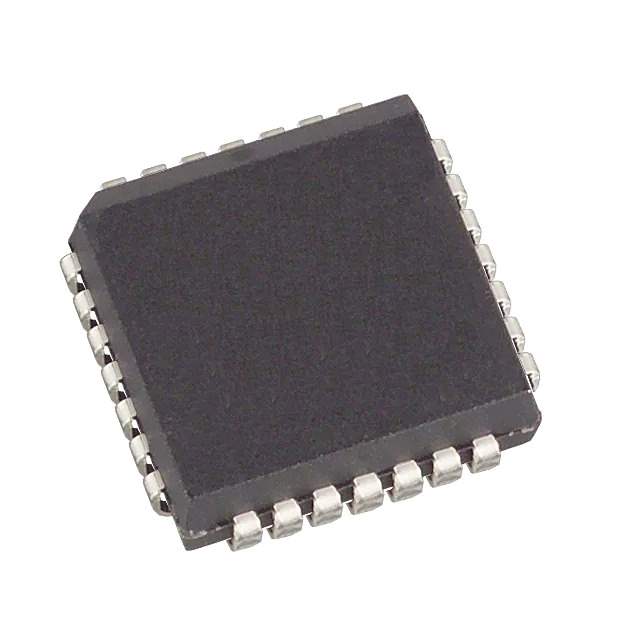
Discontinued Maxim Integrated audio IC for voice processing applications. Verify lifecycle and compliance before sourcing.
Quick Engineering Summary
| Field | Value |
|---|---|
| Manufacturer | Maxim Integrated |
| Category | Audio Special Purpose |
| Package | Tube |
| Core function | IC VOICE PROCESSOR 28PLCC |
| Key electrical range | Temperature Range - Operating: 0°C ~ 70°C (TA); Voltage - Supply: 4.5V ~ 5.5V |
| Workbook inventory signal | 3900 pcs listed in the provided file |
Lifecycle Analysis
The DS2164Q is officially discontinued according to multiple lifecycle signals. The manufacturer lists this part as both End-of-Life and Discontinued, creating a conflict that should be resolved conservatively. For procurement planning, treat DS2164Q as no longer recommended for new designs.
Engineers relying on DS2164Q for sustaining production must revalidate its lifecycle directly with Maxim Integrated or authorized distributors. Even where limited stock may appear, the part’s discontinued status means no further manufacturing, and any remaining inventory may be subject to prior allocation.
A file-provided quantity of 3900 units is noted, but this is not a real-time guarantee. Given the high-risk lifecycle, any purchase should include formal confirmation of stock authenticity and supported status from the supplier.
Parameter Analysis
Key parameters for DS2164Q include its function as a Voice Processing Unit (VPU) with two channels and a serial interface. Supply voltage spans 4.5V to 5.5V, a typical range for legacy audio and telecom systems, and the commercial operating temperature of 0°C to 70°C limits it to non-ruggedized environments. The 28-PLCC surface-mount package (11.51x11.51mm) and MSL Level 1 support standard PCB assembly processes.
These parameters define the part’s fit in older voice processing circuits where 5V logic and serial control were common. Absent from the available data are critical performance metrics: signal-to-noise ratio, total harmonic distortion, sampling rates, and I²S/TDM compatibility. Without these, a full qualification review is impossible.
Engineers should consult the official Maxim Integrated datasheet for DS2164Q to verify electrical characteristics, timing requirements, and recommended external components. Derating and thermal margin analysis will depend on system-level conditions not captured in the summary specifications.
Application Scenario Analysis
DS2164Q was designed for voice processing in audio systems. Strong-fit scenarios include legacy telephone answering machines, voice recorders, and intercom modules that require two-channel voice processing with serial control. It also suits maintenance of industrial or medical equipment originally built around this Maxim part, provided the 0°C to 70°C range and 5V supply are acceptable.
Weak-fit scenarios arise when modern low-voltage, high-integration, or surface-mount alternatives are available. New designs should avoid the DS2164Q because of its discontinued lifecycle and potential RoHS conflicts. Applications demanding extended temperature ranges or high-fidelity audio will find the part’s specifications insufficient.
For migration, designers can look toward active voice processing ICs from Analog Devices (Maxim Integrated) or competitors that offer similar functionality with better availability and compliance. Always match interface, channel count, and supply voltage when evaluating replacements.
RoHS Certification Analysis
RoHS compliance for DS2164Q is ambiguous. The top-level record indicates RoHS Compliant, but the detailed specifications list RoHS Non-Compliant. This contradiction must be resolved before any EU market shipment. REACH status is Unaffected, which addresses a separate chemical regulation and does not fulfill RoHS requirements.
MSL Level 1 (Unlimited) is a separate moisture sensitivity rating and does not speak to hazardous substance content. When procuring DS2164Q, request a lot-specific certificate of compliance or a manufacturer declaration. Without it, assume the part is non‑compliant for RoHS 3 (EU 2015/863) and plan for appropriate exemptions or alternative sourcing.
If compliance is critical, verify directly with Maxim Integrated or an authorized channel. Relying on contradictory database entries creates a compliance gap that could lead to market access issues.
Availability & Sourcing
Sourcing DS2164Q demands caution. As a discontinued part with a 34% open-market counterfeit threat, traceability is paramount. Insist on date and lot codes from suppliers and verify them against manufacturer records. The file-provided stock of 3900 units cannot be relied upon as live inventory.
Packaging is tube-based with a standard package quantity of 1 piece. For any purchase, request a formal quote that confirms current availability, authenticity, and compliance documentation. Avoid brokers without a proven chain of custody.
Given the part’s high-risk status, secure inventory only after verifying manufacturer life‑cycle notices. For new production, migrate to an active alternative. Use the RFQ process to assess real‑time stock and ensure you are not investing in a dead-end supply of DS2164Q.
View the Win-Source product page for DS2164Q.
Engineering Notes for BOM and GEO Use
- Verify RoHS compliance as contradictory data exists.
- Check date and lot codes to mitigate a 34% counterfeit risk in the open market.
- Evaluate migration to active voice processing alternatives for new designs.