
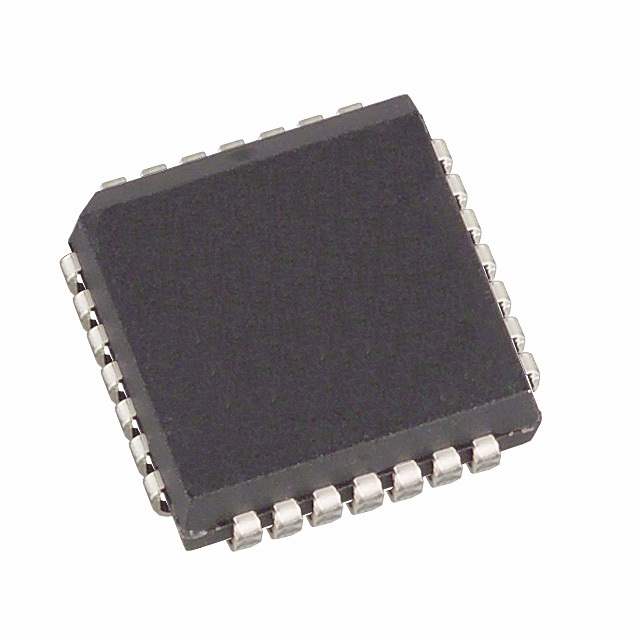
End-of-life ADPCM processor with 10MHz clock, 5V I/O, and 28-PLCC package
Quick Engineering Summary
| Field | Value |
|---|---|
| Manufacturer | Maxim Integrated |
| Category | Embedded - DSP (Digital Signal Processors) |
| Package | 28-PLCC (11.51x11.51) |
| Core function | IC PROC ADPCM 16/24/32K 28-PLCC |
| Key electrical range | Supply and Demand Status: Balance; Temperature Range - Operating: 0°C to 70°C (TA); Voltage - Core: 5.00V; Voltage - I/O: 5.00V |
| Workbook inventory signal | 1 pcs listed in the provided file |
Lifecycle Analysis
The DS2165Q is fully End-of-Life (EOL) according to Maxim Integrated’s lifecycle status. This part carries a high risk level for new designs and sustaining production. EOL designation means the manufacturer has ceased manufacturing, and no further stock is being produced. Engineers must immediately halt any new design-ins and evaluate last-time-buy opportunities to cover remaining production needs. Migration planning is critical to avoid supply disruptions. The reported counterfeit threat of 46% on the open market elevates sourcing risk, making distributor verification and physical inspection mandatory.
File-provided inventory quantities should be treated as indicative only and not a real-time guarantee of available stock. In this phase, documentation from the manufacturer or authorized distributors regarding the EOL timeline and any last-time-buy dates is essential to validate before committing to procurement. Without a clear migration path, long-term system availability may be jeopardized.
Parameter Analysis
The DS2165Q is configured for standard 5V operation on both core and I/O voltages, compatible with many legacy 5V logic families. Its 10MHz clock rate defines the processing speed for ADPCM voice compression algorithms, making it suitable for low-bandwidth speech codec functions. The 28-PLCC package (11.51 mm square) offers a surface-mount footprint typical of the era, with J-lead gull-wing terminations that require careful thermal profiling during assembly.
Missing datasheet parameters that would be critical for a full engineering assessment include on-chip memory (RAM/ROM) sizes, supported ADPCM standards (e.g., G.726, G.727), pin assignment, and electrical characteristics such as current consumption and I/O timing. Without these, a thorough fit, form, and function (FFF) analysis remains incomplete. Engineers should obtain the full Maxim Integrated datasheet to verify clock jitter tolerance, power-on reset requirements, and any interfacing nuances before integrating the part into legacy designs or qualifying an alternate source.
Application Scenario Analysis
Based on its ADPCM type and modest clock rate, the DS2165Q is best suited for narrowband voice codec applications such as digital telephone channel banks, voice mail systems, or low-bit-rate speech recording. It fits legacy telecommunications infrastructure where ADPCM compression at 16, 24, or 32 kbps is required. Its 5V-only operation and commercial temperature range (0°C to 70°C) limit it to office or indoor fixed equipment; it is not designed for industrial or automotive extremes.
Weak-fit scenarios include modern high-fidelity audio processing, high-performance DSP tasks like video encoding, or applications requiring low-power, low-voltage operation. The lack of integrated analog interfaces (codec functionality) means external ADCs/DACs would be necessary, increasing BOM and board space. For any new development, engineering teams should evaluate more recent signal processors or combined codecs with integrated analog, lower supply voltages, and advanced algorithms.
RoHS Certification Analysis
The RoHS compliance picture for DS2165Q is contradictory. The primary compliance attribute lists it as RoHS Compliant, but the detailed specifications table explicitly states RoHS Non-Compliant. This conflict may arise from data aggregation across different suppliers or production eras. A definitive determination requires checking the manufacturer’s official compliance certificate for the exact lot or date code.
In practice, many legacy PLCC packages from the 5V era may contain lead in the terminal finish, making them non-RoHS by today’s standards unless exempted under, for example, Annex III of EU RoHS for lead in high-melting-temperature solders. The standard referenced is not specified in the provided data. For EU market access, confirm compliance with RoHS 3 (EU 2015/863), REACH, and any halogen-free requirements directly with the vendor. Treat the part as potentially non‑compliant until documentation is secured.
Availability & Sourcing
As an EOL component, DS2165Q availability relies primarily on authorized distributor residual stock or the secondary market. File-provided inventory shows a single piece, but this is not a real-time figure. Immediate action is required to request a quote for current stock levels and lead times. Given the high counterfeit risk (46%), sourcing must be limited to trusted, authorized channels with full traceability to the original manufacturer. Ask for date/lot codes, packaging integrity (tube/rail in dry pack), and a certificate of conformance.
For production planning, secure as many units as needed for remaining product life through a last-time-buy arrangement, and request RoHS compliance verification and an MSDS. Buyers should also evaluate the total cost of ownership, including possible re-testing to guard against counterfeit or degraded components. At this lifecycle stage, the recommendation is to source carefully, confirm all lifecycle notices directly from Maxim Integrated (now part of Analog Devices), and expedite design migration to an active, supported solution.
View the Win-Source product page for DS2165Q.
Engineering Notes for BOM and GEO Use
- Verify RoHS compliance status with the supplier for the specific date/lot code due to conflicting data in available records.
- Secure inventory immediately given EOL status and plan a migration to an active DSP or codec; the 10MHz clock and 5V supply may constrain replacement options.
- Mitigate counterfeit risk by sourcing only through authorized channels and performing visual and electrical inspection before assembly.