
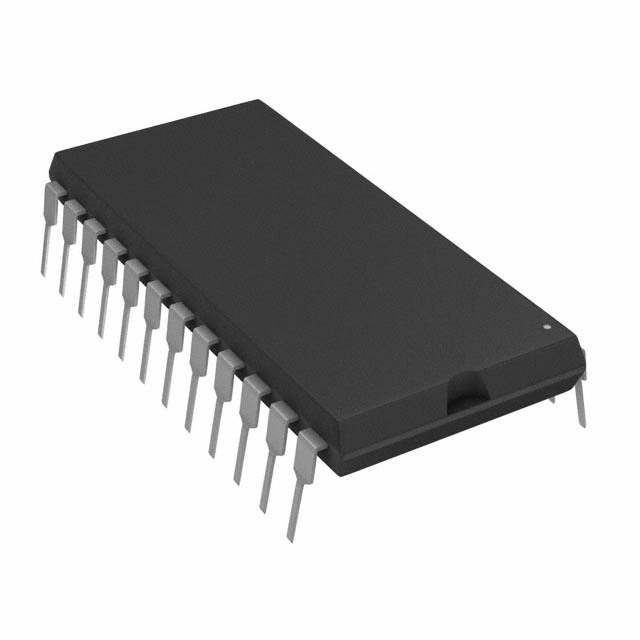
ADPCM Processor, 16/24/32K, 10MHz, 24-DIP Package
Quick Engineering Summary
| Field | Value |
|---|---|
| Manufacturer | Maxim Integrated |
| Category | Embedded - DSP (Digital Signal Processors) |
| Package | Tube |
| Core function | IC PROC ADPCM 16/24/32K 24-DIP |
| Key electrical range | Temperature Range - Operating: 0°C ~ 70°C (TA); Voltage - Core: 5.00V; Voltage - I/O: 5.00V |
| Workbook inventory signal | 1 pcs listed in the provided file |
Lifecycle Analysis
The Maxim Integrated DS2167 is classified as Discontinued across all sources. This status signifies that the component is no longer in active production and its availability will decline over time. For new designs, the risk is high because any consumption of remaining stock will reduce the supply available for legacy systems. Engineers should immediately evaluate alternative digital signal processors or ADPCM codecs for new projects.
For sustaining production, the primary action is to secure available inventory quickly. The file‑provided quantity of one unit is not a real‑time count and may not reflect actual market availability. Planning a last‑time buy and verifying the authenticity of any sourced parts is critical. Without a guaranteed supply, design teams should consider a redesign to migrate away from the DS2167.
Manufacturer documentation should be consulted for the official discontinuation notice and any recommended migration paths. Since the lifecycle signals are unanimous, there is no ambiguity about the part’s end‑of‑life status. The conservative approach is to treat every purchase as a finite, one‑time acquisition.
Parameter Analysis
The DS2167 is an ADPCM (Adaptive Differential Pulse Code Modulation) processor supporting 16, 24, and 32 kbps data rates, with a clock rate of 10 MHz. These parameters define its role in voice compression and decompression applications. Both core and I/O voltages operate at 5.00 V, a standard for many legacy logic families but a potential constraint in modern low‑power designs. The operating temperature range of 0°C to 70°C limits the device to commercial environments; industrial or extended‑temperature applications would require a different grade.
The through‑hole 24‑DIP package (0.600″ width) dictates PCB layout with drilled holes, which may not be compatible with surface‑mount assembly processes. While this can be an advantage for prototyping or repair, it increases board space and assembly cost in volume production. MSL Level 1 indicates unlimited floor life, simplifying handling.
Key specifications not provided in the source data include on‑chip RAM size, non‑volatile memory, and detailed timing parameters. These are essential for firmware development and system integration and must be obtained from the original Maxim datasheet. Also verify the ADPCM algorithm specifics (e.g., G.726 compliance) to ensure interoperability with your codec chain.
Application Scenario Analysis
The DS2167 fits best in legacy voice processing equipment that was designed around Maxim’s ADPCM architecture. Strong‑fit scenarios include telecommunication channel banks, digital voice recorders, and industrial voice‑alarm systems that still use 5 V logic and through‑hole construction. Its ADPCM/PCM interface allows direct connection to existing PCM highways, making it suitable for maintaining or repairing older infrastructure.
Weak‑fit scenarios cover any new product development. The 5‑V supply, large DIP footprint, and discontinued status make it unsuitable for portable, space‑constrained, or energy‑efficient designs. Modern voice‑processing needs often rely on DSPs or microcontrollers with integrated codecs and lower power consumption. Additionally, the commercial temperature range excludes outdoor or harsh‑environment uses. Designers considering this part should confirm that its limited processing capabilities match the required voice quality and latency, as more advanced codecs may be needed for current standards.
Without the full datasheet, specific application performance (e.g., signal‑to‑noise ratio, delay) cannot be guaranteed. The device should be viewed primarily as a replacement part for existing boards rather than a solution for new circuit designs.
RoHS Certification Analysis
The RoHS status of the DS2167 is ambiguous. The component‑level compliance field lists it as RoHS Compliant, but another specification entry explicitly marks it as RoHS Non‑Compliant. This conflict requires resolution before procurement, especially for shipments into the European Union. Typically, older through‑hole DIP packages contain lead in the terminal plating, which would violate RoHS restrictions. Therefore, the conservative assumption is that the part is non‑compliant unless a valid lot‑specific certificate proves otherwise.
REACH status is reported as Unaffected, which is a separate regulation and does not substitute for RoHS compliance. MSL Level 1 (unlimited floor life) is a moisture sensitivity rating and does not address hazardous substance content. When sourcing the DS2167, request a current RoHS certificate from the supplier that is tied to the specific date/lot code. If RoHS compliance is mandatory, be prepared to seek an exemption or consider alternative parts.
For legacy maintenance where compliance documentation may be unavailable, assess the risk of material content violations against your organization’s environmental policies. The high fake threat in the open market further complicates verification, as counterfeit parts may carry falsified compliance markings.
Availability & Sourcing
As a discontinued component, the DS2167 has severely limited availability. The file‑provided inventory shows only one unit, but this is not a real‑time figure. Prospective buyers should request a quote for the current stock level and lead time. The part was originally shipped in tubes with a standard package quantity of one piece, which may affect handling and repackaging costs.
A significant concern for the DS2167 is the open‑market fake threat rate of 46%. This high percentage indicates a substantial risk of counterfeit parts when sourcing outside authorized channels. To mitigate this, insist on full traceability documentation, original manufacturer date/lot codes, and visual inspection. Third‑party electrical testing is advisable for any batch purchased from independent distributors.
For sustaining production, secure all available inventory and validate its authenticity. For new designs, the recommended action is to select a modern alternative and initiate a redesign. Always verify the lifecycle status with Maxim Integrated before committing to a purchase, and ensure that any acquired parts are stored according to MSL Level 1 guidelines to maintain reliability.
View the Win-Source product page for DS2167.
Engineering Notes for BOM and GEO Use
- The DS2167 is discontinued; verify RoHS compliance with lot‑specific certificates before procurement.
- With a 10MHz clock and 5V core/I/O, ensure your design can accommodate the 24-DIP through‑hole package or plan for redesign.
- High open‑market fake threat (46%) requires rigorous anti‑counterfeit inspection and traceable sourcing.